Connecting PPC with SEO and AI search
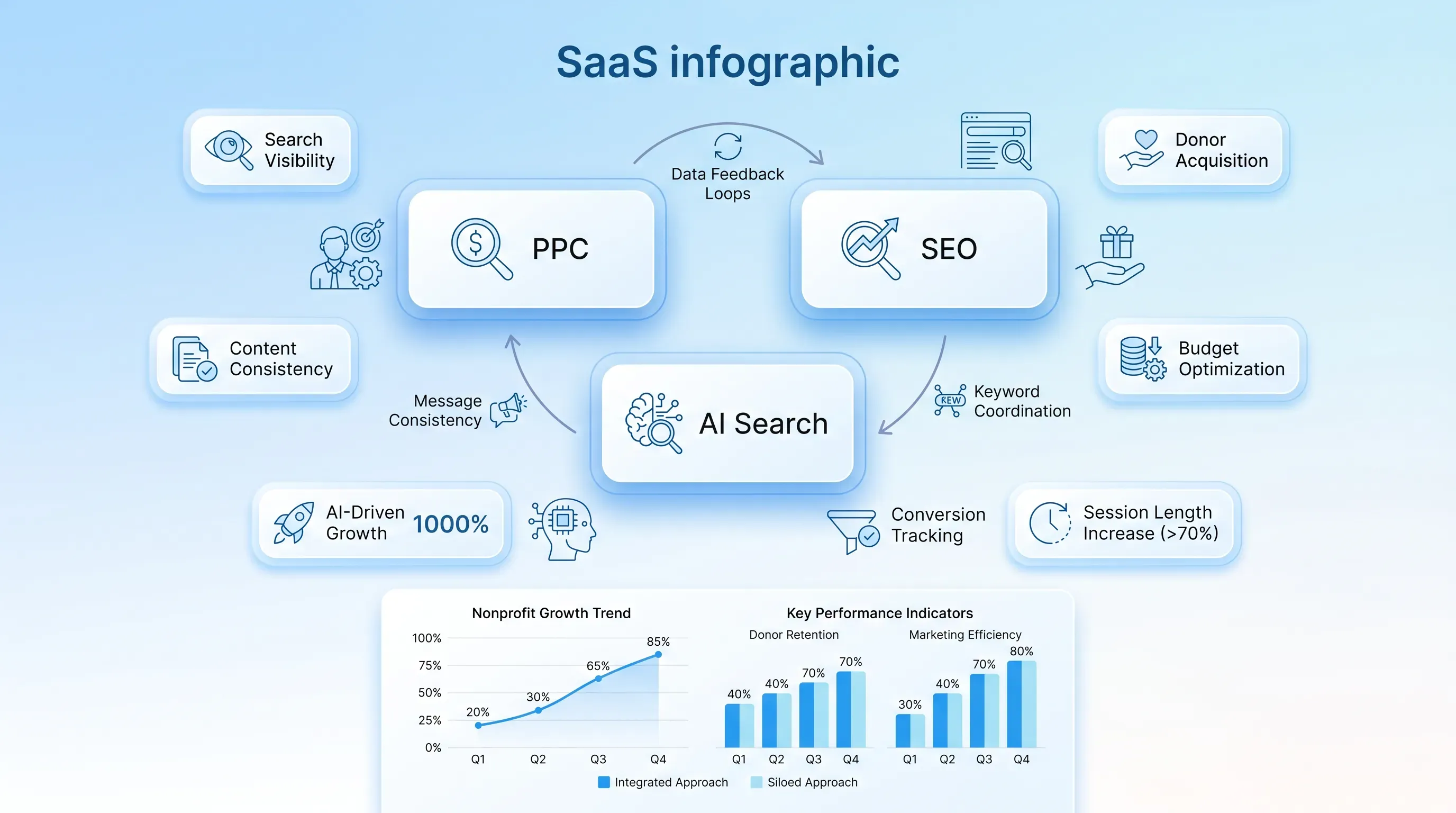
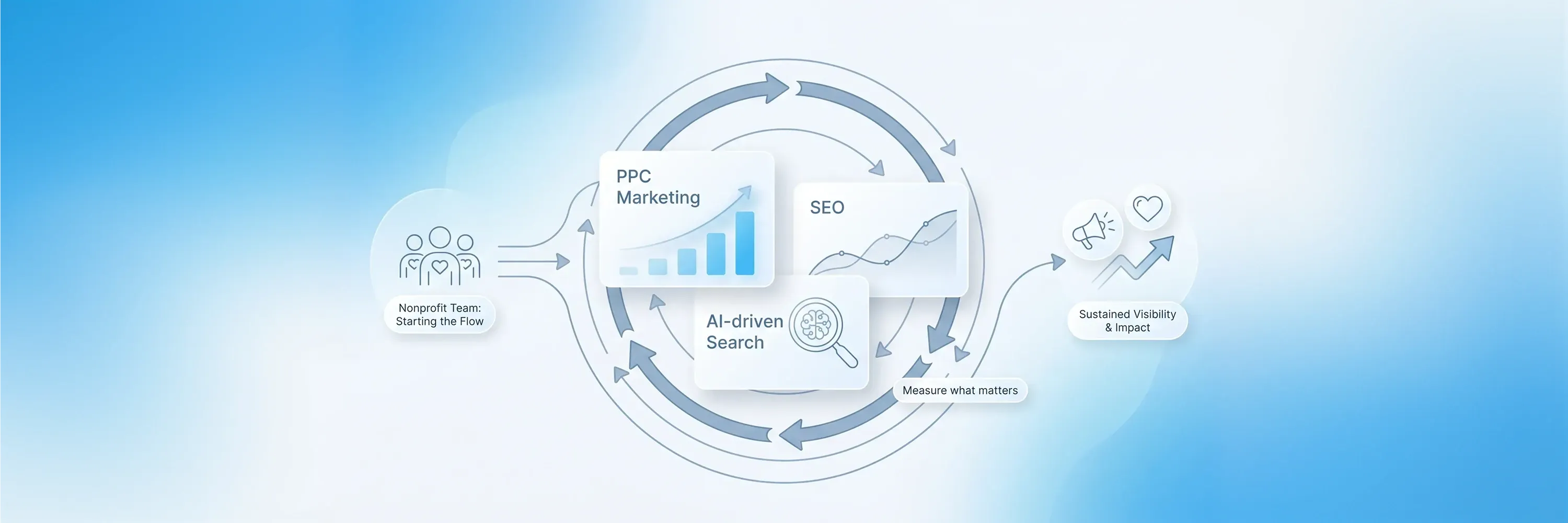
Nonprofit PPC marketing and organic search, with AI answer engines treated as a visibility layer, are managed as separate projects by separate people. The mistake is to treat them as competitors. Each one reaches donors the others miss, and together they cover far more of the search results page than any single channel can.
Organic search remains the largest doorway. M+R found that unpaid search still accounted for 39% of all visits to nonprofit sites in 2025, even after its decline. But organic ranking is slow to earn and fragile once you have it. Paid search fills the gap instantly, holding a position while your content climbs. And AI search is the fast-rising third channel, with AI-driven traffic to nonprofit sites making up just 2% of volume yet growing 1000% year over year. When these three reinforce the same terms and the same message, your cause stays visible no matter which path a donor takes.
Using a unified paid search strategy
The coordination begins with keywords. When your PPC keywords mirror the terms your SEO already targets, both channels push the same phrases, and the data each one collects sharpens the other. A unified nonprofit PPC marketing strategy means your ad copy and your page titles speak the same language, so a searcher sees consistency from the result to the landing page.
Branded searches are the clearest place to apply this. Bidding on your own name protects the top of the page from competitors and from AI summaries that would otherwise intercept the click, and that's the single most valuable searcher you'll ever reach. Use paid placement to occupy positions where your organic ranking is weak, then pull back once the unpaid listing climbs. A coordinated paid search strategy cuts wasted spend because you stop paying for ground you already hold organically and redirect that budget toward the gaps.
The payoff shows up in coverage. With one paid search strategy feeding both channels, you can own the top of the results for your priority terms while testing new ones cheaply, instead of running two disconnected programs that bid against your own pages.
Feeding data back into SEO
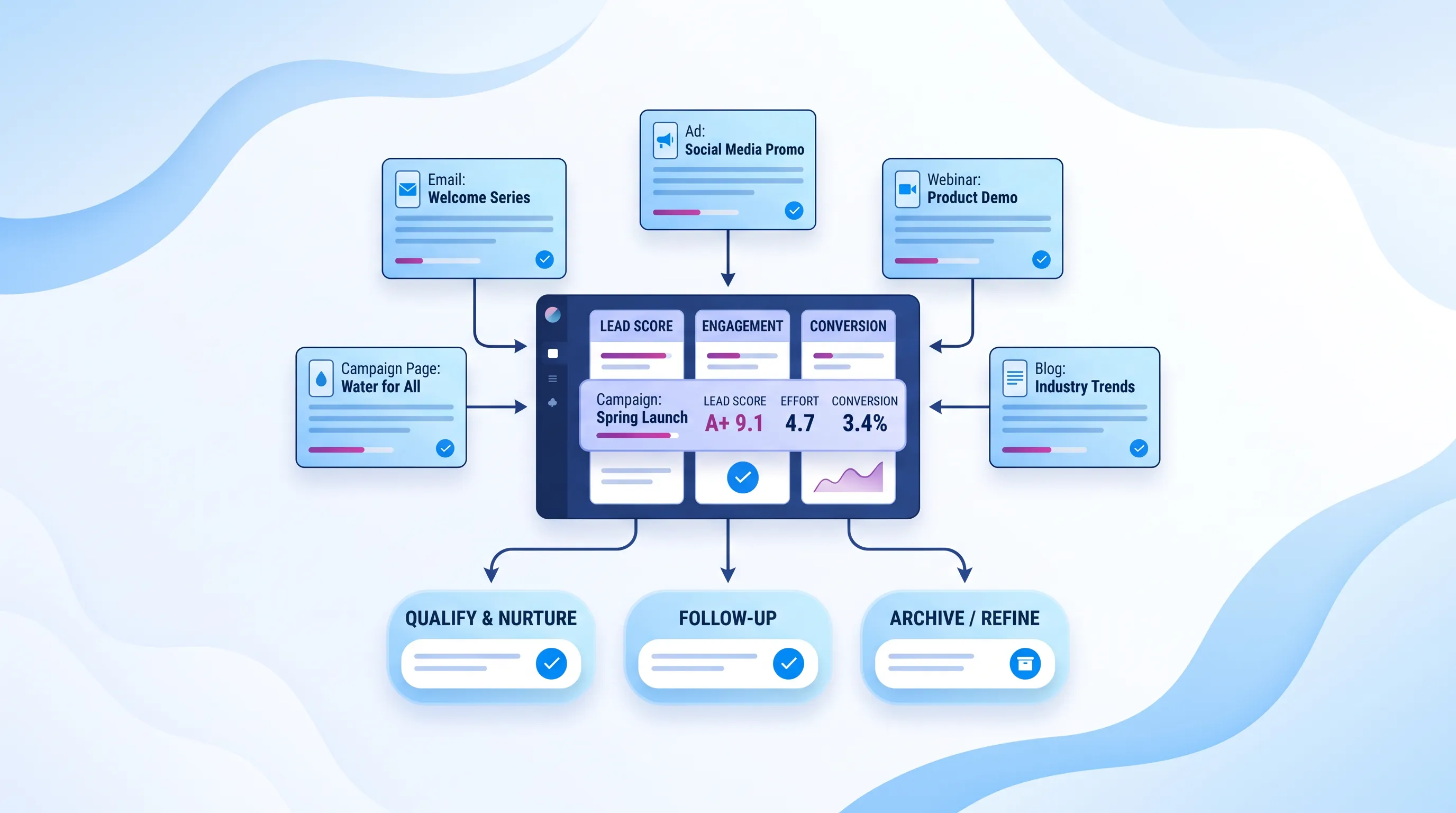
Paid campaigns answer a question that organic work takes months to resolve. They show which terms actually drive donations rather than clicks alone. Your conversion data tells you in days. The search terms report shows the exact queries that triggered a gift, and those phrases deserve real content.
This is where nonprofit PPC marketing acts as a testing ground for the slower organic strategy. A keyword that converts in a paid campaign is a keyword worth ranking for organically, and one that draws clicks but no donations is a warning to redirect your writing effort elsewhere. Nonprofit advertising data, read this way, becomes a research budget as much as an acquisition budget. You learn what your audience responds to before committing to a content calendar.
A nonprofit PPC marketing loop deserves a monthly schedule. Each month, pull the terms that convert from your paid account and use your rankings to prioritize content for high-value gaps. That discipline turns scattered nonprofit advertising spend into a map for everything else you publish.
Staying visible in AI answers
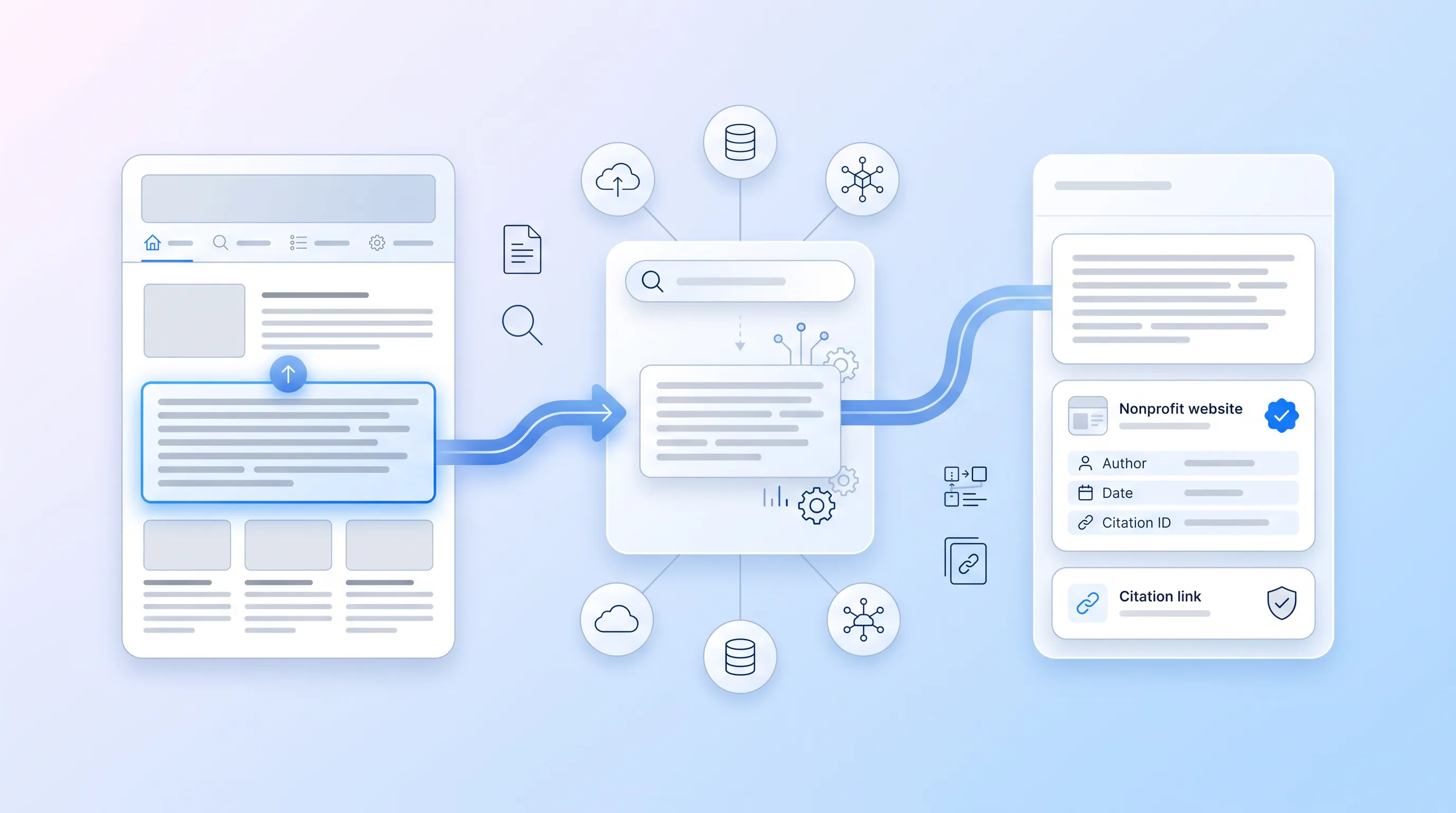
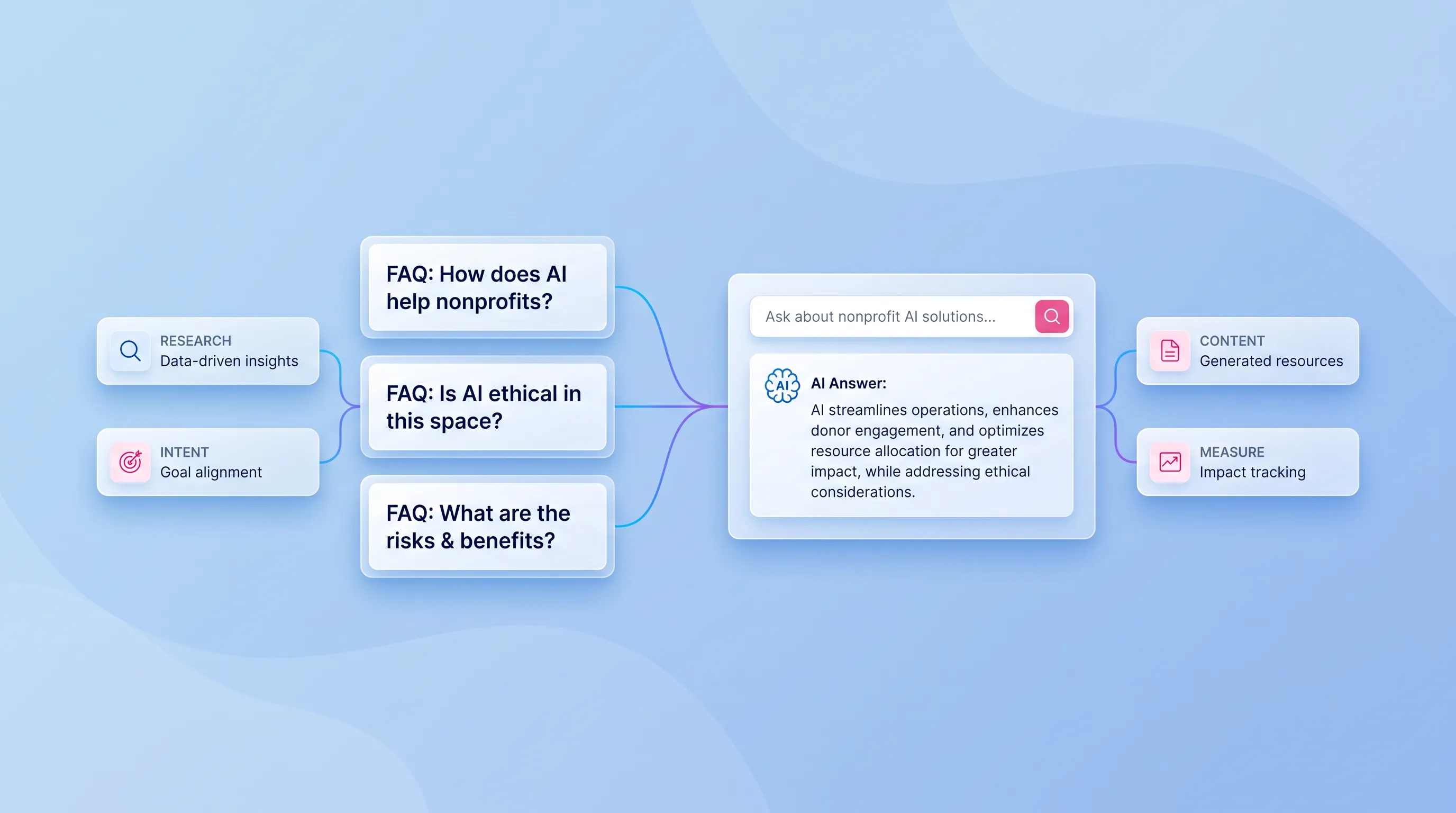
AI tools like ChatGPT and Google's AI Overviews build their answers from sources they judge clear and authoritative. ChatGPT alone now commands roughly 12% of search traffic in the US, and donors are starting to research causes there before they ever reach a website. Being cited in those answers is the new front line of visibility.
Consistency across your paid and organic signals improves your odds. When your landing pages and ad copy use the same plain terms as your published content, AI systems have an easier time understanding and quoting you. Clear pages with specific, factual claims about your impact give these tools something concrete to surface, and the same authority lifts organic rankings. Candid's research found that AI-referred visitors stayed more than 70% longer on nonprofit sites than other visitors, because they arrive ready to explore. Show up in those answers and you reach donors at the moment their intent is highest, which is the long-term goal of being found wherever people search.