Introduction
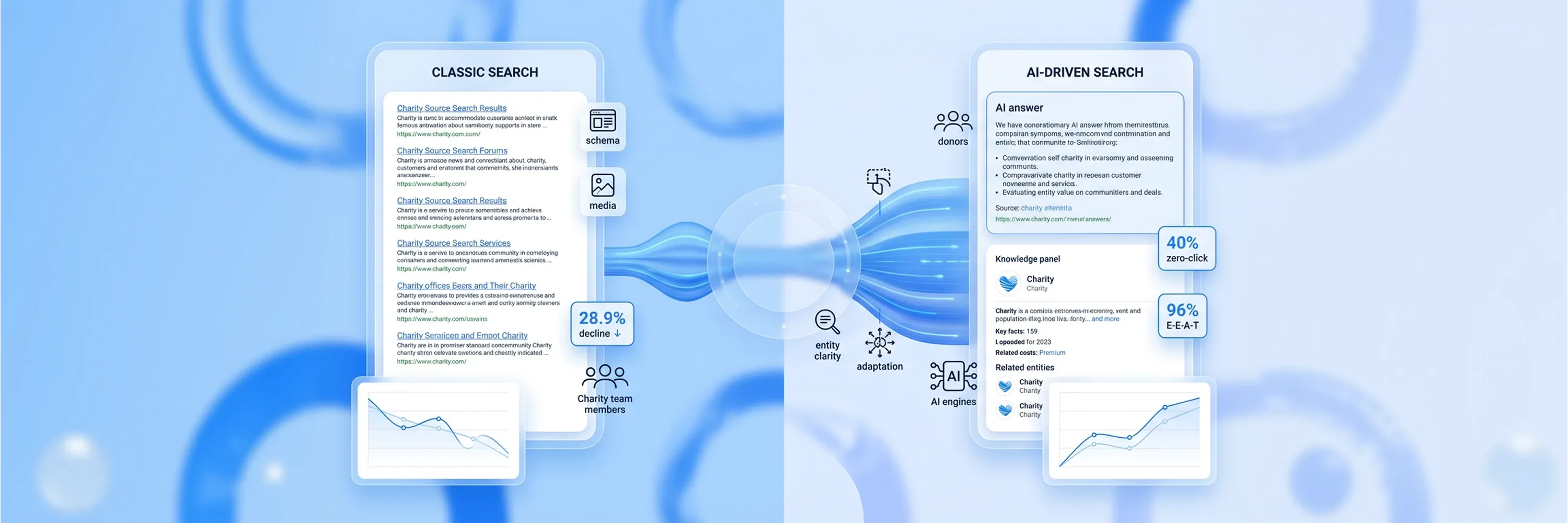
Digital discovery for nonprofits has shifted fundamentally because artificial intelligence changes how people find information online. For years, organizations relied on traditional organic rankings to connect with donors and volunteers. Today, generative search tools and AI Overviews provide direct answers to users, and this feature pushes conventional search links further down the page. Consequently, charity websites experienced a 28.9% decline in ranking pages after developers rolled out AI search features.
This change means that maintaining top keyword positions no longer guarantees website traffic. Organizations that fail to adapt risk losing their share of influence, and they miss important connections with supporters who now rely on AI tools for discovery. Modernizing the digital approach requires adopting generative engine optimization to ensure organizational missions remain visible. Modern seo for charities involves moving beyond outdated tactics and structuring content specifically for AI extraction.
Collapse of Traditional Organic Search
Structuring content for AI extraction became necessary because the evolution of digital discovery changed how supporters find organizations online. Artificial intelligence tools and zero-click search behaviors now dominate the search landscape. Traditional search engines used to provide a list of blue links, and organizations relied on these links to drive website traffic. Today, generative search platforms extract information and deliver direct answers right on the results page. This reality means that users rarely need to click through to a website to get the information they seek.
Because users rarely click through, traditional top-ranking positions do not guarantee website traffic anymore. Because of this shift, organizations fail to measure their digital footprint accurately when they track raw search volume. According to Bain & Company, consumers rely on zero-click results in at least 40% of searches, and this behavior reduces organic traffic by 15-25%. Modern SEO for charities adapts to this behavioral shift.
Shifting From Traffic to AI Visibility
Organizations adapt to this shift when they no longer chase raw search volume. Instead, they capture a share of influence within AI-generated responses. When organizations secure mentions in these AI summaries, they build trust with potential donors and volunteers before these users ever visit a webpage. Organizations get a clear picture of audience connection when they measure AI SEO visibility. Organizations adapt their digital strategies after they understand how these modern engines process information.
SEO for Charities Through Generative Engines
This understanding of information processing leads organizations to adopt generative engine optimization, which changes how they structure their digital content. This approach organizes information for AI tools rather than traditional search algorithms. Large language models retrieve information through Retrieval-Augmented Generation. This process allows AI tools to pull facts from external databases to construct accurate answers for users.
Because these engines construct direct answers, organizations do not optimize for simple keywords anymore. Organizations succeed in this environment when they understand that AI engines prioritize entity clarity, human-verified expertise, and direct answers over keyword density. Generative models look for assurance that the information they deliver comes from credible and authoritative sources. According to Ziptie, 96% of citations come from sources that demonstrate strong Experience, Expertise, Authoritativeness, and Trustworthiness signals.
Differences Between Traditional Search and Generative Engines
The operational logic behind these systems differs significantly from the mechanics of traditional search engines. Understanding these structural differences helps organizations design content that AI tools can interpret and cite accurately.
To send these strong signals, organizations recognize the differences between conventional search crawlers and modern generative engines:
-
Conventional crawlers count keyword frequency
-
Generative engines evaluate semantic context
-
Conventional crawlers rank individual web pages
-
Generative engines synthesize multiple data sources
-
Conventional crawlers map basic website links
-
Generative engines map complex knowledge relationships
Digital teams build content architectures that feed clean data directly to large language models after they understand these differences. Content architecture for these intelligent systems requires an approach that goes beyond the publication of owned content on an organization's main website.
Earned Media Forms Foundation for AI Discovery

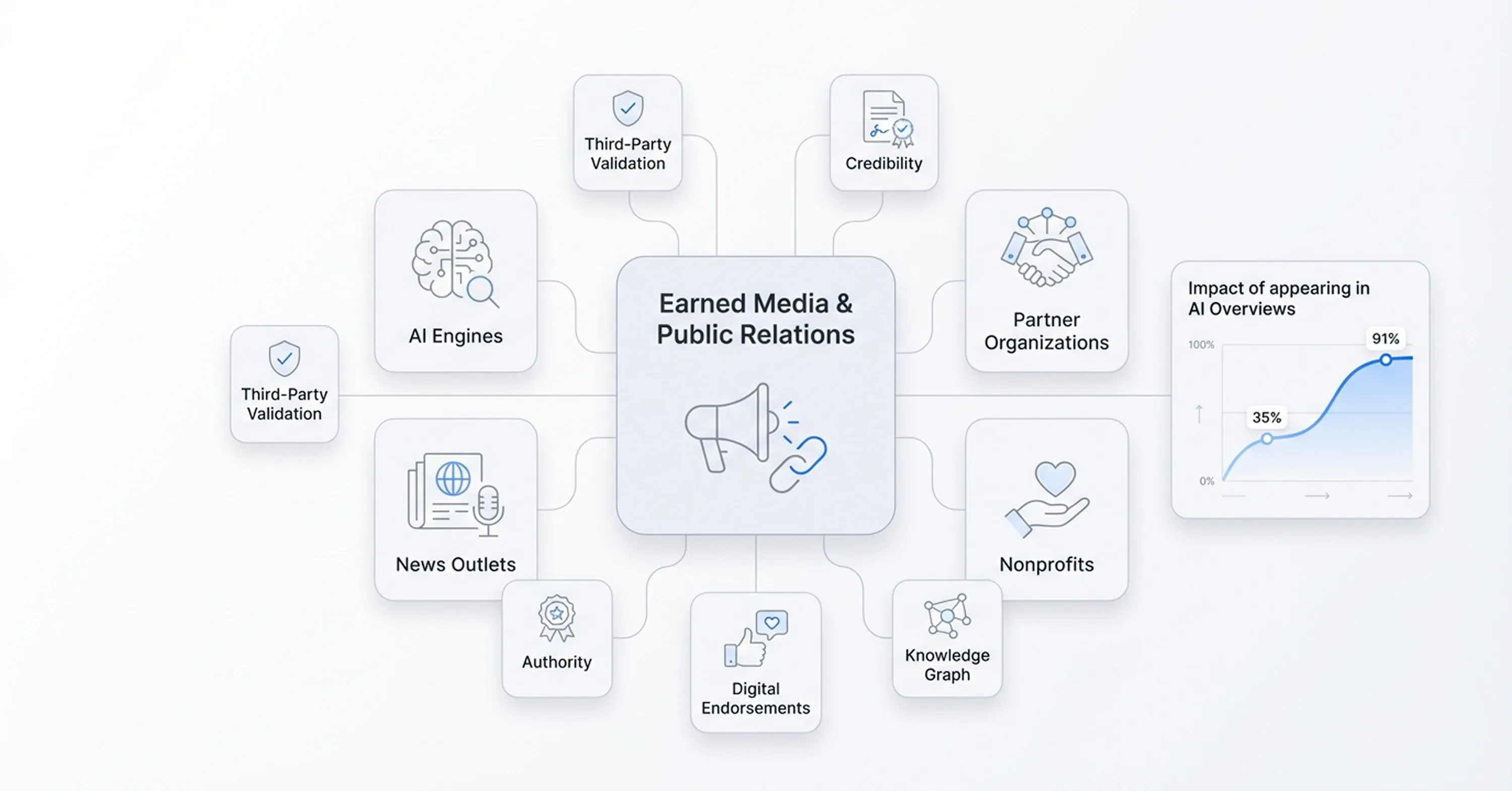
Because owned websites no longer guarantee digital discovery, AI engines rely heavily on earned media and third-party validation to determine which organizations deserve mention. A modern charity SEO strategy incorporates public relations efforts to structurally support digital visibility. When external publications, news outlets, and partner organizations mention a nonprofit, they establish organizational authority across the internet. Generative engines scan these external signals to assess an organization's expertise on specific social issues. This external validation proves credibility to AI models that must filter out unreliable information from their answers.
As public relations efforts build momentum, the organization becomes a trusted entity within the AI's knowledge graph. This trust drives measurable engagement and website traffic. According to DataSlayer, brands that appear in AI Overviews earn 35% more organic clicks and 91% more paid clicks. These citations act as digital endorsements that generative engines respect.
Building Long-Term Authority Through Earned Media
Organizations cannot buy this level of trust. They earn it through consistent media outreach and high-quality partnerships. Nonprofits secure their AI SEO visibility and ensure their missions reach the people who want to support them when they prioritize earned media. This reliance on third-party validation creates a strong digital footprint that survives future algorithm updates.
Content Architecture for AI Extraction
While third-party validation builds a strong digital footprint, a successful charity SEO strategy also requires organizations to format their knowledge for artificial intelligence extraction. Traditional web pages often bury important facts under emotional narratives and lengthy background information. This storytelling appeals to human readers, but it frustrates large language models that scan pages for facts. These models need clean data architecture to understand and retrieve organizational information accurately.
Structuring Content for Generative Engine Retrieval
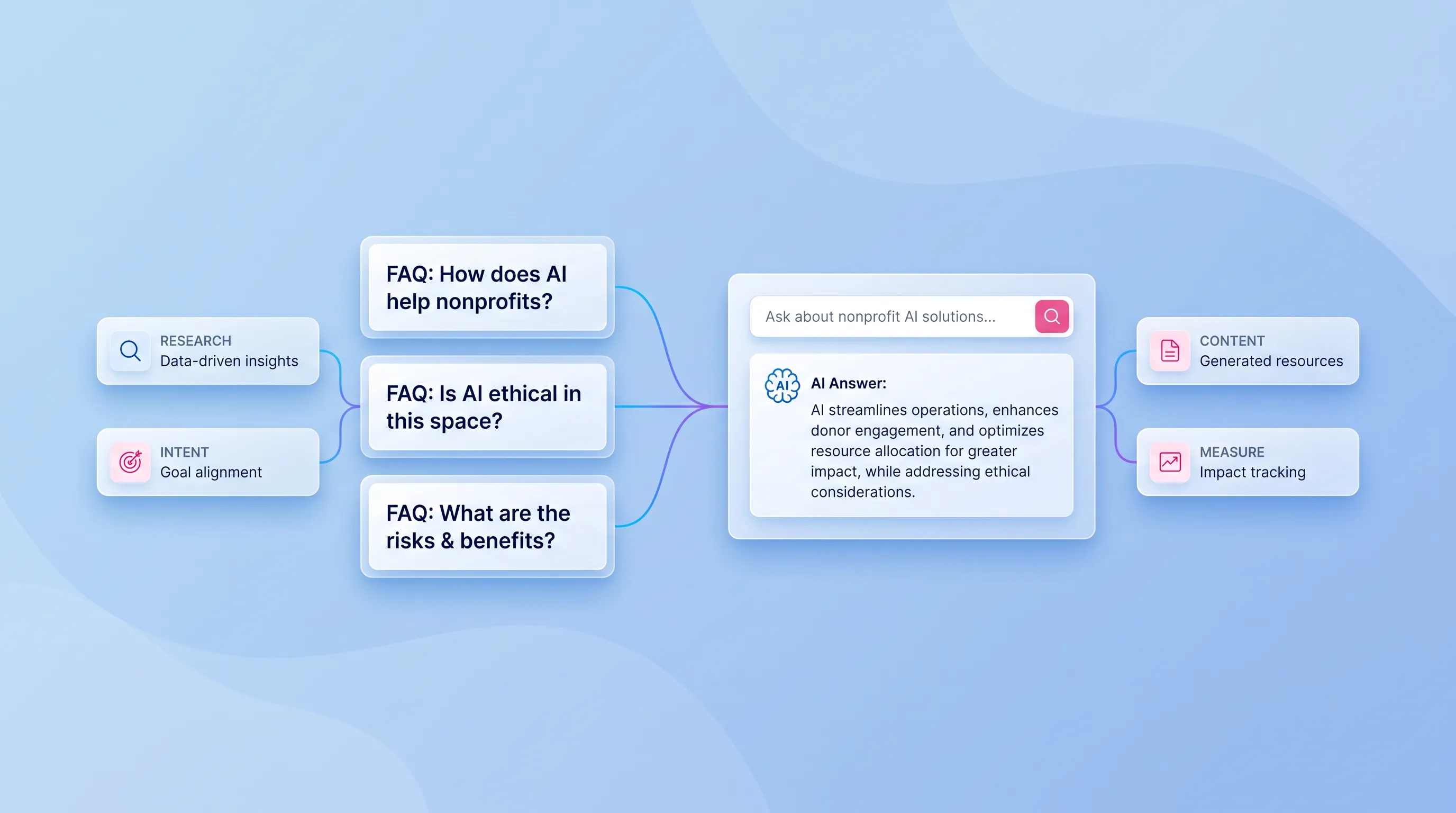
Organizations must adopt an answer-first content approach that directly addresses complex queries. This method structures information logically so generative engines easily parse and extract it. When digital teams build content with clarity, they create a direct pipeline to large language models. The models then use this formatted knowledge to construct accurate answers for users. According to Africads Agency, FAQ schema and Organization markup help increase nonprofit visibility across AI platforms. These technical elements translate human-readable text into a structured format that machines instantly recognize. Nonprofits format data correctly and ensure their mission details reach the algorithms that control digital discovery. This structural shift moves websites away from static brochures and turns them into active knowledge bases.
Answer-First Content Frameworks
These active knowledge bases succeed because generative engines prioritize definitive answers over lengthy introductions. Organizations must structure paragraphs and headers to satisfy these extraction algorithms. Organizations remove unnecessary details and present factual data upfront. An answer-first framework puts the most important information at the beginning of the page.
The text then expands into supporting details and contextual narratives. This structure gives AI tools the facts they need to appear on the search results page. Digital teams format headers as clear questions that users ask. The paragraph below the header must then provide a direct, concise answer. This straightforward approach allows algorithms to pull quotes and data points without a need to guess the context.
Core Charity SEO Strategy
Algorithms pull these quotes and data points to build a centralized knowledge graph, which acts as the foundation for digital presence. Organizations build this graph when they integrate facts about their operations, impact, and history into a structured database. Consistent messaging across all digital channels trains AI models to recognize the organization's core mission. When a nonprofit demonstrates knowledge over its specific subject area, generative engines take notice.
These engines look for consistency across the main website, social profiles, and third-party directories. Inconsistent information confuses algorithms and reduces the likelihood of being cited. Digital teams audit their entire online footprint to ensure every mention aligns with their central knowledge graph. This alignment creates a strong signal that artificial intelligence systems trust and reward with higher visibility.
Schema Markup for Machine Context
To generate this strong signal, web content requires technical translation before machines process it effectively. Structured data translates paragraphs into the language that generative algorithms understand. Schema markup provides the machine context necessary for accurate indexing. This code sits behind the visible text and categorizes information as specific entities, such as events, people, or local businesses. When digital teams apply this markup, they help algorithms find the truth that hides within complex narratives.
According to Ziptie, pages that feature 15 or more recognized entities are 4.8 times more likely to appear in AI Overviews. Rich snippets that structured data generates increase the probability of citation by large language models. Generative engines confidently cite sources that explicitly define their contents through proper schema implementation.
Multi-Audience Search Intent in AI Systems
While schema implementation helps generative engines understand content, nonprofit websites face another challenge when they serve multiple audiences with different needs. Donors seek impact metrics and financial transparency, while beneficiaries look for urgent assistance and service locations. These opposite search intents complicate information architecture. User intent behind the search dictates how generative AI contextualizes queries. A solid SEO for charities plan requires digital teams to separate these distinct content types into clearly defined website sections.
Organizations achieve technical proficiency when they compartmentalize their digital assets. A dedicated portal for beneficiaries focuses on program access, eligibility requirements, and local resources. Meanwhile, the donor-facing sections highlight annual reports, success stories, and tax information. This separation applies logic to the website structure and helps artificial intelligence tools understand which pages serve which users. Mixed intentions on a single page confuse the extraction algorithms and dilute the page's topical authority.
How AI Platforms Evaluate Content Authority
Different AI systems evaluate trust and relevance through different lenses. According to Yext, Gemini prioritizes brand-owned content, ChatGPT relies heavily on third-party listings, and Perplexity values niche expertise and reviews most. Digital teams map their content architecture to satisfy these different evaluation methods. To secure ai seo visibility, digital teams must provide the correct answers to the correct audiences across multiple generative platforms simultaneously.
AI-Driven Return on Investment
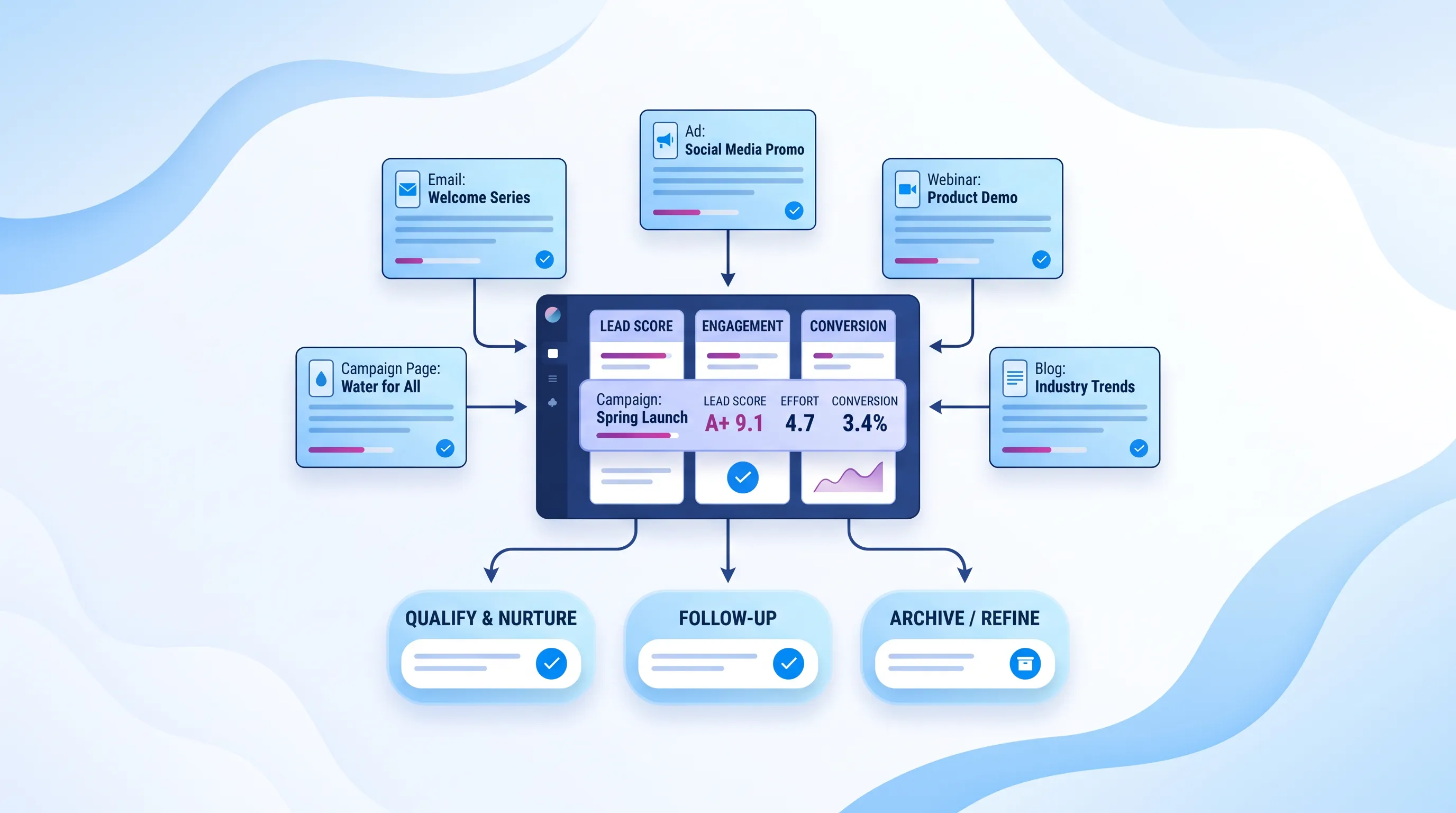
After digital teams secure this AI SEO visibility across multiple platforms, they realize that basic website analytics no longer provide a complete picture of an organization's digital influence. Users get their answers directly from search results, and this behavior drops website visits but increases brand awareness. Organizations need new frameworks to measure AI attribution and overall search influence. Digital teams connect search visibility directly to donor lifecycle analytics and tangible fundraising outcomes. This connection requires exactness in data analysis.
A modern charity SEO strategy moves beyond standard organic clicks. Digital teams analyze how artificial intelligence engines interpret and cite their content. This progression from traffic-based metrics to visibility-based metrics requires specialized software. Organizations evaluate their success in generative search when they monitor data points that reflect their digital footprint.
Measuring AI SEO Visibility
Organizations must rely on specialized metrics that capture how often artificial intelligence systems reference their content and present it to users.
According to Sanbi.ai, organizations track five essential metrics to accurately measure their ai seo visibility:
-
The visibility rate shows how often the organization appears in AI-generated answers.
-
The rank position within the generated summary determines the prominence of the citation.
-
The sentiment score ensures the AI describes the organization positively.
-
The citation sources identify which third-party websites feed data to the language models.
-
The share of voice compares the organization's visibility against similar nonprofits in the sector.
These metrics connect digital efforts to real-world impact. When an organization improves its seo for charities implementation, these metrics correlate directly with increased donor trust and higher volunteer engagement rates.
Conclusion
These higher engagement rates prove that organizations succeed in the modern search landscape when they evolve beyond outdated keyword stuffing and become AI-trusted entities through structured data and earned media. The future of SEO for charities relies on how effectively organizations format their knowledge for artificial intelligence engines rather than traditional web crawlers.
Organizations implement generative engine optimization early and secure an advantage in donor discovery and volunteer engagement. They adapt to new search behaviors when they establish baseline AI visibility metrics now. Organizations update their content architecture today to maintain a strong presence across all emerging search platforms. Our guide on nonprofit digital marketing strategies outlines the exact next steps.