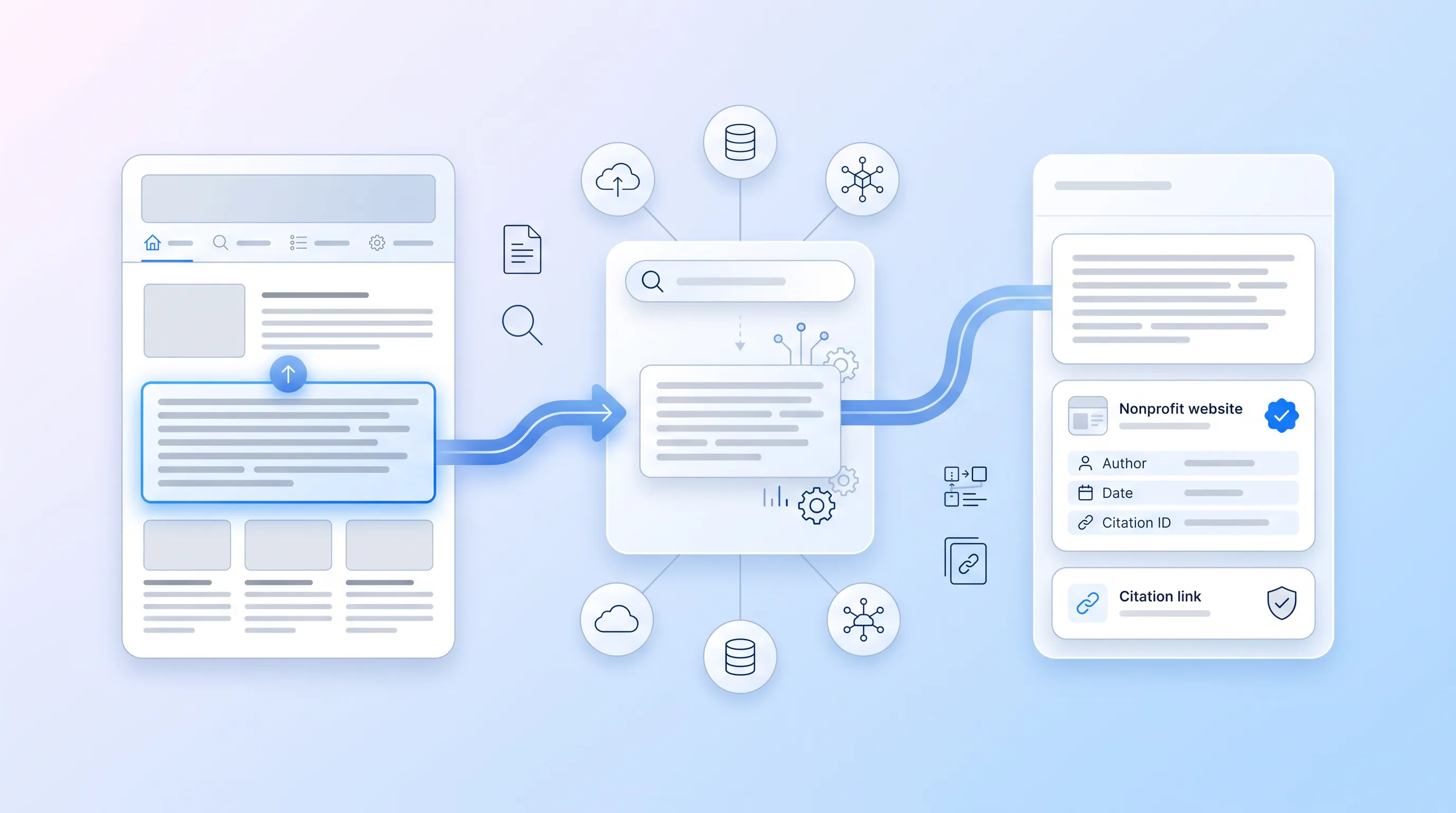
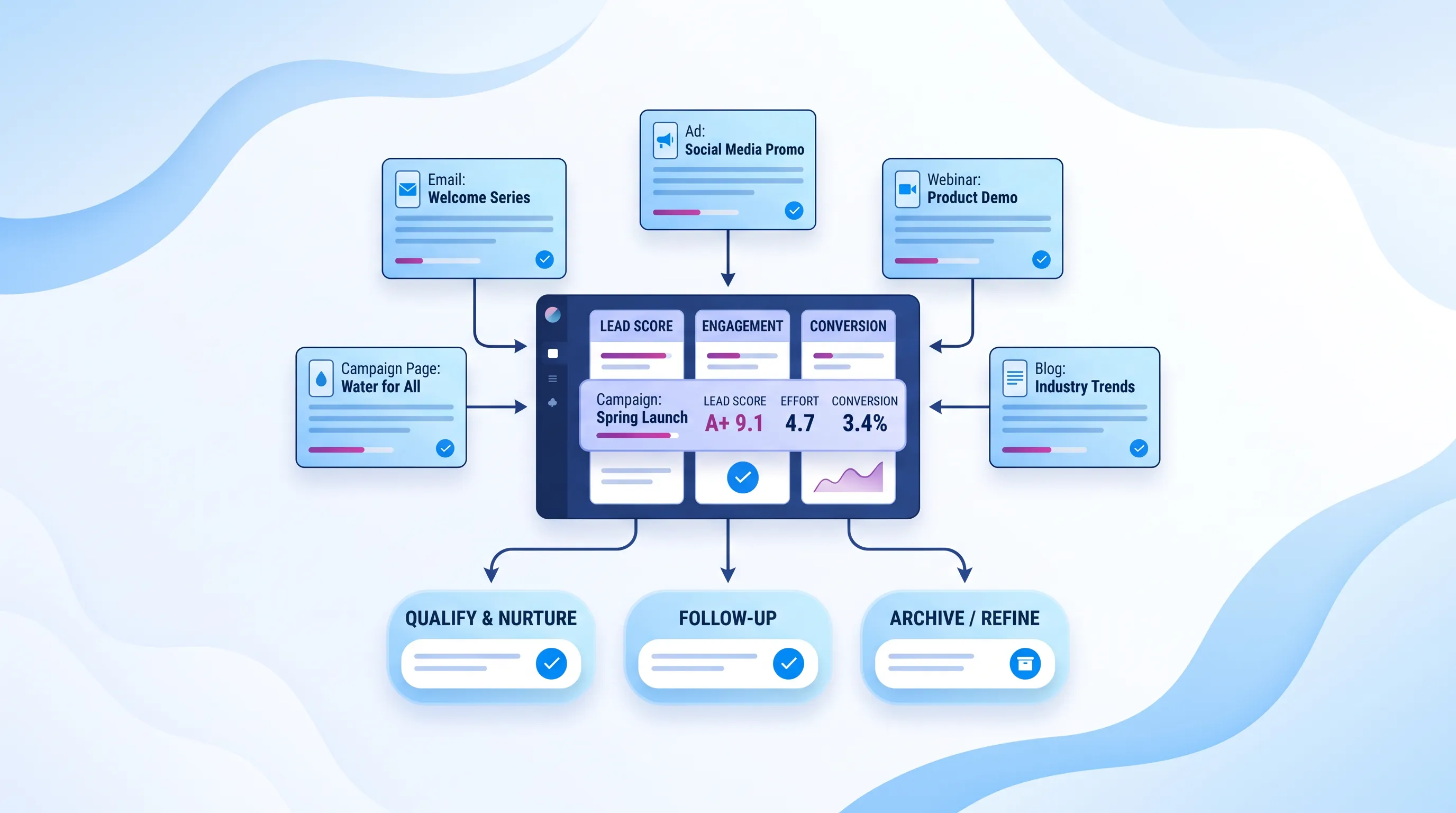
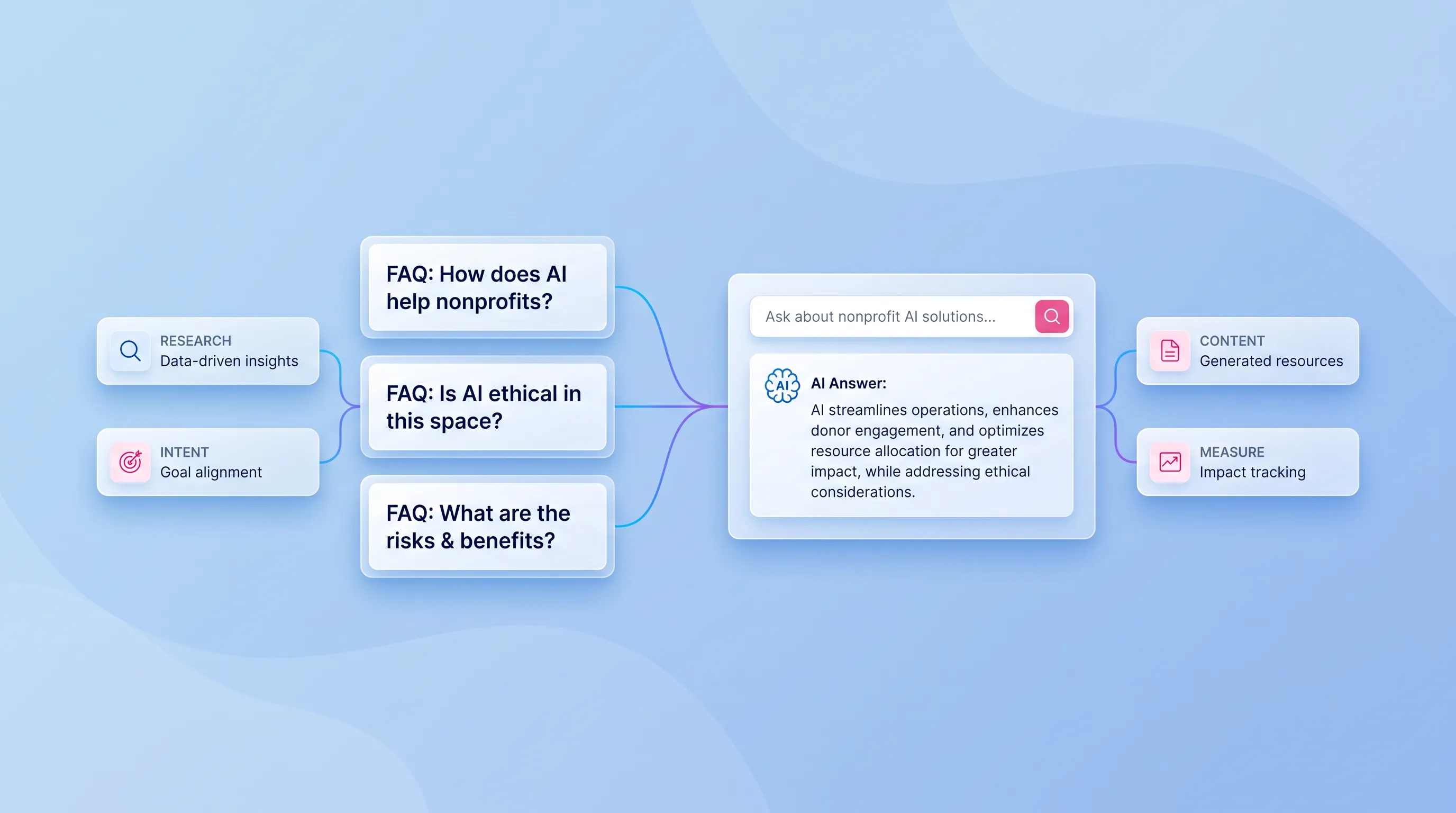
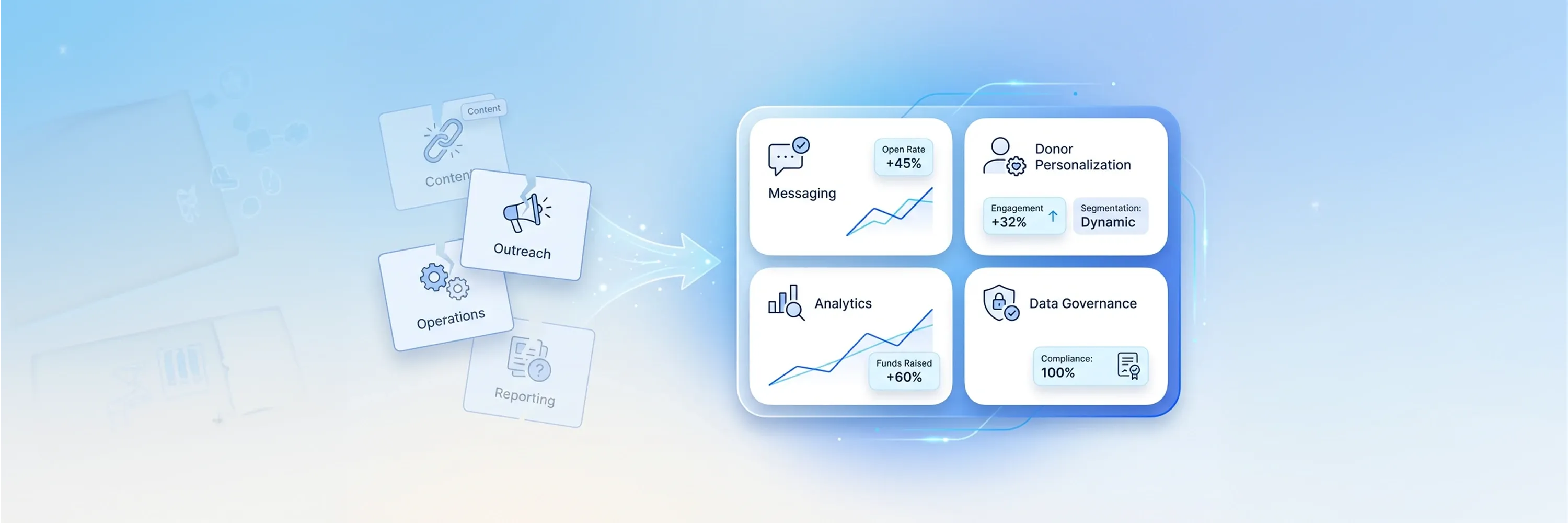
AI-powered nonprofit dashboard showing outreach, messaging performance, donor personalization, analytics, and data governance metrics

AI Content Creation Software for NGOs and Charities

In this article, we explore how to select and implement integrated digital platforms to manage messaging. We discuss the transition from fragmented writing tools to unified systems that connect content generation, distribution, and performance tracking.

Content authorSnoika FoundationPublished onReading time10 min read

Introduction

AI content creation software helps organizations generate, distribute, and track their digital messaging. Traditional search optimization rapidly loses ground to AI-generated answers, and this shift renders fragmented marketing systems ineffective. Many organizations struggle because they rely on disjointed tools that disconnect messaging from core mission data. A recent report reveals that while 92% of nonprofits use AI, only 7% see strategic impact. This large gap exists because isolated writing assistants cannot navigate modern search ecosystems or track donor interactions across different channels.

Integrated AI content creation software streamlines these workflows. A unified platform connects directly to existing databases, and this ensures messaging maintains an authentic voice and reduces staff workload. Consolidating technology builds a foundation that improves visibility across modern AI search engines. Organizations stop wasting hours on disconnected applications and start focusing on measurable outcomes. Teams can confidently distribute narratives that connect with supporters and satisfy the technical requirements of today's conversational algorithms.

Overcoming Data Fragmentation with AI Content Creation Software

Organizations need to satisfy the technical requirements of today's conversational algorithms, but they often adopt standalone writing apps to speed up draft production. They write newsletters in one application and draft social media posts in another. This approach creates disjointed communication systems. CDS Global notes that data fragmentation silently drains nonprofit mission impact because teams spend hours when they transfer information between incompatible platforms. Organizations can't maintain a unified digital presence with this disconnected setup.

Integrated AI content creation software helps leadership teams manage the entire communication lifecycle. A unified AI content software connects directly to central databases. This connection ensures that communicators pull information from a single reliable source.

Nathan Chappell serves as the Chief AI Officer at Virtuous Software, and he observes that organizations that treat AI as a side experiment often get busier instead of changing. Isolated writing tools add extra steps to daily workflows instead of simplifying them. In contrast, an integrated platform replaces these scattered applications with a secure framework. A cohesive system gives leadership teams the certainty that their outreach campaigns align with their core mission. This alignment helps teams execute a thorough NGO digital marketing strategy without losing hours to manual data entry.

Evaluate Thorough Platform Capabilities

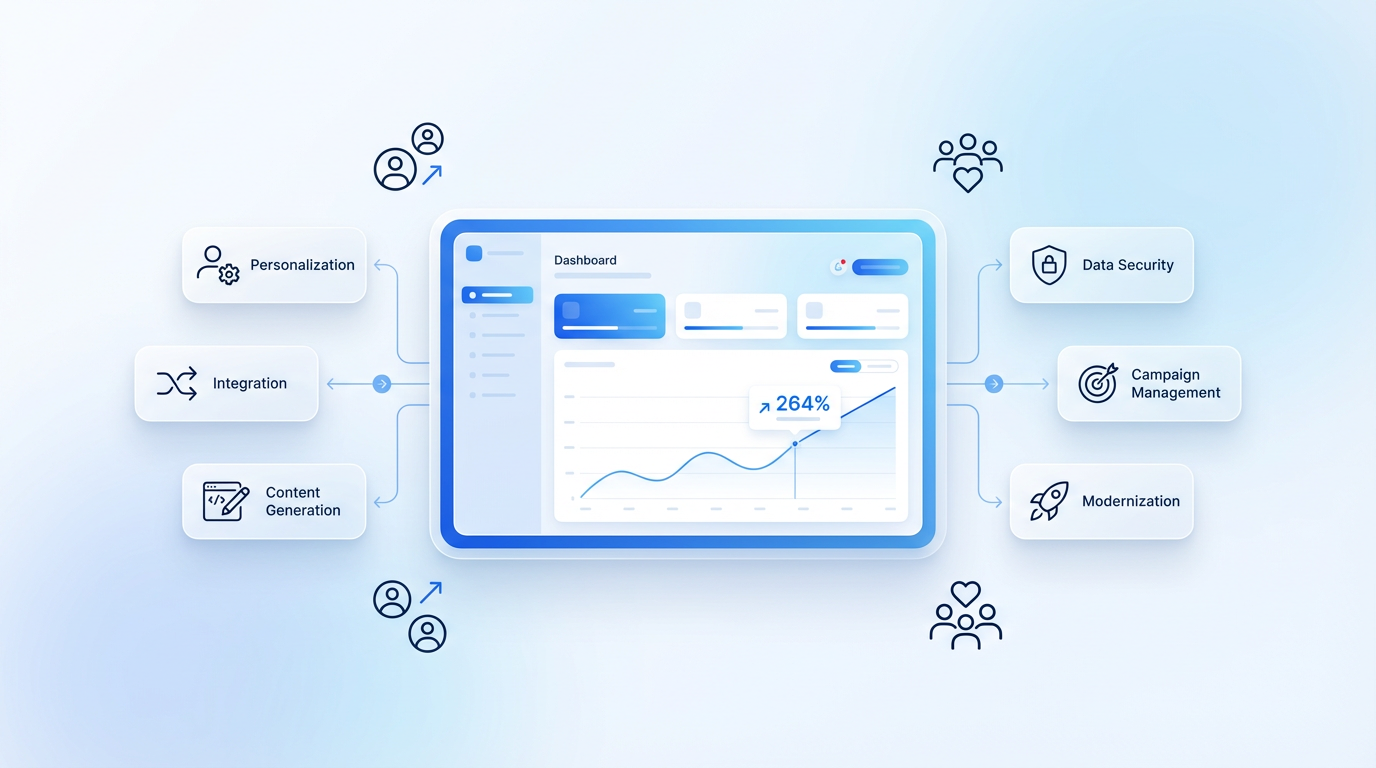
A clean SaaS marketing visual featuring a floating rounded dashboard UI, surrounded by dark blue line-icon modules representing various functions.

A unified system coordinates content generation with the specific context of an organization to help teams execute this digital marketing strategy. Standalone text generators don't understand the organization's history, mission, and past successes. Because they lack this context, these simple tools often produce generic text that fails to engage supporters. Thorough platforms solve this problem and anchor content production to established institutional knowledge. This integration helps teams take decisive action when they plan large outreach campaigns.

When evaluators look for the right platform, they prioritize systems that understand their specific communication goals. These modern solutions analyze past campaigns and learn how the organization speaks to its community. Teams need a secure environment to store these historical data sets and brand guidelines. A properly evaluated platform protects sensitive information and still uses it to shape public messaging. This structural capability allows teams to scale their outreach operations and avoid sounding robotic. The resulting messages resonate with the audience because they stem from genuine organizational data. Organizations maintain control over their narratives and build stronger connections with their supporters.

Connect with Donor Databases

Technical integration between communication platforms and donor databases builds these stronger connections and drives meaningful personalization. When AI content software links directly to donor records, organizations can tailor their messaging based on past giving history and volunteer interests. This connected approach replaces mass emails with individualized communication. For example, Animal Haven increased recurring donors by 264% after the organization implemented personalized donation appeals that relied on artificial intelligence.

Customized messages show supporters that the organization values their specific contributions. This steadfast commitment to individual donors increases overall support and long-term loyalty. When leadership teams evaluate AI for NGO digital marketing strategies, they look for software that automatically synchronizes with existing relationship management systems. This synchronization removes manual data exports and helps staff launch targeted campaigns quickly. The technology handles the difficult work and matches the right message to the right supporter.

Preserve Authentic Brand Voice

The technology matches the right message to the right supporter, and organizations establish deep connections with their communities through consistent communication. When administrators train language models on proprietary organizational data, they help maintain this authenticity. When a platform learns from previously published reports and successful appeal letters, it adopts the unique vocabulary of the institution. Bruce Dewar leads LIFT Impact Partners, and he notes that AI chatbots that learn from internal organizational data reflect the brand voice better than generic public models.

A consistent tone across all digital channels signals professionalism and competence. This consistency reinforces a trusted relationship between the organization and its supporters. Donors recognize the familiar voice, even as the organization scales its content production to reach wider audiences. Organizations preserve this authentic voice to ensure that technological efficiency doesn't compromise the human element of the mission.

Modernize Nonprofit Marketing Tech

Many organizations fail to achieve this technological efficiency because they still rely on outdated software that isolates data in separate departments. Organizations upgrade this legacy software to modern standards to change how teams collaborate and share information. A thorough platform evaluation reveals which outdated applications hold the organization back. When organizations modernize nonprofit marketing tech, they eliminate communication bottlenecks and reduce software subscription costs.

Modern unified systems offer reliable performance that legacy tools simply can't match. Staff members don't waste time because they no longer need to make incompatible programs talk to each other. They use a single interface to manage campaigns, generate drafts, and track engagement metrics. This streamlined infrastructure empowers the entire organization to work toward common objectives. A modern marketing technology stack allows teams to focus their energy on strategy and community building instead of fixing software errors.

Distribution and Generative Engine Optimization

Teams focus their energy on strategy and community building, and draft generation represents only the first step in the communication lifecycle. Organizations systematically distribute that content across multiple digital channels to reach their audience. Integrated AI content creation software automates this distribution process and adapts the core message for different platforms. This automation allows teams to publish consistent narratives across email newsletters, social media, and websites simultaneously.

Beyond traditional publishing, organizations now face the challenge to appear in conversational search algorithms like ChatGPT and Gemini. This new practice requires Generative Engine Optimization (GEO). A modern platform helps teams structure their information so that language models can easily find and cite it.

To improve AI visibility, organizations apply specific formatting techniques:

  • They add clear statistics to support major claims.

  • They use simple headings to organize complex ideas.

  • They provide direct answers to common questions.

  • They include relevant quotes from subject matter experts.

LLMrefs reports that web pages with structured lists and statistics achieve 30-40% higher AI visibility in conversational search results. A unified platform provides the confident tracking tools that monitor these citations. Teams use precise analytics to see exactly which language models reference their articles and case studies. This tracking data helps organizations refine their SEO for charities AI strategy and secure their position as authoritative voices in their respective fields. When organizations monitor citations, they ensure their mission reaches the public accurately.

Close Performance Gap Through Analytics

Organizations ensure their mission reaches the public accurately, and then they need to measure how their published materials perform with their supporters. Modern nonprofit marketing tech links content generation directly to engagement analytics, and this connection provides undeniable proof of campaign effectiveness. When teams track donor behavior across different platforms, they move beyond simple page views to understand exactly what messages inspire actual financial contributions.

Fragmented systems make it difficult to connect an email newsletter directly to a specific donation. An integrated platform solves this analytical problem and tracks the entire supporter journey from the first click to the final gift. Nonprofits consolidate their technology and often see donation increases of 20% to 30% compared to organizations that rely on disjointed applications.

Data from unified systems gives administrators convincing reasons to expand successful campaigns. Predictive donor intelligence tools analyze this continuous stream of engagement data and can triple major gifts outreach. The software identifies which supporters engage most frequently with specific narratives. Staff members then focus their energy on cultivating the most promising relationships instead of guessing what content works. Administrators also review AI search engine visibility reports to verify that their core mission ranks well across conversational platforms. This complete analytical picture ensures that every piece of published content contributes to measurable fundraising outcomes.

Navigate Implementation and Data Governance

Despite these measurable fundraising outcomes, resource-constrained organizations often hesitate to adopt integrated platforms because they worry about implementation costs and data security. However, transitions to integrated AI content creation software require a structured approach rather than a large initial investment. Teams can overcome financial barriers when they execute a steady rollout that addresses immediate needs.

Administrators follow a clear deployment sequence to manage costs and build technical competence:

  1. Teams audit existing communication tools to identify overlapping software subscriptions.

  2. They cancel redundant applications to afford an integrated system.

  3. They draft clear data governance guidelines before they connect internal databases.

  4. Staff members pilot the new platform with a small group to test privacy controls.

  5. Administrators expand software access to all departments after they confirm security protocols.

Organizations must establish proper data governance during this transition. They handle sensitive donor information, and they must maintain strict oversight when they connect this data to AI content software. Currently, 47% of nonprofits lack a formal AI policy, and this absence limits their ability to deploy these systems responsibly. Without established guidelines, these organizations might accidentally expose confidential donor records when they generate campaign materials.

Organizations protect themselves from severe legal consequences when they secure this information. For example, organizations that fail to secure donor information face fines up to €20 million under the General Data Protection Regulation. Administrators must select nonprofit marketing tech that includes built-in privacy protections and encryption features. These secure platforms ensure that staff members can generate personalized outreach and comply with international privacy laws.

Conclusion

In summary, professionals use these secure platforms to build a foundation for community trust and donor engagement. Many professionals waste energy on disconnected tools when AI content creation software offers a unified approach to digital outreach. In the future, professionals will centralize workflows and build a resilient communication strategy that adapts to algorithmic changes. They increase digital impact when they assess specific data bottlenecks and pilot an integrated solution today. They also protect sensitive information and maximize reach when they review how a specialized agency handles digital transparency.
Many grantmakers allow you to use capacity-building funds to purchase technology upgrades. You should review your grant agreements to see if they restrict software investments. If your current grants don't cover these expenses, you can apply for specific technology grants that help nonprofits modernize their operations.

Your team usually needs two to four weeks to learn the basic functions of a unified system. You should assign one person to master the software first and teach the rest of the staff. This method helps your employees adapt to the new interface because they don't feel overwhelmed.

You can partner with the Snoika Foundation to help your organization reach a wider audience. They empower nonprofits to become visible and trusted in AI search engines like ChatGPT and Gemini. Their strategies amplify voices that serve the public good, and they turn digital invisibility into measurable influence.

You need to present a clear cost analysis that compares your current manual workflows against automated processes. Board members respond well when you show them how ai content creation software reduces administrative overhead. You can also invite a vendor representative to answer their technical questions during a board meeting.

You must remove duplicate entries and update old contact information before you migrate your files. A clean database ensures that your new system sends messages to the right people. If you don't complete this step, you risk sending inaccurate appeals that frustrate your supporters and damage your reputation.

Book a Demo

Book a time that works best for you

You Might Also Like

Discover more insights and articles

illustration of AI-driven workflow optimization showing productivity metrics, document processes, and credibility verification dashboard

Best AI Tools for Content Creation for Nonprofits

In this article, we explain how organizations can move past reactive experimentation and build a solid foundation for their automated workflows. We provide a decision matrix that helps teams choose the right platforms according to their specific capacities and operational realities.

diagram showing a hybrid content creation workflow combining AI drafting, human review, fact-checking, and publication to build trust and efficiency

Automated Content Creation Without Losing NGO Credibility

In this article, we explain how to integrate automated systems into drafting workflows and maintain institutional credibility. We also explore practical governance frameworks that protect sensitive data and help organizations rank higher in modern search environments.

illustration showing transformation from an outdated website to an AI-optimized site with increased organic traffic and structured data elements

Nonprofit SEO That Builds Authority in AI and Google Search

In this article, we explain how organizations can adapt digital presence to changes in artificial intelligence search engines. We provide methods to structure data and build trust, and this helps missions remain visible to supporters.

Infographic showing transition from traditional web content to AI-optimized digital footprint using schema markup, unified messaging, and authority signals for improved trust and visibility

AI and Content Marketing: A New Visibility Model for NGOs

In this article, we examine how the transition toward generative response models alters digital visibility for mission-driven initiatives. We explain the exact structural adjustments that ensure organizations remain discoverable and relevant.