Introduction
Search behavior has fundamentally changed because AI-generated answers now dominate search results and intercept potential supporters before they ever reach organization websites. This shift means that traditional optimization tactics no longer sustain mission visibility. Marcus Johnson serves as the Digital Strategy Director at Nonprofit HR, and he states that Answer Engine Optimization fundamentally changes how nonprofits think about discoverability and donor engagement online. This guide explores how Answer Engine Optimization (AEO) and unified automation protect digital presence and the authentic relationships organizations rely on. Successful integration of ai for ngo digital marketing requires aligning these new tools with human-centered missions.
Answer Engine Optimization for Greater Visibility
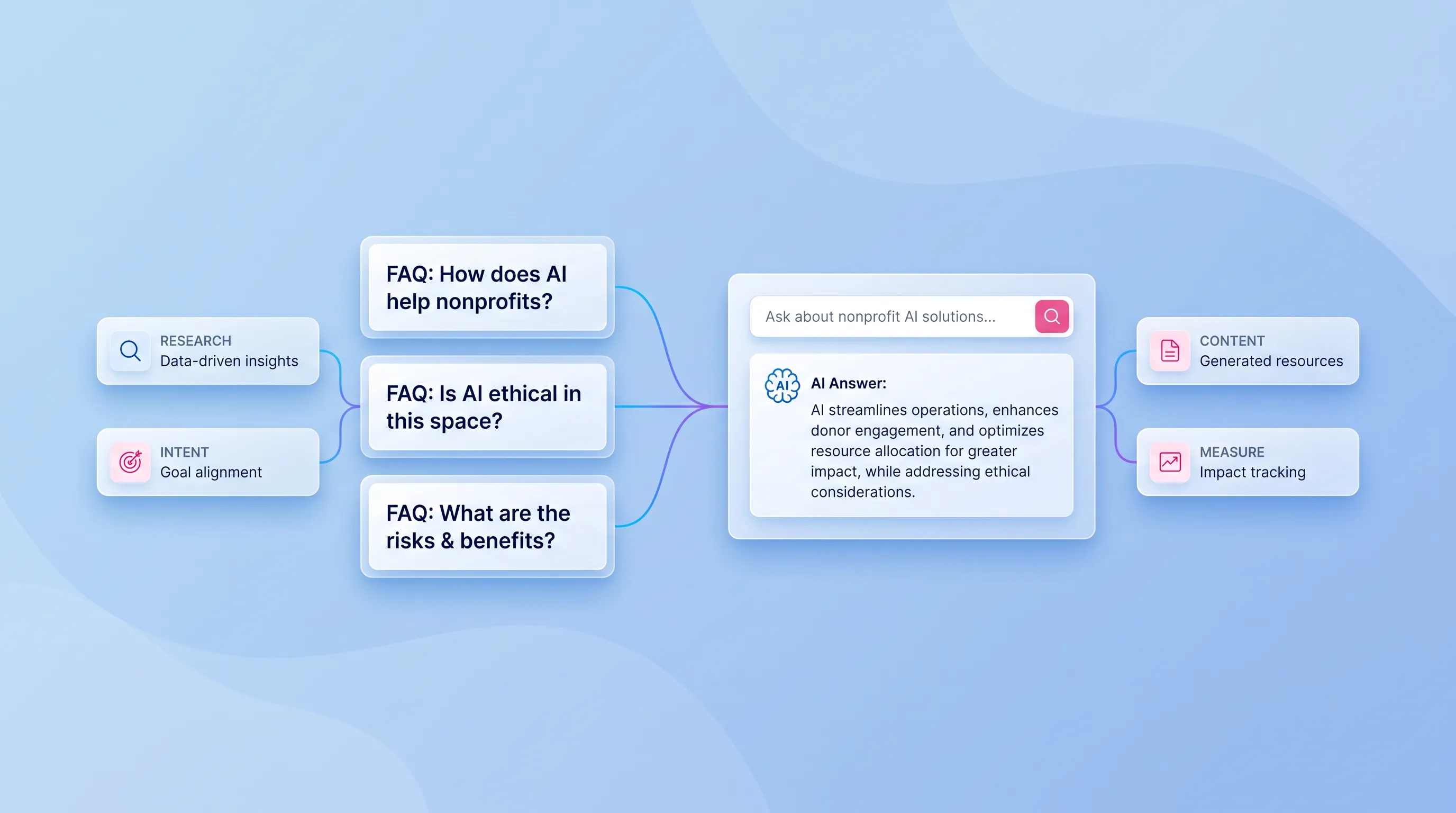
Answer Engine Optimization (AEO) forces organizations to move away from traditional Search Engine Optimization (SEO) methods. Search engines now use algorithms to answer questions directly on the results page. Nonprofits lose their visibility to new supporters if they rely only on older search tactics. Jennifer Liu serves as Head of Digital Innovation at the Global Fund for Women, and she notes that Answer Engines like Perplexity change how donors find organizations. She also explains that traditional optimization alone fails as a sufficient strategy. Modern search tools look for specific information rather than just matching keywords.
Technical Implementation of Answer Engine Optimization
This shift means an updated AI nonprofit marketing approach requires a strong focus on structured data tags. Webmasters help answer engines read and display information with confidence when they organize data clearly. This clear organization makes information more reliable for the people who search for it. Organizations improve their search visibility practices when they adjust how they publish their research and reports.
These technical adjustments include the following steps:
-
Convert complex reports from Portable Document Format (PDF) files to HyperText Markup Language (HTML) pages.
-
Organize website information with clear code.
-
Publish direct answers to common donor questions on primary landing pages.
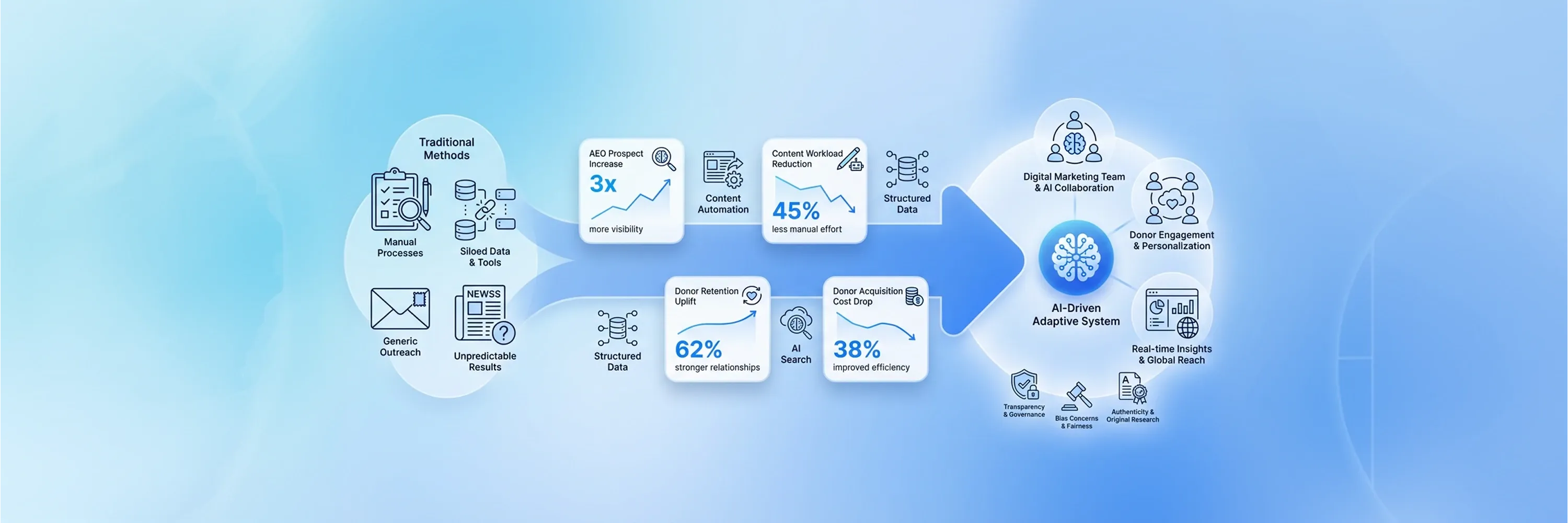
These technical changes help algorithms find and understand the organization's mission. A 2025 HubSpot study shows that Answer Engine Optimization generates three times more qualified prospects than traditional search methods for cause awareness. An updated digital infrastructure ensures that the organization's message reaches the right audience. Organizations must produce a steady stream of content to keep this new audience engaged.
Automation Authenticity Balance with AI for NGO Digital Marketing
Large content production requires teams to maintain an authentic human voice. Many organizations use AI for NGO digital marketing to write newsletters, draft emails, and create social media posts faster. However, this content automation often sounds robotic if teams fail to guide the software properly. Algorithms generate text based on patterns, and they lack the genuine emotion that drives charitable donations. Nonprofits need certainty that their messages resonate with their supporters.
Balancing Automation and Human Storytelling in AI Content
Teams risk a disconnected tone from their own mission when they rely entirely on automated writing. An effective AI nonprofit marketing plan always keeps human editors in control of the final message. Editors inject real stories, emotional nuance, and specific details into the generated drafts. This human touch secures donor relationships because supporters read words that reflect actual human experiences. Writers use an automated writing assistant to handle the initial drafting phase and reserve their energy for refinement. A balance between speed and genuine storytelling ensures the organization communicates effectively without losing its soul. Proper oversight turns basic text into compelling narratives.
AI Visibility Strategy for Content
Organizations require strict human oversight when they generate content through artificial intelligence to meet donor expectations. Donors support causes because they feel a personal connection to the mission. Supporters quickly notice the lack of genuine emotion if an organization publishes raw computer-generated stories. This scenario drives supporters away and damages long-term funding efforts. A recent study by Candid and GiveDirectly found that donors are 84% less likely to donate when they discover computer-generated appeals without disclosure.
Transparency and authenticity prevent this alienation. An effective AI visibility strategy demands that staff members review every piece of automated content before publication. Writers add details about local impact, include quotes from actual beneficiaries, and ensure the tone matches the organization's established voice. This careful review process creates a sense of safety for supporters who want to know their contributions fund real human efforts. Honest storytelling remains the foundation of charitable donations. Staff members need efficient systems to share these stories consistently.
Effective Production Expansion
Content automation reduces the daily workload for marketing staff when organizations implement it thoughtfully. Routine updates, grant reports, and event invitations take hours of staff time each week. Automation handles these repetitive tasks quickly. A 2025 study from Tech Soup indicates that content automation reduces workload by 45% and maintains the quality of supporter engagement.
This newly available time allows staff to focus on complex campaign strategies and face-to-face community building. However, operational efficiency does not need to compromise the quality of outreach. A successful digital approach uses software to build frameworks rather than replace the human perspective. Leaders build trust when they use technology to support their staff instead of replacing human workers. Efficient production systems give writers more energy to craft personal appeals that actually inspire action. Writers must direct these appeals to the correct audience to ensure success.
Unified Analytics Data Infrastructure

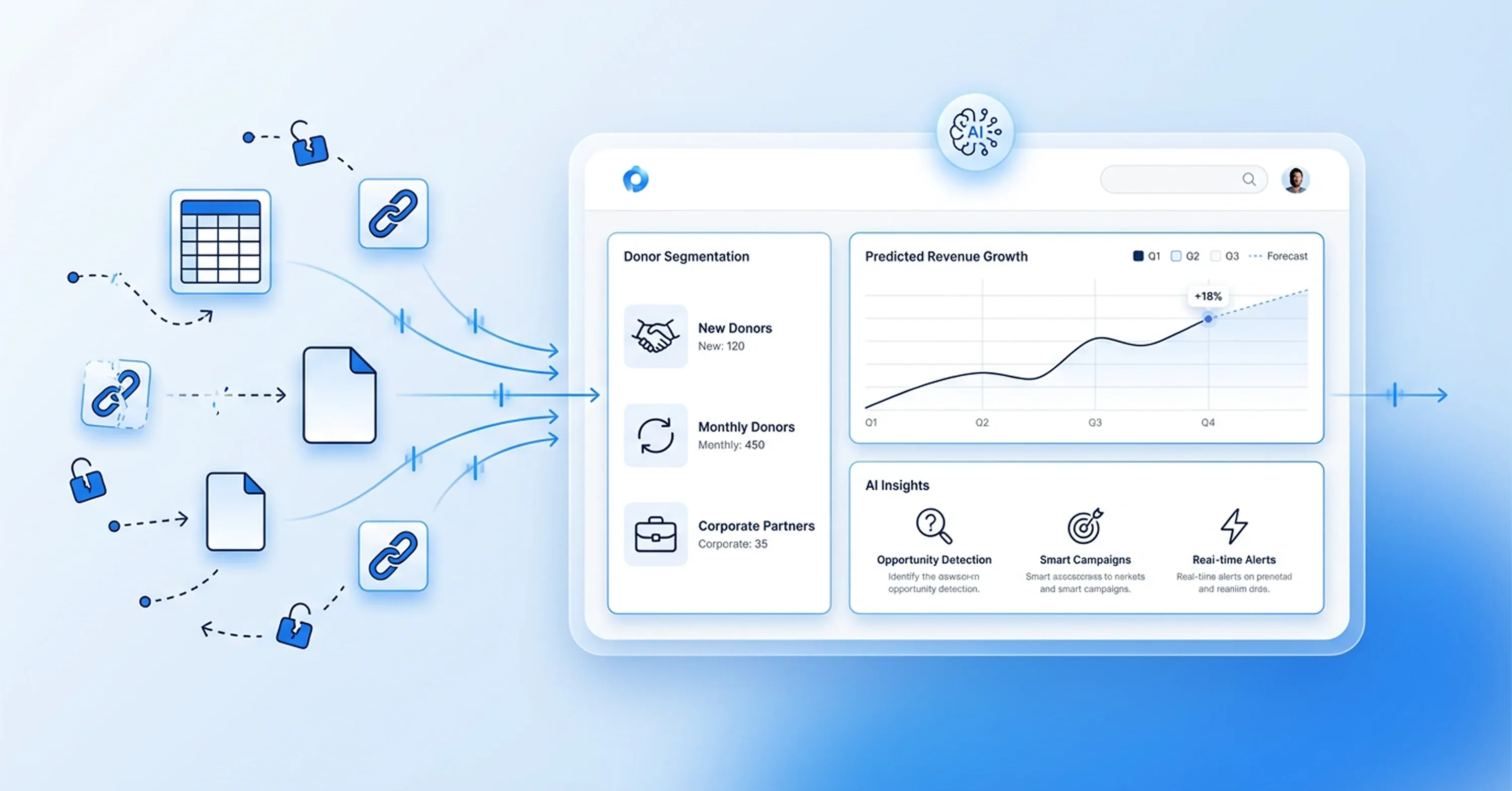
A transition from disconnected spreadsheets to unified Customer Relationship Management (CRM) systems improves donor segmentation. Many organizations struggle to understand their supporters because they keep email lists, donation records, and event attendance in separate files. This fragmented approach hides important patterns. An integrated AI visibility strategy connects these different data points into one clear system. Algorithms analyze giving histories and predict future engagement with high precision when organizations centralize their data.
How Predictive Analytics Improves Donor Engagement and Efficiency
Better data infrastructure directly improves the quality of outreach campaigns. A 2025 Blackbaud report shows that organizations that implement predictive donor segmentation experience a 62% improvement in campaign personalization and retention. Unified systems help teams send specific appeals to the people most likely to respond instead of identical mass messaging. Algorithms identify which supporters prefer monthly donation programs and which ones respond better to annual charity galas.
This targeted approach saves money and resources. According to a recent Accordant study, predictive analytics provides a 38% average cost reduction for donor acquisition. Organizations stop guessing what their supporters want when they apply AI for NGO digital marketing to their analytics. They use integrated data platforms to understand donor behavior accurately. Unified infrastructure turns scattered numbers into clear strategies that support long-term mission growth. These internal strategies help organizations publish reliable data that external algorithms trust.
Earn AI Citations Through Earned Media
Search algorithms evaluate the credibility of information before they display answers to users. Algorithms prioritize content from organizations that demonstrate Experience, Expertise, Authoritativeness, and Trustworthiness (E-E-A-T). Public relations campaigns and original research signal this authority directly to artificial intelligence models. When reputable news outlets link to an organization's research report, artificial intelligence recognizes the source as trustworthy. Organizations need a deliberate ai visibility strategy to earn these citations.
This strategy focuses on publishing unique data instead of repeating existing information. Original studies prove the soundness of an organization's mission and establish the group as an industry leader. Artificial intelligence systems reward this verified expertise and feature the organization in direct answers and algorithmic summaries.
The Role of Transparency and Media Coverage in AI Visibility
Primary research also builds deeper relationships with supporters who look for credible institutions. Supporters evaluate the conviction behind an organization's work through the transparency of its public communications. Kathryn Finney notes that transparency builds competitive advantage for nonprofits because donor authenticity demands increase as artificial intelligence becomes prevalent. Organizations demonstrate the impact of their programs through earned media coverage and independent journalism. An AI nonprofit marketing approach integrates these media appearances to strengthen credibility across digital platforms. Furthermore, organizations can study specific search marketing tactics to understand how external links influence algorithm behavior and increase institutional reach.
Consistent media coverage confirms the organization's real-world impact and secures its position in an automated digital landscape. Public relations efforts ultimately force answer engines to cite the organization as the definitive source on specific social issues. Organizations must govern their internal technology carefully as they build this public authority.
Establish AI Governance for Donor Trust
Organizations require oversight to maintain supporter confidence when they deploy new technology. Donors share sensitive financial and personal information with organizations because they expect privacy. When organizations integrate algorithms into their daily operations, they guarantee the protection of this donor data above operational speed. A 2025 Nonprofit Finance Fund survey shows that 89% of organizations cite data security and bias mitigation as top concerns when they implement algorithmic tools.
However, a gap exists between these concerns and actual operational practices across the sector. The Center for Effective Philanthropy found that 92% of organizations lack documented policies for algorithmic governance, and only 14% conduct regular bias audits. This lack of structure exposes organizations to reputational damage and legal risks.
Building an Ethical Framework for AI in Nonprofits
Organizations establish clear rules to ensure ethical technology use. They create a formal framework because it provides supporters with comfort and demonstrates institutional responsibility. Organizations that rely on AI for NGO digital marketing require guidelines that govern how software processes information.
These organizations build a successful ethical framework through several specific steps:
-
A data privacy policy restricts algorithmic access to sensitive donor records.
-
Human editors review all automated communications before public distribution.
-
Quarterly audits identify and eliminate bias in predictive analytics models.
-
A public statement explains how the organization uses automation tools.
These governance practices ensure that technology serves the mission without compromising ethical standards. Organizations build lasting trust when they treat donor information with respect and transparency. This trust serves as a firm foundation for all digital outreach efforts.
Conclusion
To summarize the major points, organizations adapt to technological shifts to remain visible to the right people. They use artificial intelligence in marketing efforts to amplify their human connection rather than replace it. These groups navigate this transition safely when they audit their internal AI visibility and establish clear governance policies. In the future, organizations will ensure their mission reaches the right audience and remains a trusted resource through an integrated approach. They require thoughtful planning to make AI for NGO digital marketing effective. Organizations build their digital presence further when they review SEO for nonprofits and update current strategies.