Planning campaigns that convert
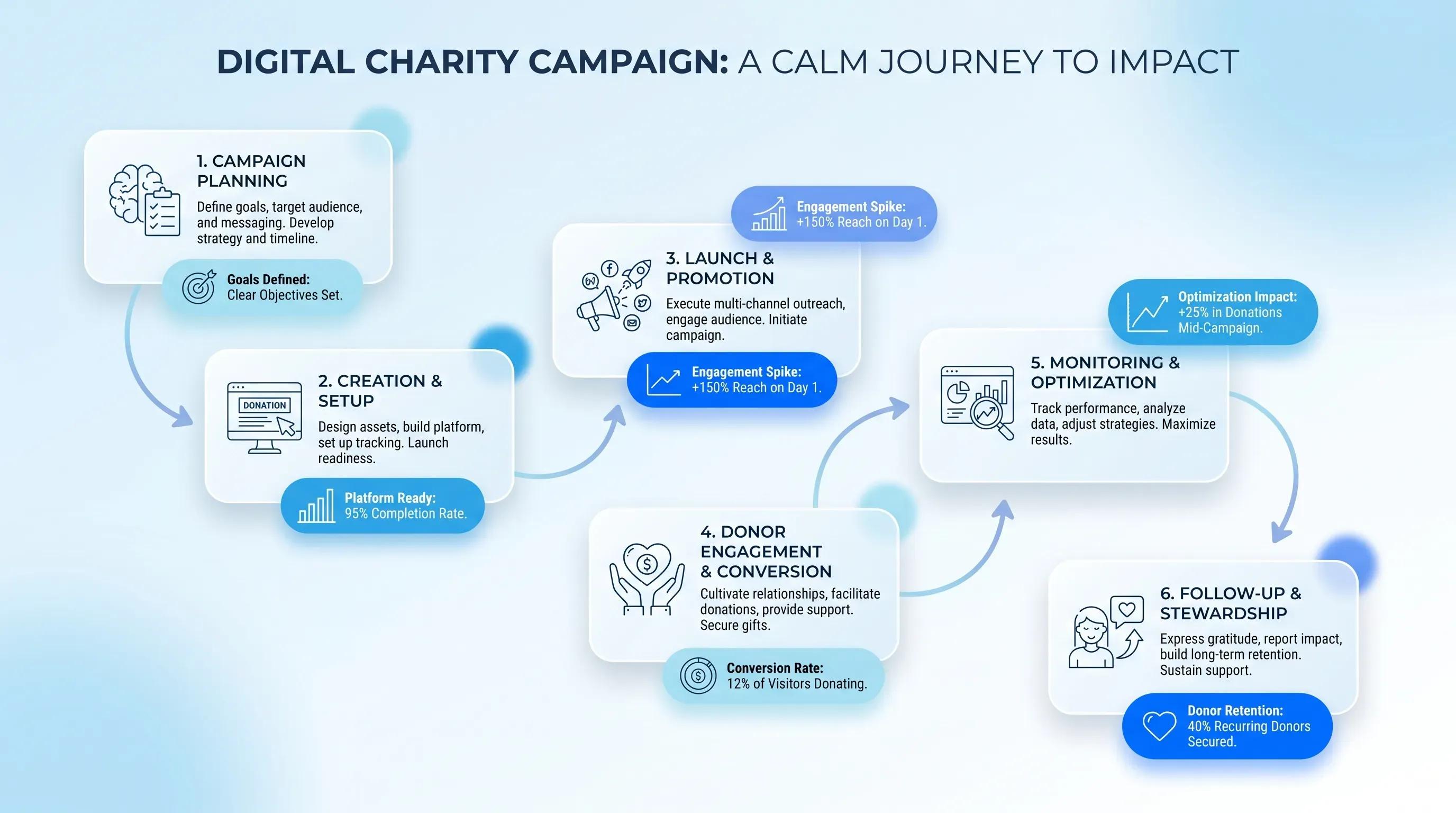
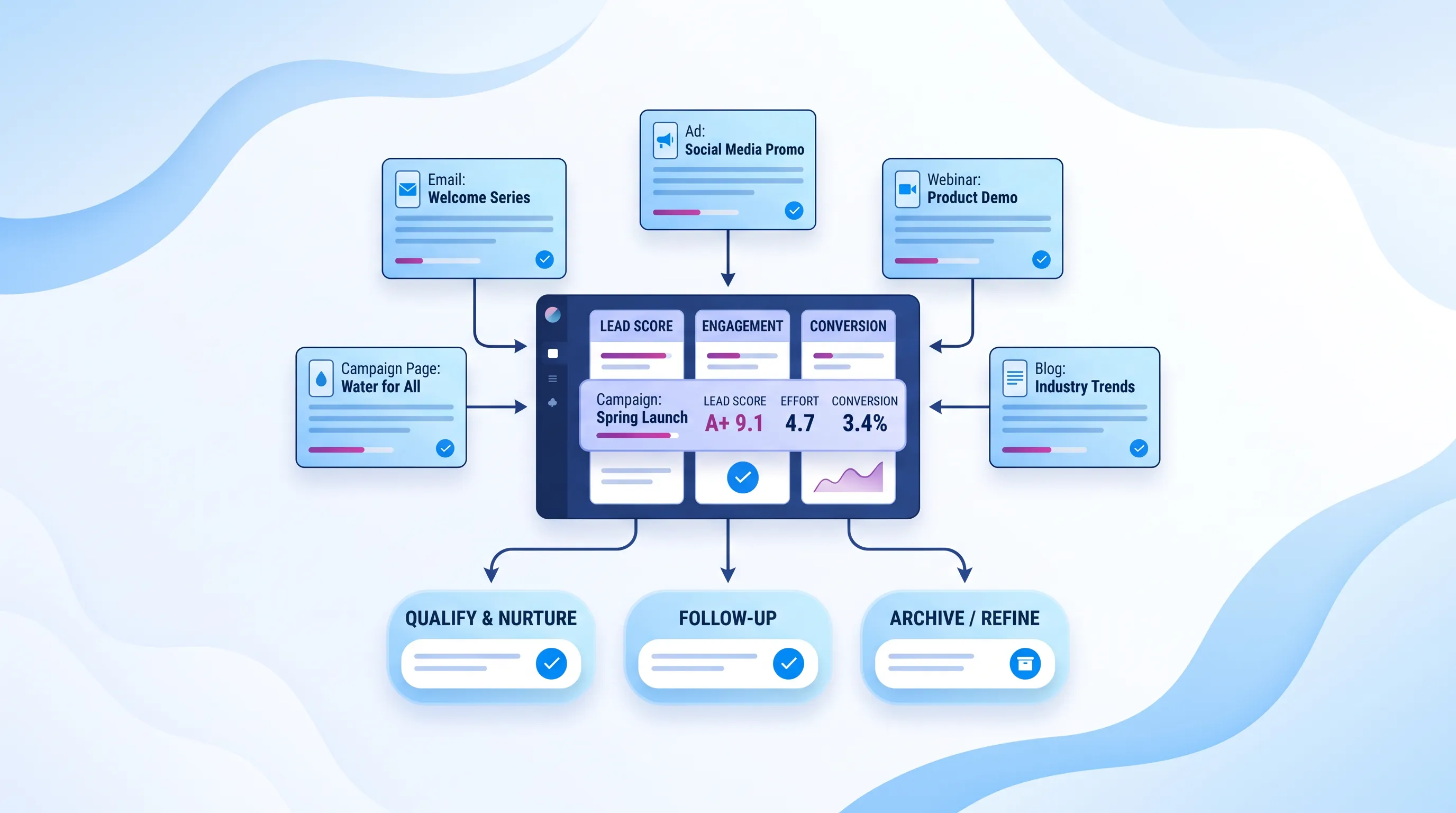
In digital marketing for charities, the alternative to reactive posting is a planned campaign. Instead of scattering appeals whenever you remember, you pick one goal and pull every channel toward it for a set window. A campaign is where your content turns the website and donor emails from the earlier sections into one push.
The structure is the same every time, which is what makes it repeatable. Set a clear goal with a number and a deadline. Decide your channels. Write one call to action and use it everywhere, because a campaign that asks for three different things gets none of them done. Then build the supporting pieces around that single ask, starting with a landing page and a story before you add the email sequence.
Running charity online campaigns for fundraising
Here's how charity online campaigns fit in a fundraising push. Start with a target and a deadline, say £8,000 by the end of the month to cover winter supplies. That number gives supporters something concrete to rally behind and gives you a clear way to measure progress. Then build a dedicated landing page for the appeal rather than sending people to your generic homepage, because a focused page with one ask converts far better than a page trying to do everything.
Choose two channels you can sustain: email to your existing list plus social to reach beyond it. Lead with a supporter or beneficiary story. Then run a short sequence of follow-up emails that shares progress from launch through the final day, so momentum builds instead of fading after the first send.
Two touches keep energy high through the middle of a campaign:
-
A matched-giving moment, where a funder doubles gifts for 48 hours. 84% of donors say they're more likely to give when a match is offered, and mentioning a match lifts the response rate by 71%, according to Double the Donation.
-
Visible progress updates, a thermometer or a running total, so people see their gift moving the needle and feel the pull to push it over the line.
None of this costs more than the time to plan it. The coordination is the value. The same supporter who reads your story and gets a well-timed follow-up after landing on a focused page is worth far more than the one who sees a lone post and scrolls on.
Recruiting volunteers online
The same method for charity online campaigns works when you're asking for time instead of money, with one shift in mindset. A volunteer is looking for purpose and a place to belong, so the offer is the experience. Frame the ask around what they'll be part of, and the rest of the campaign structure carries over directly.
Start with a clear role description. State what the role involves and what someone gets out of it, because vagueness is the fastest way to lose an interested person. Then cut the friction in signing up. If your form asks for fifteen fields and a CV before someone can express interest, most will quit halfway. Ask for a name and an email to start the conversation, and gather the rest later.
Real volunteer stories do the recruiting work that no job advert can. A short profile of someone who started nervous and now runs a Saturday session tells a prospective volunteer exactly what they're walking into. And once someone raises their hand, nurture them. A prompt, warm reply and a clear next step turn an enquiry into an active volunteer, while silence turns it back into nothing. That follow-through is where most charities lose people, and it's the cheapest part of nonprofit audience engagement to get right.
Building awareness for nonprofit audience engagement
Charity online campaigns and emails work best when people already know who you are. Awareness work fills that top of the funnel because it puts the cause in front of new people long before you ever ask them for anything. Get this right and your campaigns convert better, because you're asking warm strangers instead of cold ones.
The tactics are low-cost by design. Social media keeps your cause visible between campaigns. Local press will run a strong human-interest story for free, and a single article can reach an audience you'd never afford to buy. Partnerships with a local business or a complementary charity put you in front of an audience that already trusts the partner, which shortens the distance to trusting you.
The most underused channel is the supporters you already have. People who care about your work will share it if you make sharing easy and give them something worth passing on. That word-of-mouth reach is more credible than anything you publish about yourself, which is why genuine nonprofit audience engagement beats a paid follower count every time. The aim is a steady stream of people who've encountered your cause and, when the moment comes, can give or volunteer.
Measure awareness by whether it feeds the rest of the system. A post that earns nonprofit audience engagement worth having sends a new person to your site or brings them into a campaign. Awareness that never connects to the next stage is just noise, so keep tying it back to the website and the email list that turn attention into support.
Your first 90 days
You can't do all of this at once, and you shouldn't try. Work in order. Spend the first weeks fixing the website basics so nothing you do later leaks away. Then publish a few pages that answer the real questions supporters ask. Next, set up a simple donor email so you stop starting from zero. Only then plan your first structured campaign.
Consistent charity online campaigns beat sporadic bursts every time, and the order above means each step makes the next one work harder. Pick one action and start this week.
Snoika Foundation helps NGOs and nonprofits become visible and trusted across AI search engines like ChatGPT and Perplexity, as well as Google. If you want your pages surfaced in the answers donors and volunteers now rely on, book a demo and put your digital marketing for charities plan into motion with people who do this work every day.