Introduction
Organizations face new digital landscapes, and traditional website optimization alone no longer ensures that missions get discovered by supporters. Historically, these groups relied on standard search engine results to connect with donors, volunteers, and advocates. Today, organizations need new strategies because artificial intelligence platforms increasingly serve direct answers to user queries and alter how people find information online.
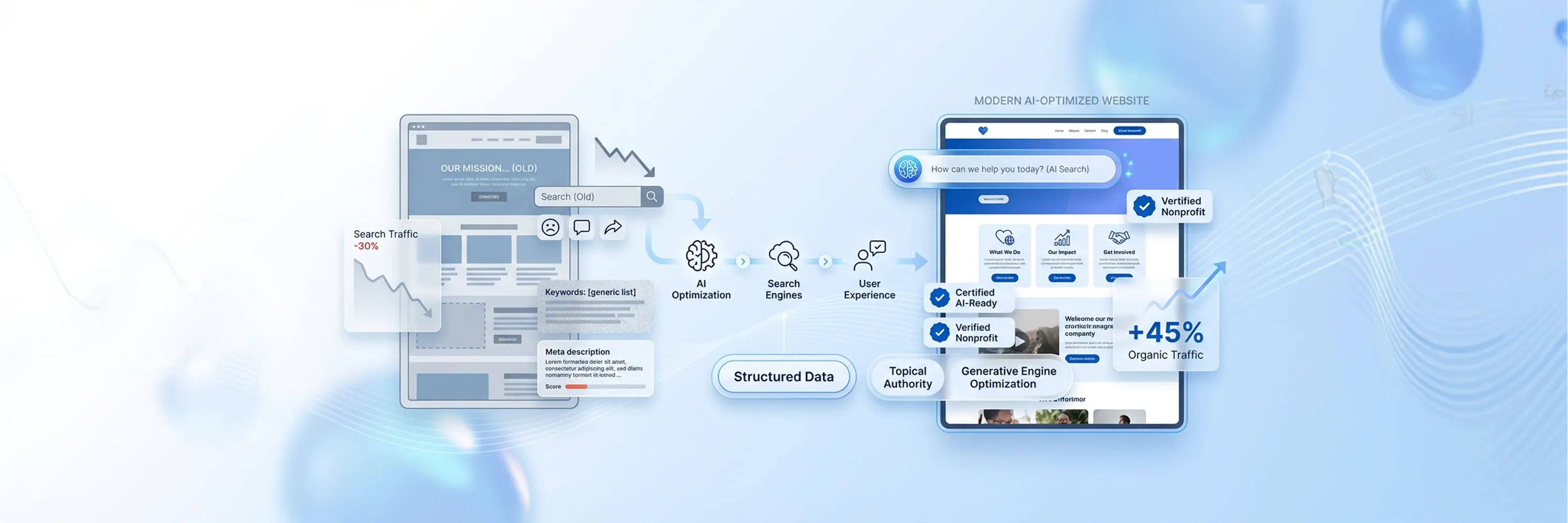
Between May 2024 and May 2025, zero-click searches rose from 56% to 69%. This increase means that users find necessary information and never visit an external website. When organizations use outdated tactics, they remain hidden from people who actively seek to support their causes. Organizations survive this transition when they adapt to how machines process and present data. The following sections explain the necessary steps to make organizations visible and credible to both search engines and generative models. Modern non profit seo practices help structure website data effectively and demonstrate human expertise to build trust and visibility.
Shift to AI-Driven Discovery
Organizations adopt these modern practices because traditional keyword ranking no longer guarantees website visibility. Artificial intelligence answers user questions directly on the search page, and this shift creates a zero-click environment where people read the generated response and leave the search engine instead of visiting external websites. This transition presents a challenge to charitable entities that need to maintain community awareness and donor support.
Data shows how these changes affect website traffic. A recent seventeen-organization study revealed that nonprofits experienced a 13% drop in organic search traffic. Furthermore, research on artificial intelligence search features found that organic click-through rates dropped 61% and went down from 1.76% to 0.61%. These numbers demonstrate that traditional search engine optimization strategies leave missions vulnerable.
Why Nonprofits Must Adapt Their SEO Strategy for AI-Powered Search
Organizations need certainty when they plan digital communication strategies. They must adapt their nonprofit SEO methods to serve the machines that compile these automated answers. This adaptation requires developers to provide structured and easily digestible information that algorithms process confidently. Webmasters risk losing connections with volunteers and donors if they ignore this technical shift.
Modern AI SEO focuses less on clicks and more on topical authority. Generative models pull information into their direct answers when an organization clearly answers common community questions on its website. Ultimately, organizations restructure their digital content so machines read it just as easily as human supporters do.
Generative Engine Optimization Basics
This restructuring process relies on Generative Engine Optimization (GEO). This practice represents the next phase of digital visibility and requires webmasters to structure website content so artificial intelligence models understand, verify, and cite the information in their conversational answers. Traditional optimization focuses on keywords and backlinks, but GEO emphasizes accuracy and content architecture.
These two approaches complement each other. An effective AI SEO strategy builds upon fundamental technical practices and adds the precision that large language models require. If an organization already produces high-quality content, webmasters only need to adjust how they format and organize that data.
How Structured Content Helps Nonprofits Appear in AI Search Results
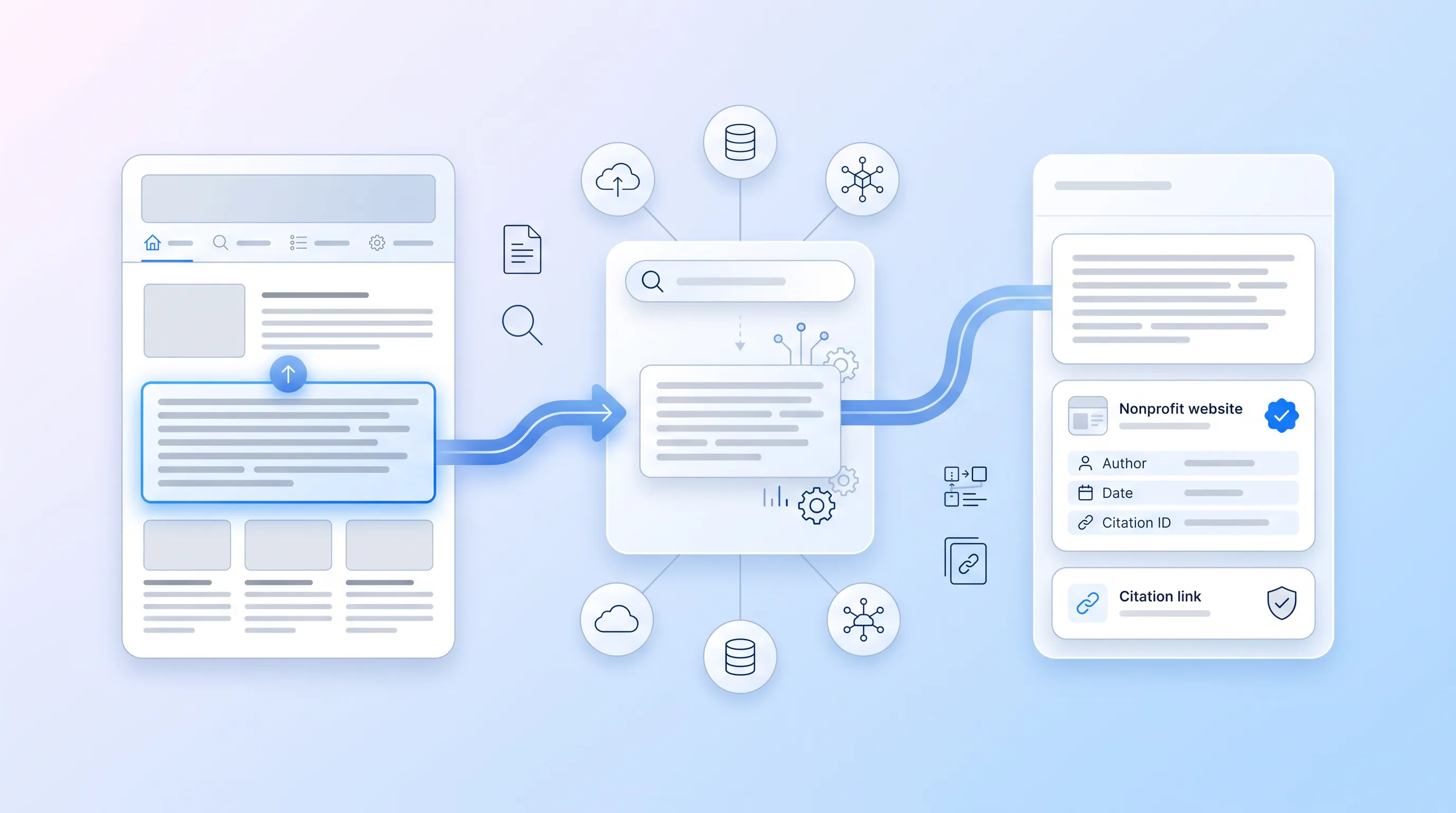
Search engine developers emphasize the importance of technical formatting for modern discovery. Google stated in a recent search central update that structured data is critical for generative search features. This code acts as a translator between human-readable text and machine algorithms.
Organizations adapt their content architecture for direct answers through specific structural changes:
-
Format common community questions as clear headings.
-
Write concise answers immediately below each heading.
-
Add statistical data to support organizational impact claims.
-
Include technical markup code to identify core programs.
These structural adjustments assure algorithms that the website contains accurate information. Machines cite the organization as a reliable source in their generated responses when they extract facts about charitable programs. This integration helps charities maintain their visibility in an automated search landscape.
Machine-Readable Nonprofit SEO

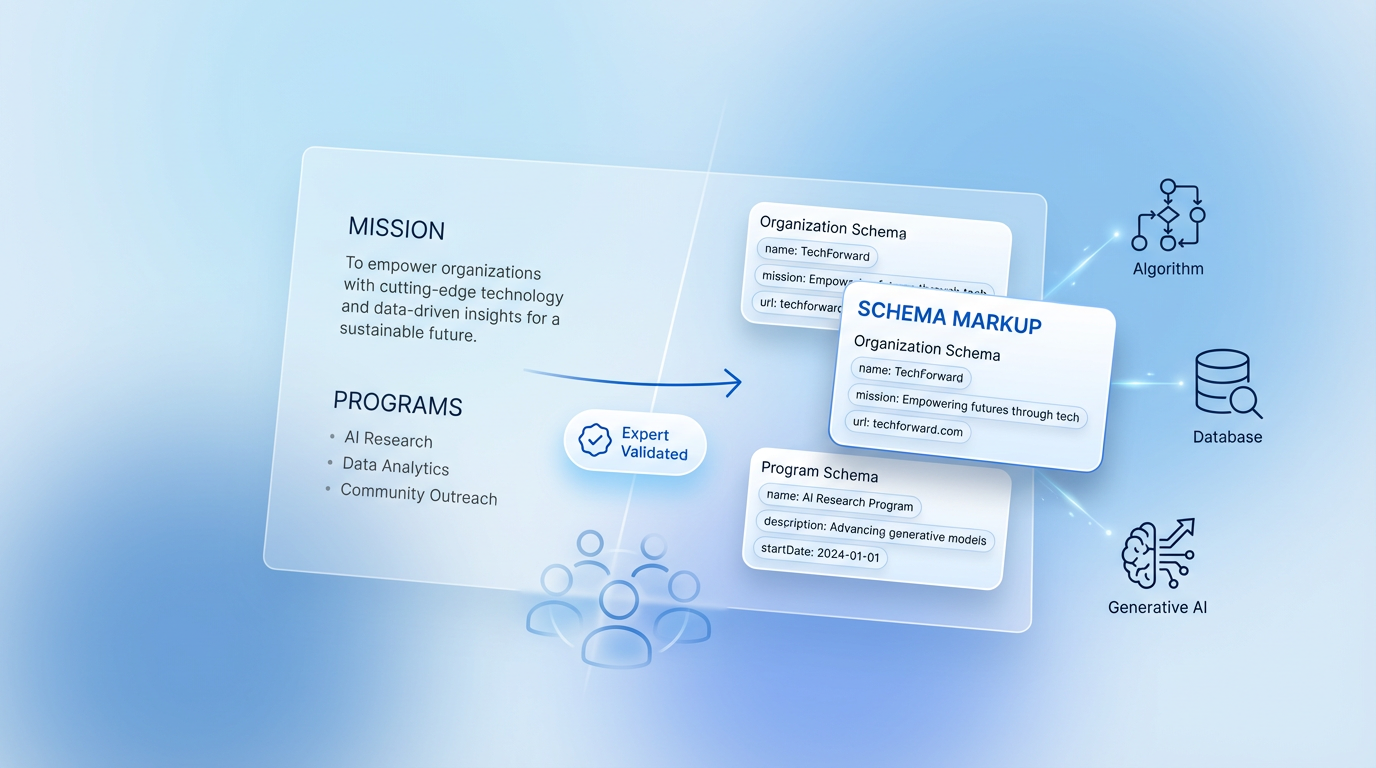
This automated search landscape relies on algorithms that do not understand complex mission statements and program descriptions without technical guidance. They need clarity to process charitable work accurately. Web developers use structured data markup to provide this clarity. This specialized code labels specific elements on a webpage and tells machines what the information means.
Developers change standard text into a factual database that generative models read when an organization implements proper schema markup code. Search engine representatives validate the value of this technical approach. A Microsoft engineer stated during a recent industry conference that schema markup helps language models process website content more effectively.
Why Structured Data Improves AI Accuracy and Nonprofit Visibility
This code directly impacts how artificial intelligence platforms present information. Recent technical testing showed that accuracy improves to 54% when websites use structured data markup. This improvement helps algorithms cite the organization correctly and summarize its services without hallucinations.
Effective nonprofit SEO relies heavily on this translation process. Machines ignore the organization entirely and pull answers from better-structured competitors if they cannot categorize a website's content. Webmasters implement specific types of markup code to comply with modern search engine requirements. The following sections detail the specific schema categories that establish technical authority for charities.
Organization Schema for Verification
Organization schema serves as a digital identity card for a charitable entity. This specific markup code belongs on the homepage, the contact page, and the primary informational pages. It contains essential details such as the official name, the tax-exempt status, contact information, and social media profiles.
Search engines use this structured data to verify the entity behind the mission. Algorithms establish trust in the brand when they find consistent organizational details across a website. This verification process forms the foundation of a modern NGO digital marketing strategy. Artificial intelligence platforms might confuse the charity with businesses that have similar names without Organization schema. Webmasters explicitly define the corporate entity in the code to ensure that search engines connect the correct programs to the right organization, and this builds topical trust over time.
Person Schema for Leadership
While Organization schema defines the corporate entity, Person schema identifies the human experts who work behind the scenes. Web developers apply this code to leadership directories, board member biographies, and author profile pages. The markup specifies an individual's job title, educational background, and professional affiliations.
Charitable organizations strengthen their credibility when they link these technical expert profiles to published articles and research reports. The content gains credibility when search algorithms connect a well-researched article about food insecurity to an author with ten years of social work experience. This connection serves as a critical component of modern optimization. Generative models prefer to cite information that verified experts write instead of anonymous contributions. Person schema secures this recognition and proves to the algorithms that real and qualified professionals guide the organization's mission and write the published content.
Service Schema for Core Programs
After webmasters verify the organization and its professionals, they use Service schema to define the specific assistance programs that an organization provides to the public. Webmasters apply this markup to individual program pages, such as a food pantry schedule, an after-school tutoring service, or a legal aid clinic. The code highlights the service type, the geographic service area, and the target audience.
Artificial intelligence platforms rely on this definitive structure to extract accurate details when users search for local help. The algorithm scans for local entities that use Service schema if someone asks a conversational model where to find winter coats for children. Websites with this proper formatting win these placements. This markup changes vague program descriptions into structured data points, and it builds relevance because it matches the organization's capabilities directly to the community's immediate needs.
Experience and Trust on Budget
These structured data points build technical relevance, but organizations also demonstrate their human expertise to algorithms. Organizations do not require large financial investments to establish Experience, Expertise, Authority, and Trustworthiness. They can build significant reliance on their digital platforms when they focus on authentic content and community connections. They can also see in search engine guidelines that trust remains the most important framework component, and all other elements exist simply to support it.
Organizations use detailed author biographies as a cost-effective method to demonstrate expertise. They update website profiles to highlight the specific credentials, years of field experience, and educational backgrounds of the staff members who write the articles. They gain credibility for a well-researched guide on community housing when search algorithms connect the content to an author with a master's degree in social work.
How Nonprofits Build Authority Through Research and Local Community Signals
Nonprofits can also establish strong authority with original research that does not break the budget. They gather valuable data every single day through their regular program operations. They can turn this internal data into annual reports and case studies that artificial intelligence models frequently cite. They can also review recent analysis that indicates websites with strong quality signals showed 23% visibility gains after the December 2025 Core Update.
Organizations improve their search engine marketing for charities with localized backlinks. They form partnerships with local news outlets, community boards, and allied civic groups to generate links from respected regional domains. They signal to search engines through these local connections that the community actively supports the organization's mission. They rely on these genuine human signals in a solid non profit SEO strategy to prove real-world impact to automated systems.
AI Visibility Framework
A solid non profit SEO strategy organizes these genuine human signals and technical elements into a systematic approach. Organizations use this approach to transition from traditional digital marketing to a modern AI SEO strategy. They use the Generative Engine Optimization Maturity Framework as a guide through this exact process. They secure prominent citations in automated search answers when they move through specific developmental stages.
Organizations measure their progress carefully as they adapt their content infrastructure. Industry experts emphasize that a share of voice measurement serves as a critical performance benchmark in these generative environments.
Organizations establish a sound technical foundation when they follow these progressive steps:
-
Organizations conduct content audits to identify missing structural elements and outdated information.
-
Organizations apply schema markup to the homepage, contact pages, and primary service directories.
-
Organizations format frequently asked community questions as clear and concise headings across all informational pages.
-
Organizations publish original program data and local case studies that generative models can easily extract.
-
Organizations monitor brand mentions within artificial intelligence answers to measure overall share of voice.
Organizations provide technical comfort to algorithms that scan the website through this framework. They encourage the models to transition from text crawls to active citations of the organization as a definitive source. They stop their competition for basic keyword rankings and start their leadership in the topical conversations relevant to their mission as they mature through these stages.
Diversification Beyond Search Engine Algorithms
Even though organizations establish leadership in these topical conversations, they rarely rely entirely on external platforms for their digital survival. They face constant changes in search engine algorithms, and these sudden shifts can disrupt community outreach overnight. They historically receive 44% of traffic from organic search visits. They create unnecessary vulnerability when they depend entirely on this single channel.
Organizations establish essential protection during periods of technological transition with a priority on owned channels. They use direct communication tools like email newsletters and text message alerts to reach supporters without algorithmic interference. They create a direct line to their most engaged advocates when they build a strong email list. They also establish financial safety through recurring donor programs that offset any temporary dips in website traffic.
Why Nonprofits Need a Diversified Strategy Beyond Search Traffic
Recent industry data highlights the resilience of a diversified communication strategy. A study of seventeen organizations revealed that nonprofit donations rose by 3% despite a simultaneous 13% decline in organic search traffic. This financial stability occurred because those charities maintained strong relationships through their owned channels and did not rely solely on search trends.
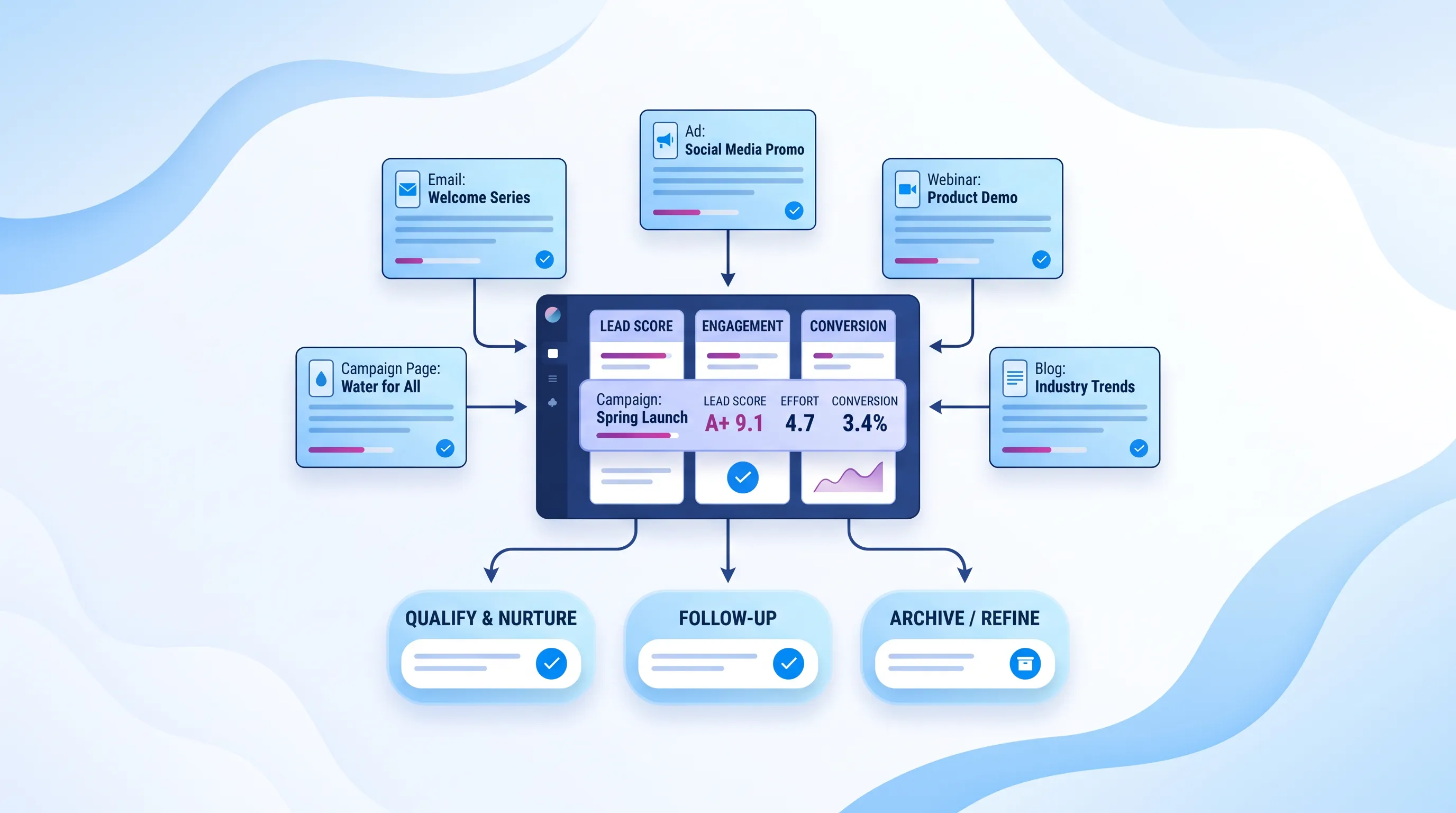
A digital marketing agency for NGOs usually recommends a balance between technical updates and community relationship building. Organizations build topical relevance and improve machine readability with modern non profit SEO strategies. However, they achieve true digital discovery when they pair that technical optimization with direct supporter engagement. They ensure the mission continues to thrive with a diversified approach, regardless of how search engines decide to format their answers tomorrow.
Conclusion
A diversified approach protects the mission, and this article summarized the critical steps to optimize a digital presence for artificial intelligence platforms. While generative models fundamentally change the technical delivery of information, they ultimately rely on verifiable human impact and trustworthy data to provide answers. Adapting digital infrastructure helps organizations maintain a strong connection with the community. Clear website schema markup and refreshed author bios allow machines to understand organizational expertise. These proactive measures ensure critical missions remain visible and respected resources. Organizations implement these modern non profit SEO strategies today to continue building meaningful relationships with donors and volunteers for years to come.