Communicate with donors without begging
If asking for money makes you squirm, you are in good company, and a steady rhythm fixes the awkwardness. The awkwardness comes from treating every appeal as a one-off emergency. When the ask is part of a steady flow that also carries gratitude and proof of impact, it stops feeling like begging and starts feeling like an invitation to people who already want in.
Balance what lands in the feed. For every direct ask, post more that simply keeps donors feeling like insiders:
Then, when you do ask, make the ask clear and the path short. Put the donation link where a phone thumb can reach it, and do not bury it three clicks deep. Your email list is the warmest audience you have for nonprofit social media marketing, so invite those subscribers to follow your account and share your posts. That matters because email still raises $2.40 per subscriber on average, and those people already trust you.
Here is a script you can borrow when the discomfort creeps in: "We're $2,000 away from keeping the after-school program open through spring. If tonight's story moved you, this is the moment. The link in our bio takes 30 seconds." It names a goal and points to the next step by tying the ask to a story. That is all an ask needs to be. The reason a short path matters so much shows up in the numbers, since only 19% of first-time donors return the next year, and friction is one reason the second gift never comes.
Run educational and charity social campaigns
In nonprofit social media marketing, a campaign is a time-bound push with one goal and a story that unfolds across several posts, and it consistently outperforms scattered one-off updates. Charity social campaigns work because they give supporters something to follow and a reason to show up on a specific day.
The payoff of planning ahead is measurable. GivingTuesday 2024 pulled in $3.6 billion in the United States, a 16% jump over the year before, and the organizations that did well were the ones warming up their audiences for weeks in advance. Peer sharing multiplies the result, since campaign pages linked to Facebook fundraisers raise 83% more on average. Pre-event activity is where the money is decided.
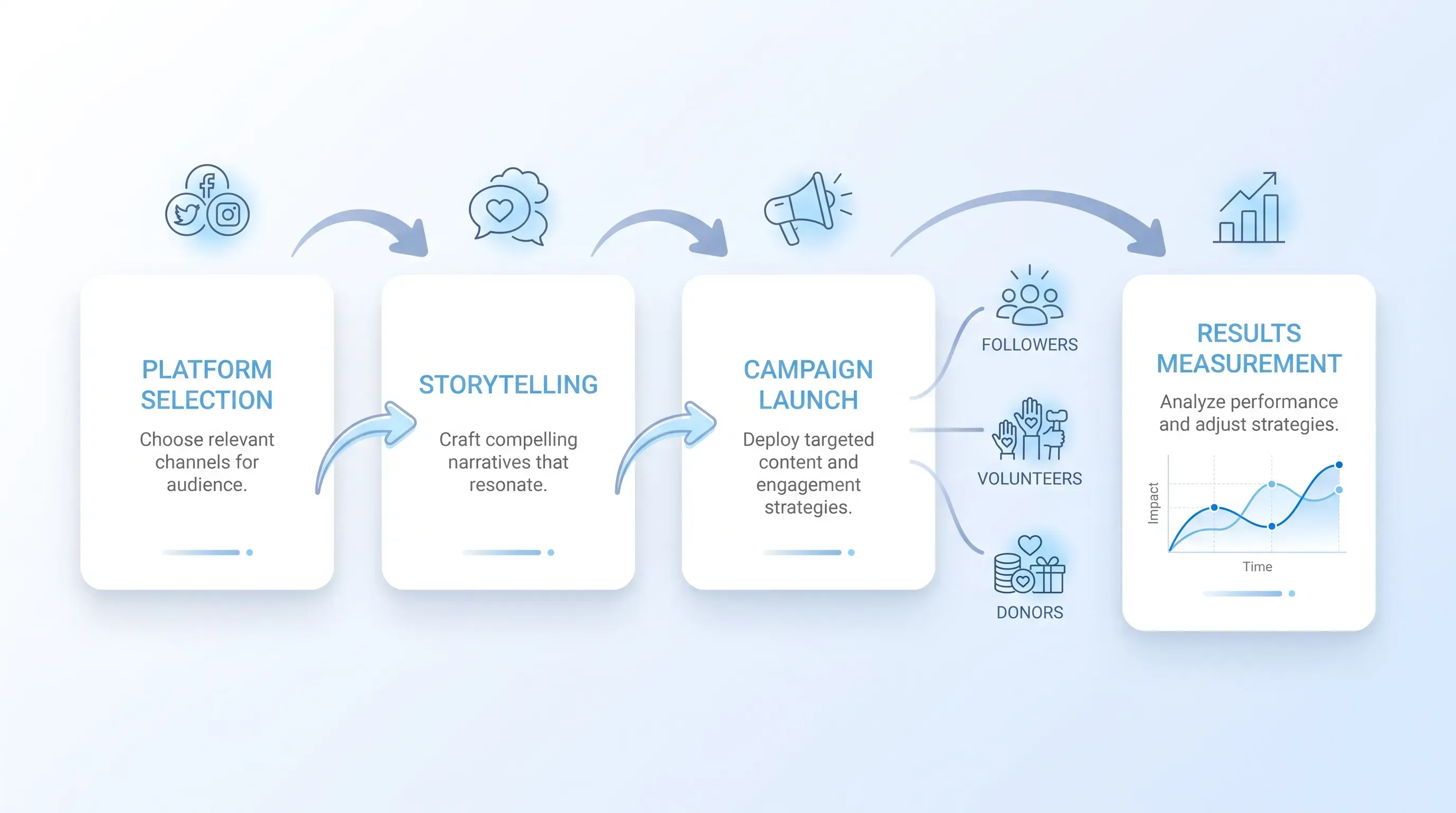
Structure your charity social campaigns around a simple arc:
-
Set one specific, measurable goal with a deadline, like "raise $10,000 for winter coats by December 3."
-
Build a story across the run: teach the problem first, then show the solution your donors fund through the people affected.
-
Close with a single clear call to action repeated on the giving day itself.
A campaign you could adapt: a two-week "Warm Winter" push. Week one runs educational content about why coat access matters in your community, told through one family's experience. Week two shifts to the ask and counts down to a giving day through a feature on volunteers who sort donations. This is where educational content earns its place, since teaching the problem before asking gives people a reason the number matters. Well-planned charity social campaigns like this turn a quiet December into your strongest month, and roughly 30% of annual giving happens then anyway. The best charity social campaigns simply catch a wave that is already forming.
Measure what actually matters
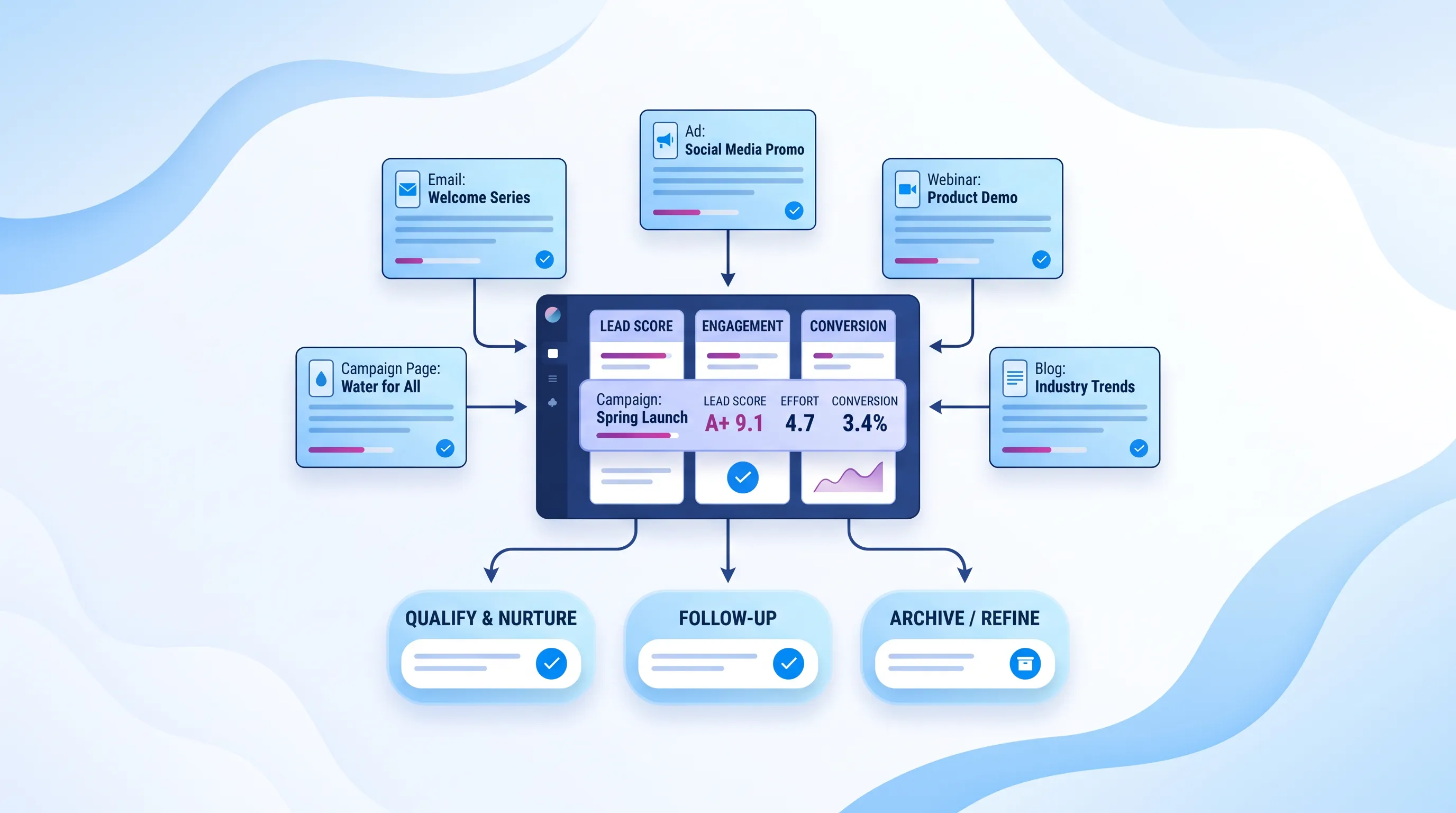
Likes feel good and tell you almost nothing. If you want to know whether your nonprofit social media marketing is working, watch the numbers that track movement toward a gift. Stop chasing vanity metrics and start following the trail from post to donation.
Here is what to actually watch:
-
Reach, which tells you how many people saw the post. For context, nonprofit posts reach about 14.9% of followers on Instagram versus 1.4% on Facebook.
-
Shares, because a share is a supporter vouching for you, which is worth more than a like.
Click-throughs on your donation link and the gifts that follow are the numbers that close the loop. Every platform gives you a free analytics tab for reach and link clicks; shares appear there too. Open it once a month and write those figures in a simple spreadsheet so you can watch the trend over time. You are looking for direction.
For tools that fit a small budget, both Buffer and Hootsuite offer nonprofit discounts. Buffer runs a 50% nonprofit discount with paid plans from $6 a month, and Hootsuite's HootGiving program drops its Standard plan from $99 to $39 per user monthly. Either one schedules your posts in advance and pulls your numbers into one place, which is most of what a stretched team needs.
Build your repeatable system
Everything here folds into one workflow you can start this week. Pick one platform. Set a posting rhythm you can hold. Build the nonprofit social media marketing workflow around one person's story and daily community replies; then let clear-goal campaigns and a monthly numbers check guide the rest. That is the whole system, and its power is that a small committed effort beats sporadic bursts every time.
Start with the single change that felt most useful and put it into practice today, whether that is committing to one channel or writing one person's story. That first step is where effective nonprofit social media marketing actually begins, and the supporters you are looking for are already waiting to hear from you.