Introduction
Content marketing for nonprofits requires a new approach because artificial intelligence platforms have replaced traditional search engines. According to the Nonprofit Learning Lab, half of consumers use AI-powered search tools to find information. In the past, organizations relied on standard algorithms to match keywords with user queries. Today, organizations face generative engines that synthesize facts from multiple sources and deliver direct answers.
These new engines do not require users to visit a website. This structural change means that organizations must evolve beyond basic keyword placement. They still need to write human-centered narratives, but they must also adopt Generative Engine Optimization to help large language models extract and cite information accurately. If organizations fail to structure their digital content for these automated systems, they risk losing visibility among potential donors and stakeholders. Organizations maintain their digital authority and ensure their mission reaches the right audiences when they adapt to this new discovery model.
Nonprofit Content Strategy in Answer Engines
When organizations adapt to this new discovery model, they learn that artificial intelligence platforms evaluate digital content differently than traditional search engines do. These platforms require organizations to understand Answer Engine Optimization. Answer Engine Optimization focuses on ranking answers instead of pages for artificial intelligence search. These search engines use the 5WPR AI Citation Index to measure how well content answers user questions based on structural integrity and factual density. Because generative platforms value facts over keywords, Experience, Expertise, Authoritativeness, and Trustworthiness become important elements. These elements prove essential when search engines filter misinformation from large language models.
Organizations need assurance that their digital assets reach right stakeholders. Content marketing for nonprofits must adapt to this exact reality. Generative engines prioritize verifiable facts over emotional appeals alone. If organizations build their online presence around verifiable facts, then generative engines select their pages as primary sources. Organizations must build their AI content visibility through evidence and conviction. Kelly Farrell serves as the CEO of designRoom, and she states that organizations compete for trust. When marketing teams prioritize trust, artificial intelligence engines reward them with higher citation rates.
Proof Chain Framework

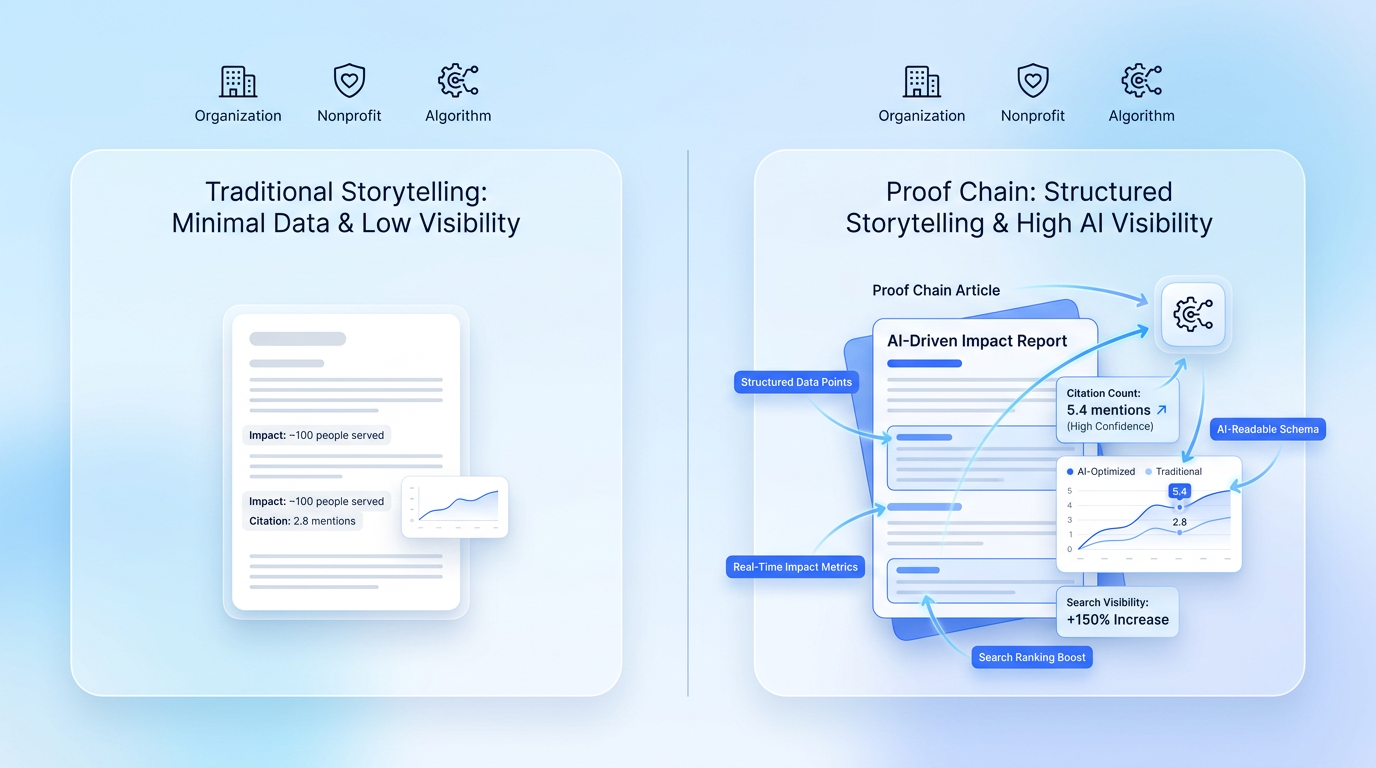
Organizations achieve these higher citation rates when they use the Proof Chain method to structure stories for artificial intelligence. Nonprofits often write emotional narratives but omit baseline measurements and quantifiable outcomes. Large language models need factual data to recognize a story as a citable authority. Content marketing for nonprofits requires precision. If organizations pair emotional narratives with specific intervention data, then algorithms parse the story as factual truth. This dependable framework prevents generative engines from skipping over important impact stories. Kelly Farrell notes that artificial intelligence measures human connection.
Statistics support this approach to nonprofit storytelling. Articles that include 19 original data points secure 5.4 citations on average, while content without data secures only 2.8 citations. Nonprofits should apply this exact framework to their content generation cycles to secure better search rankings.
The Proof Chain method requires writers to include three important elements in their articles:
-
Baseline measurements: The data that establishes the initial state of the problem before the organization intervenes.
-
Specific intervention data: The precise funding amounts and timelines the organization uses to address the problem.
-
Quantifiable outcomes: The measurable changes that prove the effectiveness of the program.
Technical Structure for Algorithmic Extraction
After writers include these measurable changes in the text, developers must format the impact narratives for machines, maintain exactness, and preserve human empathy. Algorithms scan text for specific structures that indicate factual reliability. Proper technical structure guarantees the accuracy that generative engines require to extract information. Content marketing for nonprofits relies on this balance between emotional storytelling and technical code. Because algorithms cannot feel emotions, they look for specific digital markers instead.
For instance, search engines gain clarity to process complex information when developers implement Organization, FAQ, and Event schema. If developers structure the backend code properly, then generative engines can retrieve facts quickly. This technical foundation supports better ai content visibility across all generative platforms. Nonprofits improve their overall search tactics by adjusting how they build their digital pages. Clean code allows large language models to read the page, verify the data, and cite the organization as an authority. Without this underlying structure, automated systems ignore even the most compelling stories.
Answer-First Paragraphs
The answer-first paragraph structure serves as the first layer of this underlying structure and helps algorithms parse text quickly. Writers often bury important facts at the end of long sections. Generative engines prefer front-loaded factual answers that provide immediate clarity. When a paragraph starts with a direct answer, the algorithm recognizes the value of the text immediately. If writers place the core data point in the first sentence, then the search engine extracts it without analyzing the entire block of text. The remaining sentences can then focus on emotional nonprofit storytelling. When writers add statistics to this exact structure, it increases citation rates by 30 to 40 percent. This method ensures that the machine finds the facts while the human reader enjoys the narrative.
FAQ Schema Markup for Digital Visibility
While the answer-first structure helps machines find facts, schema markup translates human empathy into a machine-readable format for better algorithmic extraction. This hidden code provides stability to the website structure. Search engines use schema to understand what specific paragraphs mean. According to recent research, schema carries 10 percent weight in citation evaluation for generative platforms. Furthermore, pages with schema markup get cited 2.3 times more often than unstructured pages. Organizations must deploy FAQ and Article schema markup to make their impact reports accessible to large language models. This code tells the algorithm exactly where to find the evidence it needs to formulate answers. When developers label data clearly, they eliminate the guesswork for automated systems and secure higher rankings.
Direct Question Headers
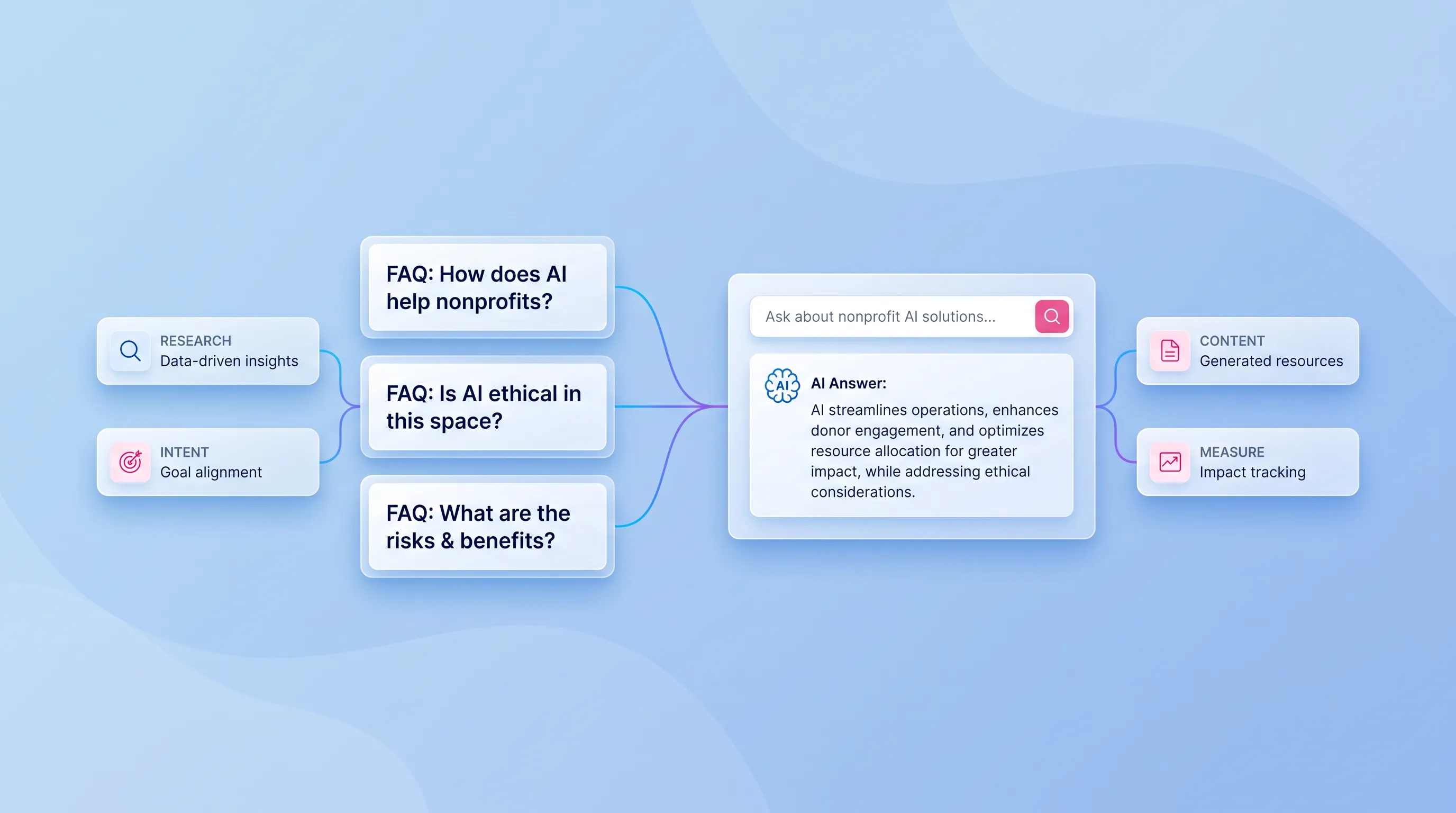
Developers further eliminate the guesswork for automated systems when they use direct question-and-answer headers to capture artificial intelligence citations effectively. Question-based structures mirror how users interact with generative engines. When a user types a specific question, the algorithm applies logic to find headers that match that exact query. Traditional storytelling often uses abstract headers that confuse machines. Direct questions create a clear path for data extraction. Engines prefer to surface authoritative content over creative titles. If an organization uses direct headers, then the algorithm ranks their page higher. Clear headers align the organization's narrative directly with the questions that potential donors and stakeholders ask. This structural alignment bridges the gap between human curiosity and machine data retrieval.
Global Reach
When organizations bridge this gap between human curiosity and machine data retrieval, their optimized storytelling transcends geographic boundaries and builds international partnerships. Multilingual artificial intelligence systems retrieve structured content to connect organizations worldwide. The World Bank uses its AVA platform to demonstrate how transparent data practices become a mechanism for global trust. The World Bank uses this AVA system to parse thousands of documents instantly and find suitable international partners that match specific documented achievements. This automated matchmaking relies entirely on how well an organization structures its digital assets.
When a nonprofit organization establishes authority through verifiable data, generative engines recommend its content across different languages and regions. Because generative platforms prioritize facts, this validation ensures that the right stakeholders discover the mission. Better digital visibility leads directly to more successful international collaborations. In fact, 73 percent of collaborating nonprofits report measurable success like expanded services. Digital marketing becomes a tool for global expansion when organizations use structured data. Teams should use specific content creation tools to expand their reach effectively.
Organizations build authority globally when they adopt specific storytelling practices:
-
Publish open-source impact datasets.
-
Align narratives with global development goals.
-
Verify claims through third-party audits.
-
Update program statistics quarterly.
If an organization follows the Proof Chain method, it secures a permanent place in the global data ecosystem. As machines translate and synthesize this information, international donors gain direct access to verified impact metrics.
Conclusion
To summarize, when organizations provide these verified impact metrics, they realize that optimizing narratives for artificial intelligence does not require them to sacrifice emotional resonance. Instead, this process enforces a standard of verifiable truth that builds deeper donor trust. Generative engines prioritize clear evidence over traditional search tactics, and this shift makes technical formatting crucial for digital authority. Effective content marketing for nonprofits relies on this exact balance of human empathy and algorithmic precision. Organizations audit their top-performing impact reports next. They retrofit these reports with structured data points and proper schema markup to establish an immediate baseline for machine citations. When teams adopt AI-driven search strategies, they secure their online visibility and ensure their mission continues to inspire action globally.