Building a repeatable publishing workflow
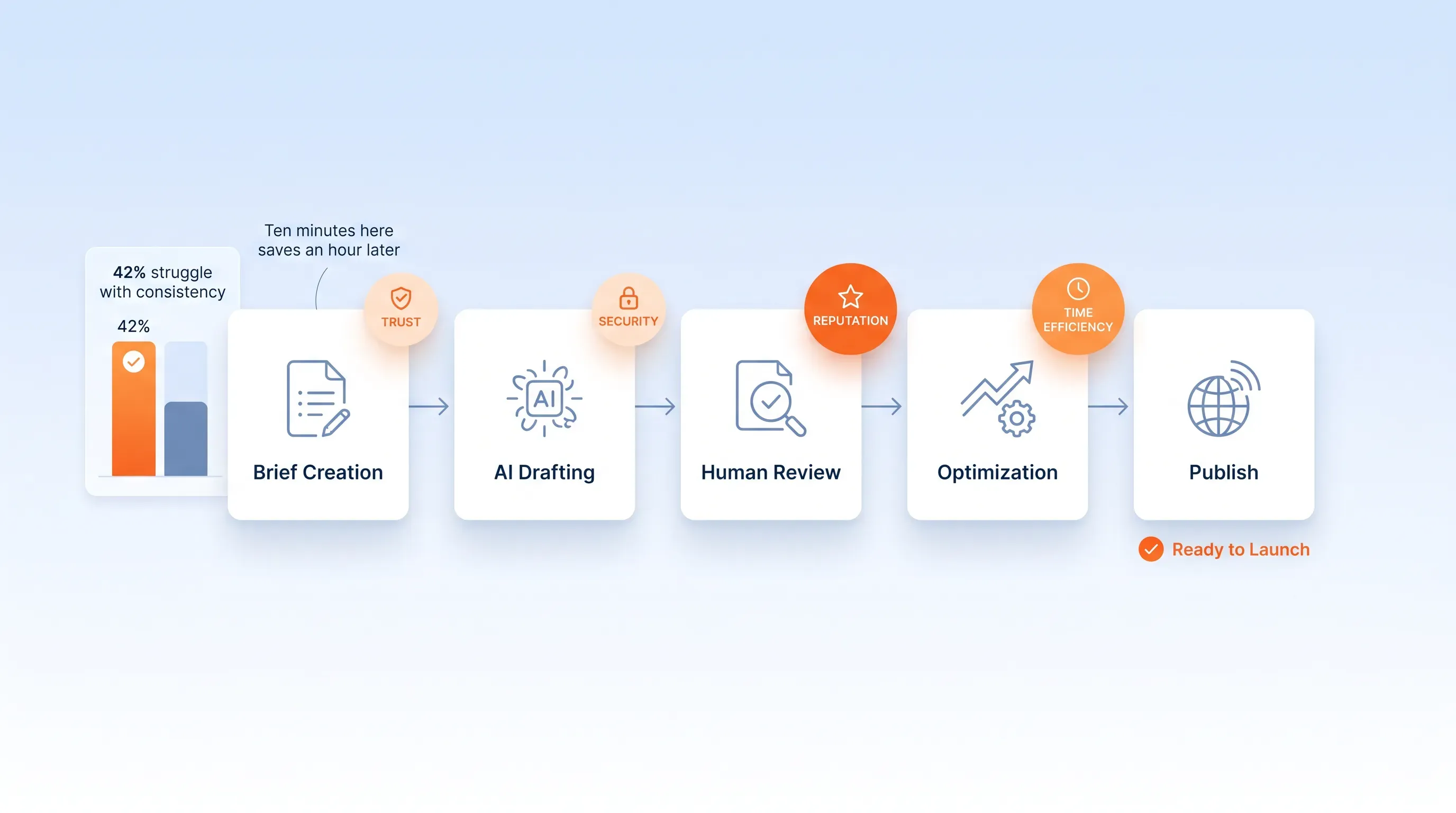
The goal is a system a one-person team can run on a steady cadence. Consistency is what compounds. One well-structured pillar page per quarter outperforms a blog-a-week program with no architecture behind it.
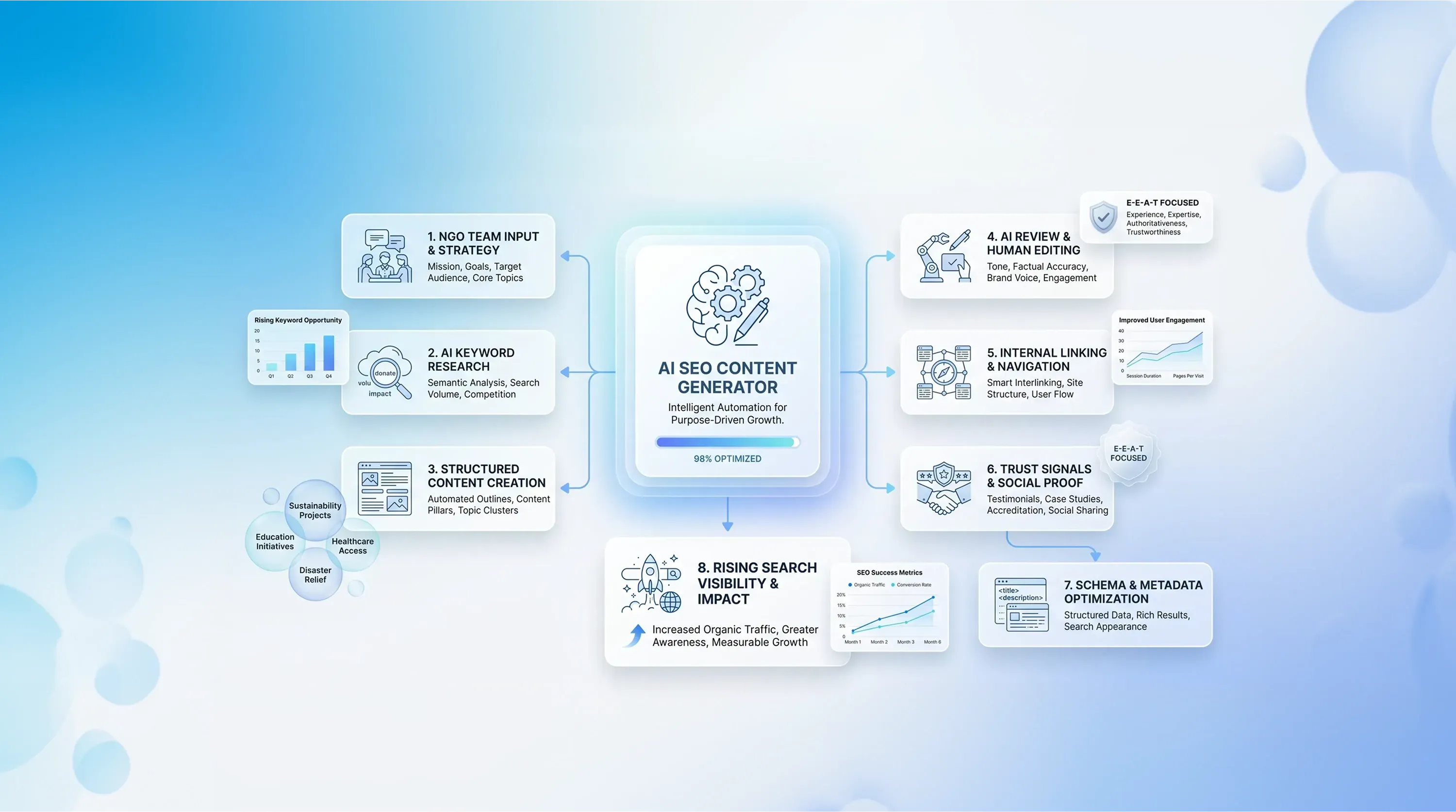
Build the workflow as a handoff. Each stage feeds the next cleanly, so you're never staring at a blank page wondering where to start. The stages below break the process into parts you can run separately, even across different days.
Briefing the generator
The brief is what separates a usable draft from one you have to rewrite line by line. A weak prompt produces generic filler. A strong one produces something close to publishable.
Give the tool the inputs that matter most. Name the person you're writing for, whether that's a prospective monthly donor or a parent looking for your services. State the goal of the piece, the action you want at the end. List the required facts and any source you want cited, with program names and local details included where they matter.
With 42% of nonprofit content marketers struggling to produce content consistently, the brief is where you buy back the most time. Spend ten minutes here and you save an hour later.
Structuring drafts for search
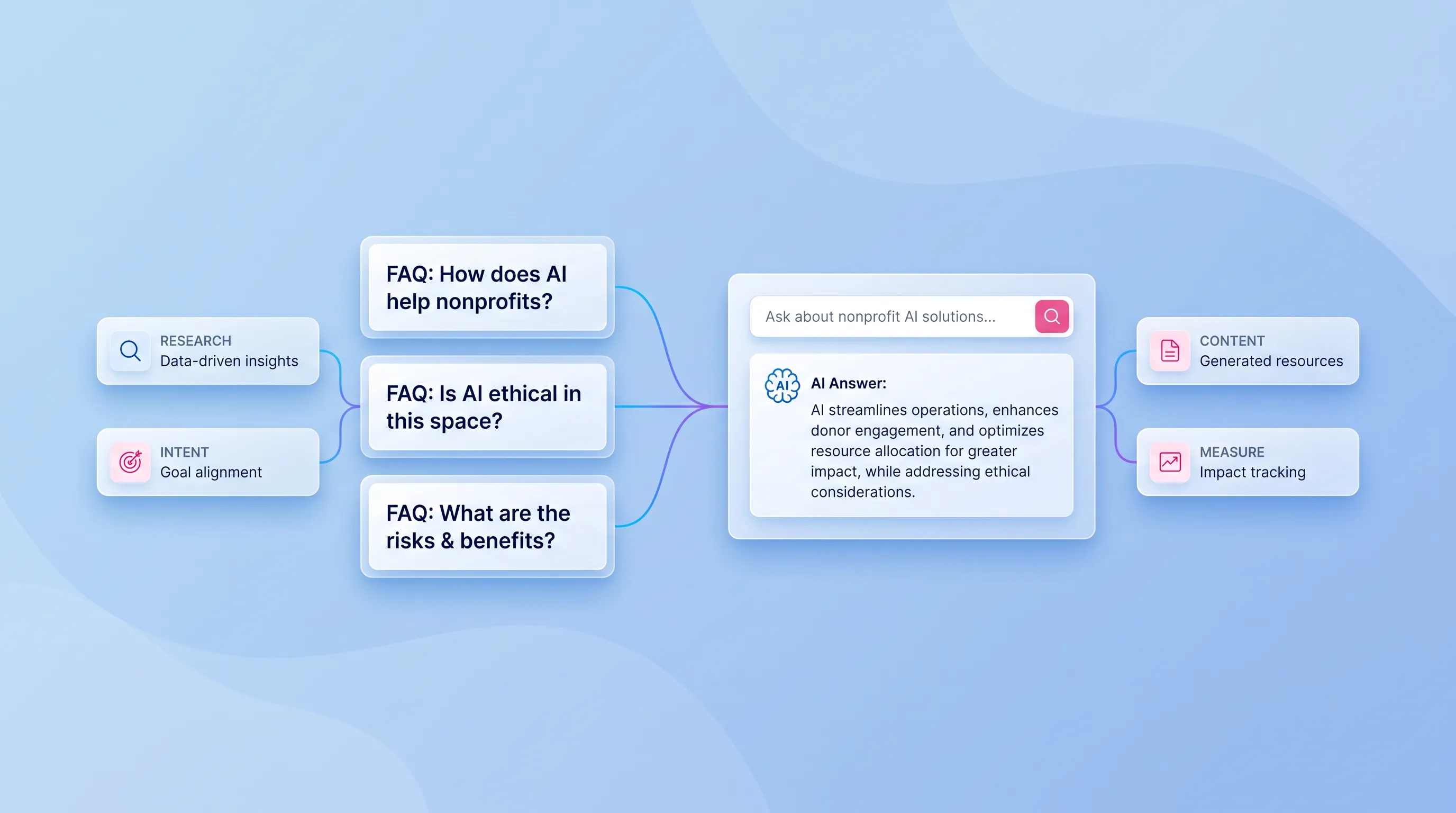
Direct the AI SEO content generator to produce a clear heading hierarchy and answer-first passages. The opening line of each section should answer the question that heading implies, then expand. Keep paragraphs short and sections scannable.
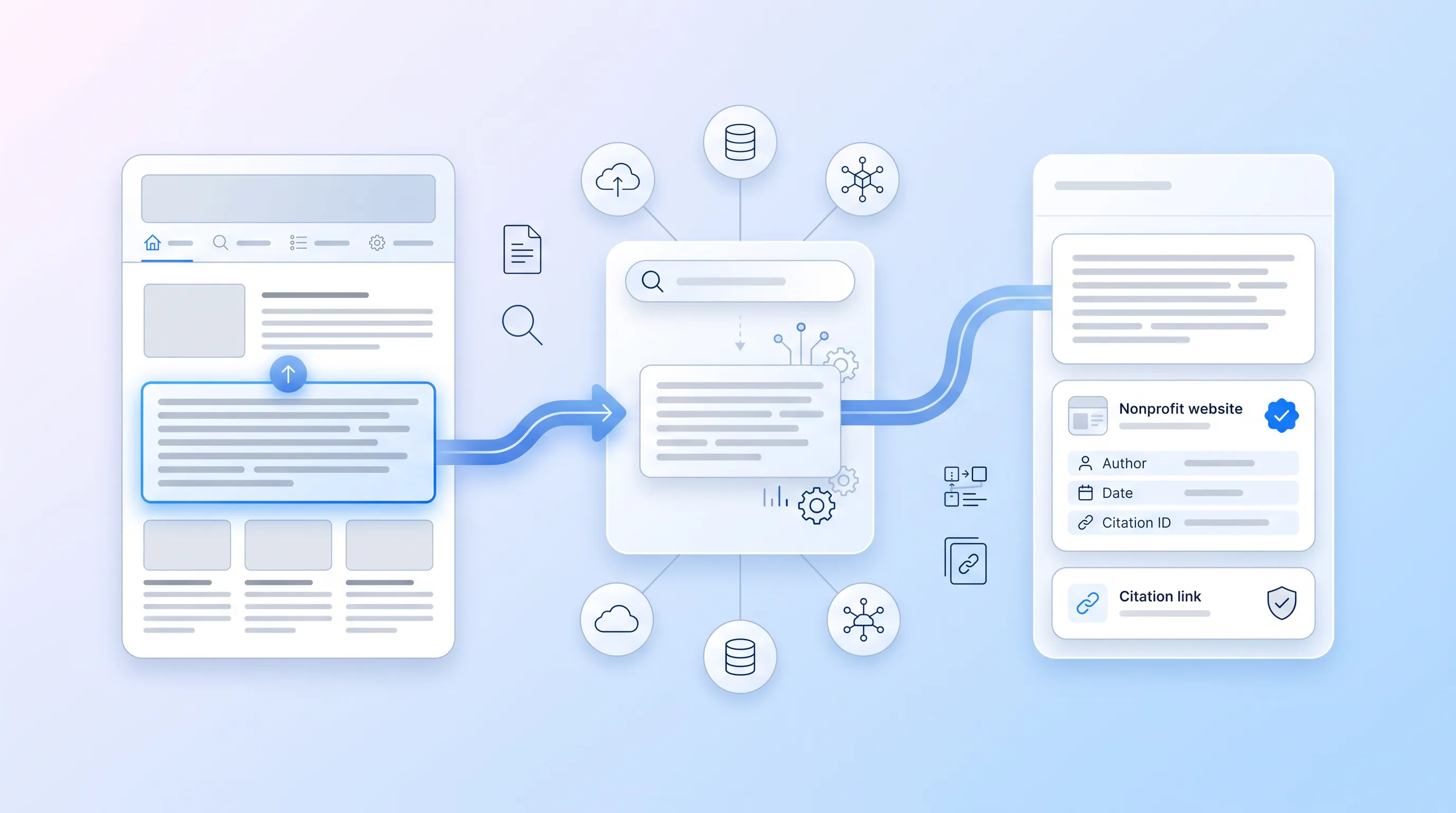
Structure does double duty here. A person skimming on their phone finds what they need fast, and an AI engine extracting an answer can lift a clean passage without guessing. A well-structured NGO article reads like a series of direct answers under descriptive subheadings, each one self-contained enough to stand on its own if a machine quotes it.
Human review and fact checking
This step is non-negotiable. Before anything publishes, you verify the claims and statistics, then check the mission language. AI models invent numbers that sound plausible, and a fabricated figure on an NGO site does real damage to a reputation that's already fragile.
Run a quick mental checklist:
-
Does every statistic trace back to a real, named source?
-
Does the mission language match what your organization actually promises?
-
Are the stories accurate, with real names used only where you have permission?
This is the step that turns AI optimized content writing into something your board would stand behind. Trust sits at the center of how Google evaluates content, and one careless error undermines it.
Readability and search friendly AI content
Readability makes a single piece of content work harder for two audiences at once. A casual supporter scanning during a lunch break needs plain language. An AI engine deciding what to quote needs clear, well-chunked passages it can extract. Both want the same thing, and AI drafts rarely deliver it without tightening.
Machine-generated text is bloated. It pads sentences and reaches for grand phrasing that says little. Your editing job is to cut that down to search friendly AI content that reads like a person wrote it.
A few moves do most of the work:
-
Replace inflated phrasing with plain words a 12-year-old could follow.
-
Break long paragraphs into two or three sentences each.
-
Write subheadings that describe what's below them.
There's a direct line from readability to discoverability. A clear, self-contained passage is search friendly AI content that is easy for an AI engine to lift into an answer, and that's how you earn a citation. Dense, tangled prose gets skipped. The tighter the writing, the better your odds of being the source the machine pulls from, which makes search friendly ai content a ranking concern.