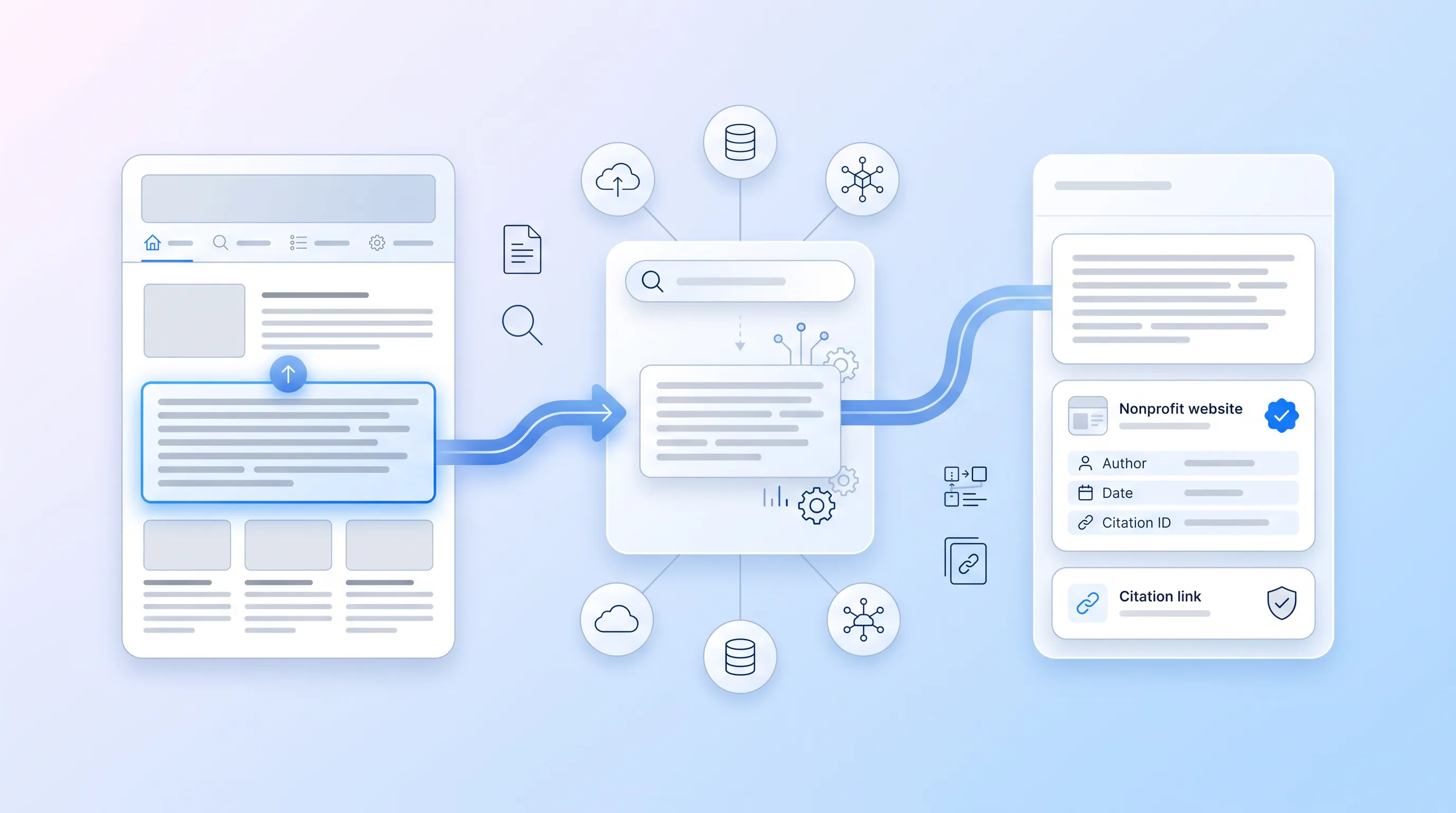
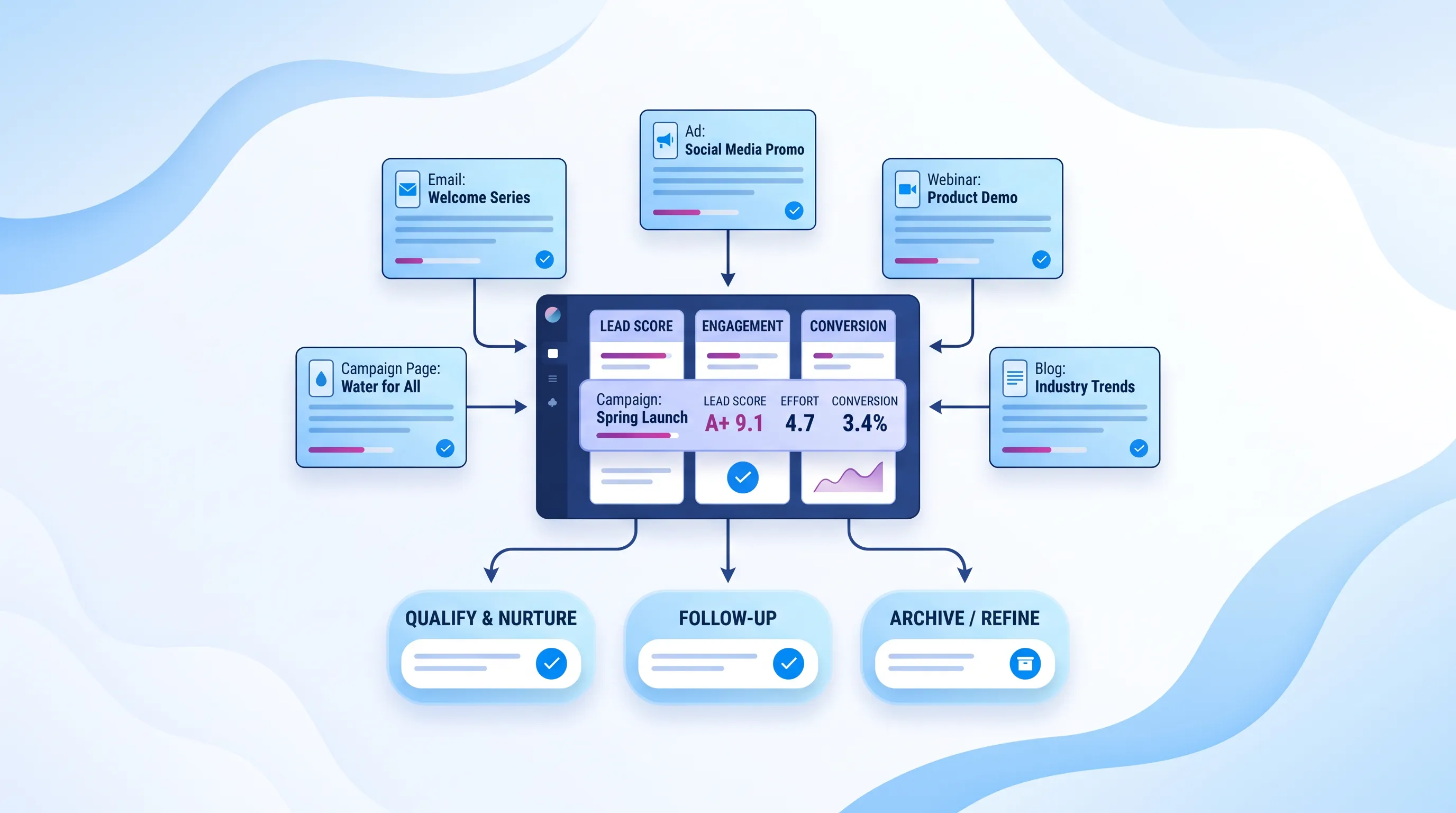
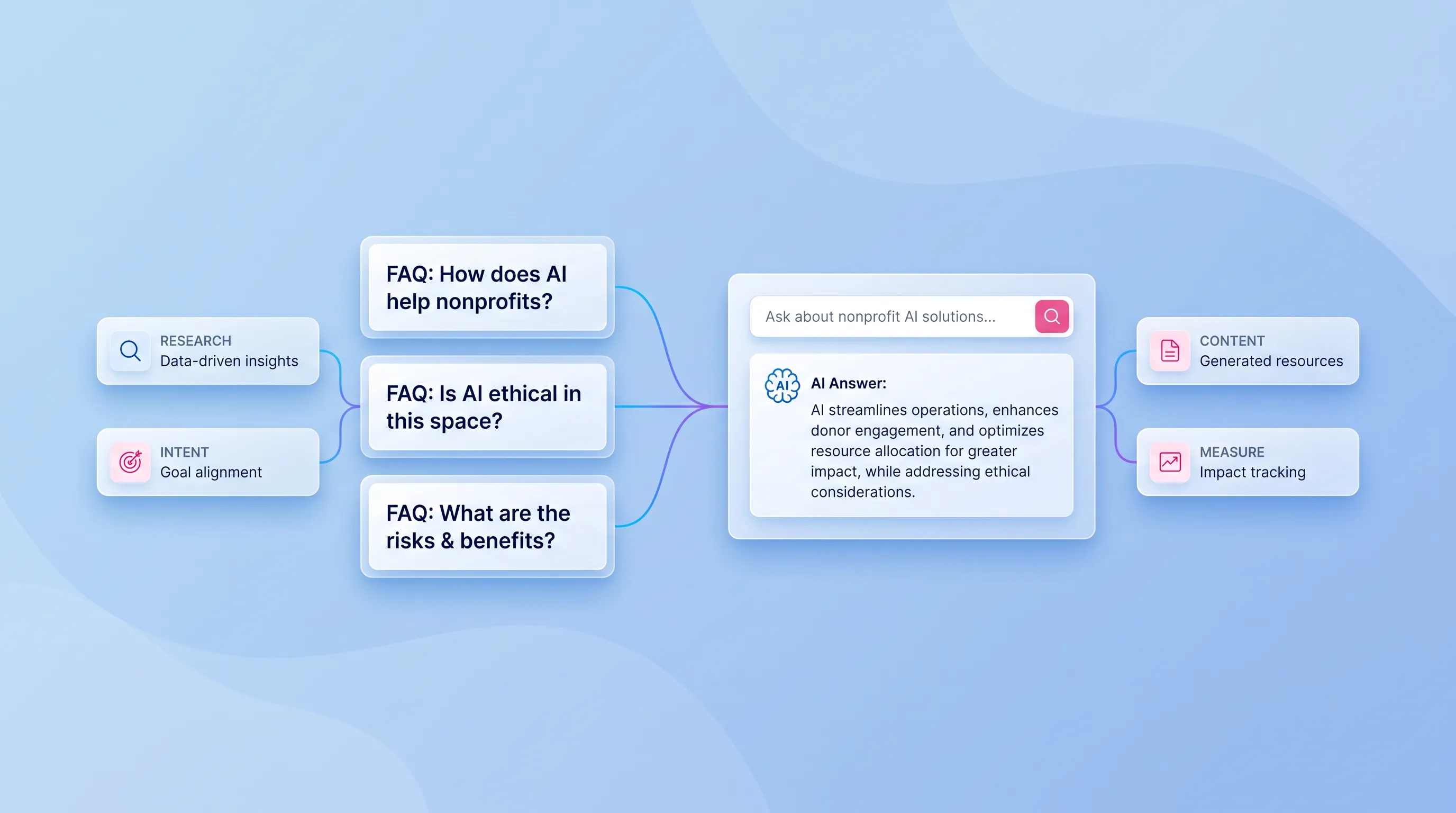
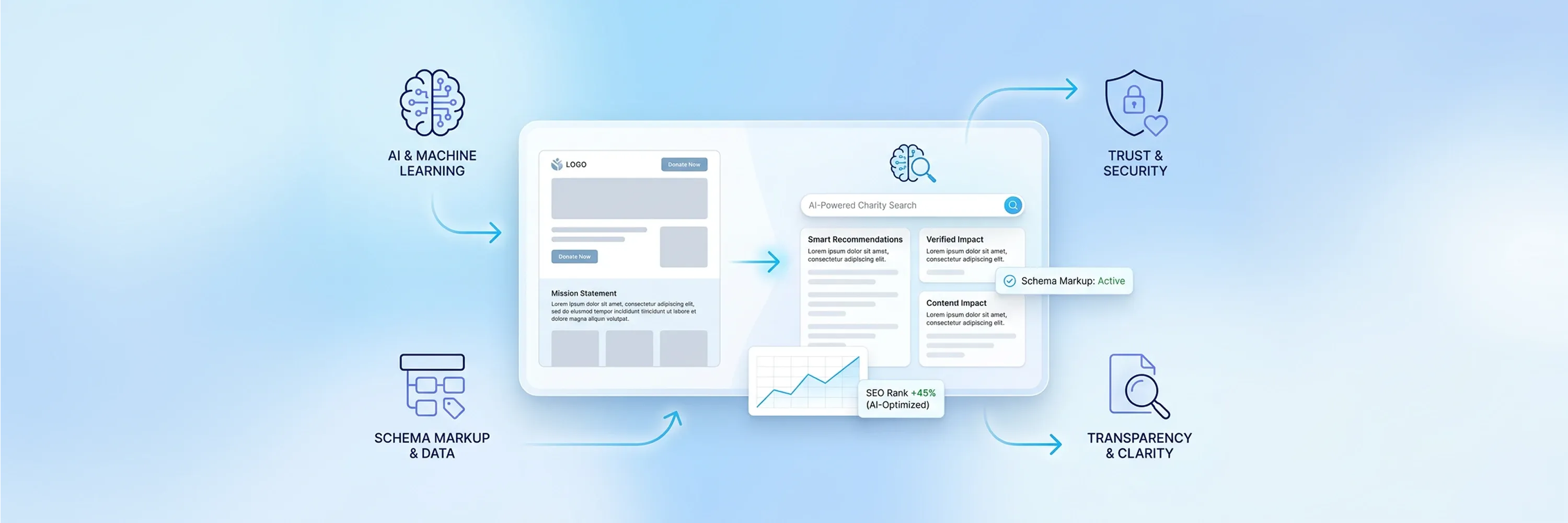
Illustration of AI-powered charity search interface enhanced with schema markup, improving SEO rankings, transparency, and donor trust

Charity SEO Services That Go Beyond Rankings

In this article, we explain how modern search strategies improve mission-driven impact and integrate artificial intelligence visibility and trust signals. We discuss the shift from traditional keyword optimization to generative engine optimization and provide a measurement framework that fits organizational goals.

Content authorSnoika FoundationPublished onReading time12 min read

Introduction

Charity SEO services help organizations improve their digital discoverability and reach people who want to support their causes. Organizations previously relied on traditional search engines to connect with potential donors and volunteers. Today, these organizations face a new reality because users increasingly rely on ChatGPT and Google AI Overviews to research causes before they decide to participate or donate. An Eight Oh Two 2026 study found that 37% of consumers now start their searches with AI tools rather than Google or Bing. Organizations become invisible to potential supporters when they fail to optimize their missions for artificial intelligence synthesis. Modern optimization connects impactful work with the specific audiences who actively search to help. Charity SEO services provide this bridge and ensure that automated engines understand organizational goals. This article addresses how organizations can integrate trust signals and structured data to improve their mission-driven impact.

Shift from Traditional Keywords to Generative Engine Optimization

Organizations must integrate these trust signals and structured data because search behaviors change rapidly as automated systems answer user questions directly. Many professionals believe that Generative Engine Optimization requires organizations to abandon traditional search foundations. This assumption creates a false dichotomy between old methods and new requirements. If organizations abandon traditional foundations, they lose their structural integrity. Instead, search engine marketing for charities relies on both traditional optimization and artificial intelligence visibility.

A recent Blue State Digital analysis found that organic search traffic fell 35% because users adopted tools like ChatGPT. This drop in traffic shows how searchers consume information now. They do not want ten blue links. They want direct answers. Traditional optimization organizes website structure so search engines read it easily. Generative Engine Optimization takes this organized data and makes it accessible for automated summaries. The two approaches complement each other and build certainty for the reader. When technical foundations match readable content, the machine understands the context. This combination establishes trust with search engines and the users that rely on them.

Why Artificial Intelligence Acts as Trust Engine for Nonprofits

This established trust matters because artificial intelligence systems evaluate information differently than traditional algorithms. These systems act as trust engines that favor verifiable content over large brand authority. Large organizations used to dominate search results simply because they possessed millions of backlinks. Now, automated engines analyze the specific expertise within the text. This shift creates a competitive advantage for smaller organizations that publish detailed knowledge about their cause. When an organization shares deep expertise, it builds assurance with the machine. Quality ai visibility services ensure that this expertise reaches the people who need it.

According to Kelly Farrell from designRoom, competing for trust replaces clicks in modern search environments. The conviction behind the content matters more than historical dominance. Users approach search boxes with high intent and look for specific answers about how donations help. Small organizations deliver these exact answers through detailed case studies and direct reports. The system rewards this precision. Smaller entities prioritize high-intent information and bypass large marketing budgets of competitors to connect directly with supporters.

How Machine Learning Levels Playing Field

Smaller entities bypass large marketing budgets because algorithms increasingly prioritize accurate answers over historical brand dominance. Smaller organizations provide clear and structured data to outrank large competitors. Wellows 2025 GEO Visibility Research reveals that 73% of Google-ranked brands remain invisible in artificial intelligence summaries. This statistic proves that historical rank does not guarantee future visibility. Machine learning models extract factual sentences and bypass vague corporate language. If a local shelter organizes its impact statistics clearly, the model cites the shelter over a national network that uses complex marketing terms. This focus on structured facts levels the playing field. Clear data establishes authority.

High-Intent Content in Automated Systems

Clear data establishes this authority, and high-intent visitors engage differently when they arrive from automated summaries. These users already read the initial answer and clicked through to learn more. A 2025 Blue State Digital analysis found that visitors from artificial intelligence sources stay 70% longer compared to other traffic sources. This longer duration demonstrates the value of high-intent search matching. When the machine successfully matches a specific query with focused content, the user finds exactly what they want. They spend more time to consume the material and understand the mission. Organizations answer complex questions directly to capture this dedicated attention.

Structure of AI Visibility Services for Focused Charities

Organizations capture this dedicated attention through concentrated visibility, and this visibility allows them to capture the majority of automated responses in their specific niche. Targeted digital frameworks organize information so language models digest it easily. ZeroClick Labs reports that only five brands capture 80% of machine-generated responses within any given category. Organizations need focused AI visibility services to enter this top tier. When an organization commits to a digital framework, it removes ambiguity from its web pages. This structural clarity provides certainty to the algorithms. The models recognize the focused expertise and consistently cite the organization for relevant queries.

Compounding Credibility Through Structured Schema Markup

A clean SaaS process illustration with a rounded UI panel, soft blue gradient background, and minimal icons linked by gentle arrows.

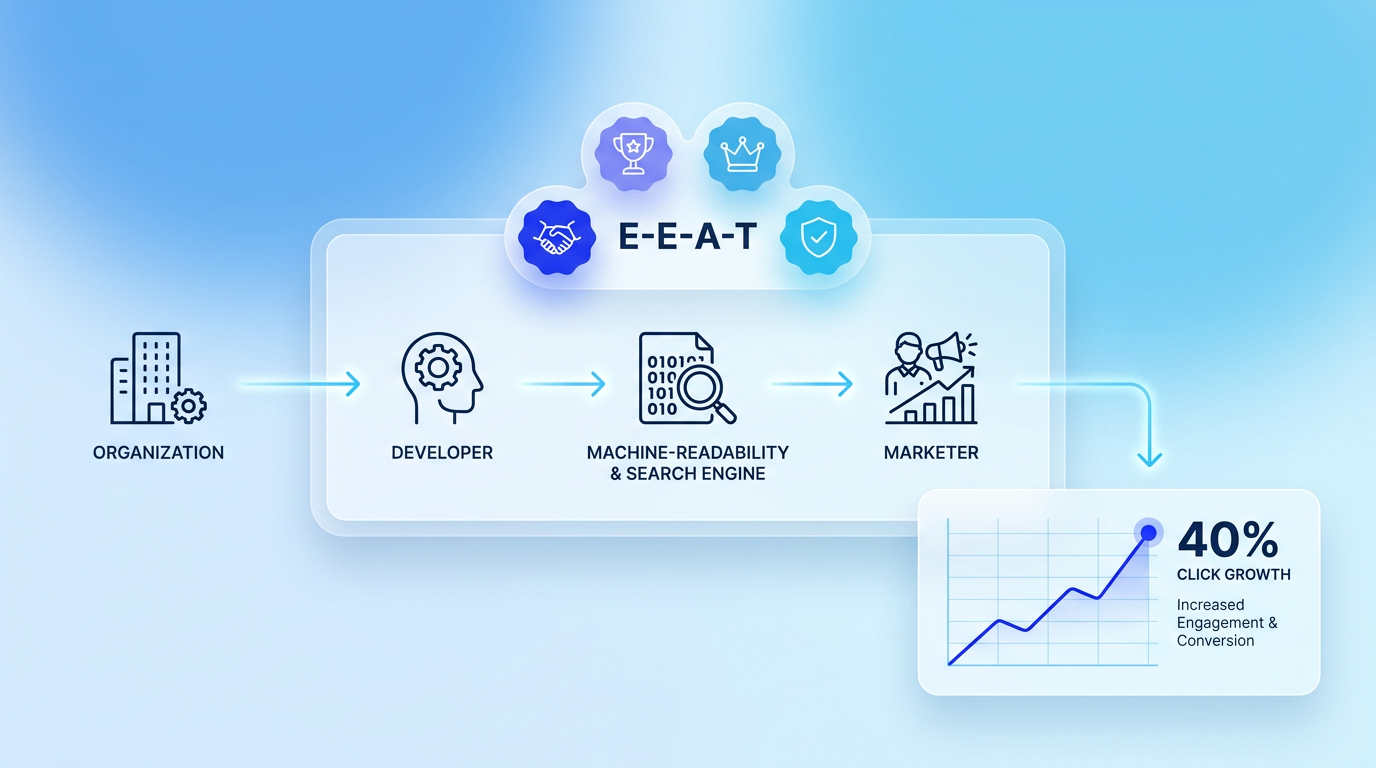
The models consistently cite organizations for relevant queries when these organizations apply Experience, Expertise, Authoritativeness, and Trustworthiness (E-E-A-T) principles to build compounding credibility over time. Organizations use structured schema markup to make their data machine-readable and demonstrate these principles. Schema markup acts as a translator between human language and algorithmic processing. SEO services for charities implement this code to highlight specific facts, numbers, and authors. A recent study by Schema App cited by Blackbaud shows that structured markup increases clicks by 40% compared to unmarked pages. The machine understands marked-up data instantly and presents it confidently to users. Quality charity SEO services identify exactly which pages need this technical enhancement.

Organizations implement schema markup in four steps:

  • Managers complete page identification to select the pages that describe the mission, board members, and impact statistics.

  • Developers focus on schema generation and use free online generators to create Organization and Article schema structures.

  • Technicians handle script embedding to place the generated code into the website header and ensure algorithms read it.

  • Marketers prioritize structure validation and test the implementation with the Google Rich Results Test tool.

This structured approach establishes trust with search engines. The technical foundation proves authority and secures visibility over time.

Trust Signals With Transparent Impact Reporting

Organizations use this technical foundation, and they use transparent impact reporting to create trust signals for modern search environments. Both donors and algorithms demand clear explanations of organizational practices and financial distributions. Authentic beneficiary stories provide the qualitative data that machines look for to verify real-world action. If a website only asks for money and does not show results, algorithms rank it lower than websites with detailed impact pages. Quality SEO services for charities prioritize financial transparency reports and success metrics. The accuracy of these transparent reports builds confidence. Modern supporters also care deeply about how organizations operate internally.

A 2025 study by Cherian Koshy found that 73% of donors expect explanations about how organizations use artificial intelligence. They want to know their contributions support ethical operations. Search engines expect this transparency as well. Organizations demonstrate conviction when they publish their operational standards openly. When search optimization services align this transparent content with technical optimization, the website becomes a verified source. The algorithms reward this transparency with consistent citations.

New Measurement Framework for Mission Impact

Organizations must track these consistent citations, and they need a new measurement framework that fits specific mission-driven goals. Traditional metrics focus on raw organic traffic, but raw traffic does not automatically translate into community impact. Leaders must shift their focus toward meaningful metrics like donor retention, volunteer engagement, and citation share. Effective charity seo services prioritize these deeper interactions over superficial clicks. When a search engine provides a direct answer, users do not need to visit the website, and this lowers overall traffic numbers. But the users who do click through carry high intent. They arrive ready to volunteer or donate. This qualitative shift requires assurance from updated reporting models.

According to Nonprofit Pro research, organizations spend $0.20 per dollar to retain current supporters compared to the $1.50 they spend to acquire new donors. Digital marketing professionals track how incoming search traffic contributes to this retention over time. Organizations analyze how many search visitors become recurring donors to measure success. They evaluate the conversion rates of volunteer signup pages. This targeted measurement framework provides certainty about the real-world value of the digital strategy. A focus on meaningful actions ensures the marketing budget directly supports the core mission.

Charity SEO Services on Limited Budget

Resource-constrained teams ensure the marketing budget directly supports the core mission when they implement an optimization roadmap and stay within their budgets. The first phase requires answer-first content that satisfies algorithmic extraction tools. Writers structure paragraphs to answer common questions in the first sentence. This direct approach helps algorithms pull the information easily. Next, teams share detailed stories about the people they help to incorporate human empathy. Charity SEO services blend this emotional resonance with technical formatting. However, many organizations struggle with consistent execution.

A 2026 Nonprofit AI Adoption Report indicates that only 4% maintain documented workflows to sustain their digital presence. A documented workflow establishes authority and ensures the team produces structured content regularly. Experienced professionals help teams create these operating procedures. Teams define who writes the content, who updates the schema markup, and who reviews the impact metrics. This organized system builds trust with search engines over time. Automated visibility strategies do not require large financial investments. They require consistency, accurate data, and direct answers to user questions.

Trust Signals With Transparent Impact Reporting

Organizations provide accurate data and direct answers when they use transparent impact reporting to create critical trust signals that satisfy both algorithmic extraction tools and modern donors. Authentic beneficiary stories and clear financial distributions demonstrate the soundness of an organization's operations. Algorithms evaluate these detailed impact pages to verify real-world action. For example, a regional food bank publishes quarterly distribution metrics and features verified interviews with local families, and this provides exact data points for language models to extract. When a website asks for funds but fails to show results, search engines rank it lower than platforms that provide thorough transparency reports.

Effective SEO services for charities publish these success metrics alongside qualitative data. The integration of content marketing strategies requires publishing clear operational standards. Modern supporters care deeply about internal operations and ethical practices. A 2025 study by Cherian Koshy revealed that 73% of donors expect public explanations about how nonprofits use artificial intelligence. They demand conviction from the entities they support. When AI visibility services align transparent reporting with technical formatting, the website becomes a verified source of truth. The algorithms reward this transparency with consistent citations, and this builds credibility month after month.

New Measurement Framework for Mission Impact

Organizations must track these consistent citations, and they need a new measurement framework that aligns with specific mission-driven goals rather than superficial data. Traditional analytics focus heavily on raw organic traffic, but raw traffic does not measure community impact accurately. Organizations shift their focus toward meaningful interactions like donor retention, volunteer engagement, and artificial intelligence citation share. Effective charity SEO services prioritize these deeper interactions over superficial clicks. When a search engine provides a direct answer, users skip the website visit, and this lowers overall traffic numbers. However, the users who click through carry high intent and arrive ready to act. This qualitative shift requires assurance from updated reporting models. According to Nonprofit Pro research, donor retention costs less because organizations spend $0.20 per dollar raised compared to $1.50 to acquire new donors. Quality SEO services for charities track how incoming search traffic contributes to this long-term retention.

Organizations evaluate their digital strategy when they measure three specific actions:

  1. They evaluate the conversion rates of volunteer signup pages.

  2. They analyze how many search visitors become recurring donors.

  3. They monitor brand mentions in artificial intelligence overviews.

This targeted framework provides certainty about the digital strategy's real-world value. When organizations focus on meaningful actions, the marketing budget directly supports the core mission.

Charity SEO Services on Limited Budget

Resource-constrained teams ensure the marketing budget directly supports the core mission when they implement a phased optimization roadmap and stay within their operational budgets. The first phase requires teams to create answer-first content that satisfies algorithmic extraction tools. Writers structure paragraphs to answer common questions in the first sentence. This direct approach helps algorithms pull the information easily. Next, teams incorporate human empathy when they share detailed stories about the people they help. When teams combine emotional resonance with technical formatting, they define modern SEO for charities. However, many organizations struggle with consistent execution. A 2026 Nonprofit AI Adoption Report indicates that only 4% maintain documented algorithmic workflows to sustain their digital presence.

A documented workflow establishes authority and ensures the team produces structured content regularly. Quality consultants guide teams to create these standard operating procedures. Teams define who writes the content, who updates the schema markup, and who reviews the impact metrics. This organized system builds trust with search engines. Reliable AI visibility services do not require massive financial investments. They require consistency, accurate data, and a commitment to answering user questions directly. Effective charity SEO services help organizations build this sustainable engine step by step.

Conclusion

This article explained how organizations build this sustainable engine step by step and actively engineer trust signals to sustain their digital influence. Organizations can no longer rely on traditional optimization to guarantee discovery, but they can build credibility month after month with structured data and clear impact reporting. Organizations ensure their mission remains at the forefront of the digital conversation when they embrace AI-readiness. Leaders must shift their focus away from superficial clicks and measure metrics that matter, such as sustained donor engagement and AI citation share. Charity seo services help organizations adapt to these changes and secure reliable visibility. Consulting the guide on SEO for nonprofits helps organizations optimize their digital presence today.
You usually wait three to six months to see your digital visibility improve. Search algorithms need time to crawl your updated pages and evaluate your new trust signals. Consistency in publishing structured content speeds up this evaluation process.

You can use tracking platforms like Ahrefs or Semrush to monitor your automated search citations. The Snoika Foundation also offers proprietary AI visibility strategies to help you measure how often language models cite your mission. You don't need expensive software to start gathering this data.

You correct inaccurate responses when you publish the exact facts on your official website. Language models prioritize primary sources, so you must update your pages with accurate data and clear schema markup. You can't edit external platforms directly, but you can influence them with strong technical formatting.

You optimize for local supporters when you include your city and neighborhood names naturally throughout your web pages. Professional charity seo services integrate location data into your website code to help nearby donors find you. This local focus helps automated engines match your cause with residents who want to help.

Video content helps your organization reach more supporters, but text remains the primary format that language models process. If you produce videos about your cause, you should include a written transcript on the same page. This transcript ensures that algorithms can read and extract your factual information.

Book a Demo

Book a time that works best for you

You Might Also Like

Discover more insights and articles

Title:
Paid Search for NGOs: Smarter Campaigns with AI Insights

Meta description:
Stretch your ad budget with paid search for ngos. You will learn how AI insights help you reach active donors and spe

Paid Search for NGOs: Smarter Campaigns with AI Insights

This article is a practical playbook for NGO marketing teams who want to get more from every advertising dollar. It walks through how AI insights and visibility data can sharpen paid search for NGOs working with tight budgets and shifting donor behavior.

Performance marketing workflow for charities showing paid campaigns, conversion tracking, AI-powered optimization, and measurable mission outcomes connected through a data-driven marketing framework.

Performance Marketing for Charities with Measurable Impact

This article explains how charities can run paid campaigns that produce results tied directly to mission outcomes rather than vanity numbers. It covers the channels worth using, the analytics setup that makes spending defensible, and how AI search is rewriting the way donors find causes online.

Infographic illustrating a nonprofit donor acquisition funnel from search intent and AI-driven discovery through trust evaluation to donation conversion, highlighting visibility, engagement, transparency, and donor growth metrics.

SEO for Fundraising Campaigns: Reaching Donors at the Right Moment

This article walks fundraising leads and nonprofit founders through how SEO for fundraising campaigns can put their cause in front of donors during the short windows when those donors are ready to give. You will learn how building and measurement should adjust as search behavior shifts toward AI-driven discovery.

Infographic showing the progression from storytelling and verifiable facts to technical structure and AI recognition for improved nonprofit visibility and engagement

Content Marketing for Nonprofits That Drives AI Visibility

In this article, we explain how to structure authentic impact stories that build trust and secure verifiable AI search citations. We discuss the transition from traditional search optimization to generative engine frameworks that prioritize evidence-backed narratives.