Introduction
Search visibility has shifted from providing web links to generating direct answers. For years, organizations relied on traditional optimization methods to attract supporters and drive mission awareness. Today, generative artificial intelligence platforms intercept users and synthesize information long before anyone visits an external website.
According to Digital Applied, 64.82% of Google searches now end without a click compared to 50% in 2019. This structural change requires organizations to adapt how they publish and distribute their messaging. Organizations optimize their content for these new answer engines to maintain their primary source of new donors and volunteers. Securing online prominence in this environment requires a cohesive digital marketing strategy for ngo that aligns technical formatting with human authenticity. An integrated framework helps organizations maintain their digital influence, capture high-intent audiences, and scale their operations efficiently.
Shift from Search Engines to Answer Engines
Organizations scale their operations efficiently when they adapt to the structural change in digital discovery. Internet users don't click through pages of blue links to find information anymore. Instead, search has shifted to answer engines that run on generative AI. Algorithms intercept user queries and generate synthesized responses directly on the results page. This instant delivery satisfies the user's intent, and they do not need to visit external websites. The shift reduces the web traffic that organizations historically relied on to attract volunteers and donors.
To survive this transition, organizations must develop a complete NGO marketing framework that accounts for these new discovery habits. A progressive approach embraces algorithmic changes and does not resist them. Content acts as a magnet. When algorithms find clear, well-structured information, they pull that data into their overviews. Readers get their answers instantly, and the organization earns a valuable citation. This new environment forces organizations to change how they measure online success. Traditional metrics like page views and click-through rates tell an incomplete story. Instead, brand citations within AI-generated responses show the true reach of an organization's messaging. Organizations that align their publishing habits with these algorithmic preferences secure a lasting impact on their digital presence. They ensure their mission remains visible to the exact people who want to help.
Integrated digital marketing strategy for NGO
Organizations maintain visibility to the exact people who want to help when they connect their marketing efforts. Disconnected marketing efforts waste resources. When organizations treat content creation, search visibility, and performance tracking as separate tasks, they create operational silos. These silos make it hard for organizations to adapt to algorithmic shifts efficiently. Today's digital environment requires an integrated promotional system that connects all marketing functions into a single workflow.
Surprisingly, many organizations still ignore this necessary integration. Recent industry surveys indicate that 47% of brands lack a Generative Engine Optimization (GEO) strategy. Organizations that operate without a clear AI marketing strategy leave themselves vulnerable to competitors who understand how modern answer engines function. A fragmented approach confuses algorithms, and this confusion leads to lower visibility on results pages.
When organizations unify their efforts, they regain control over their digital narrative. Content creators write materials that satisfy human readers and algorithms simultaneously. Search specialists ensure this content features proper technical formatting. Performance analysts monitor how often answer engines cite these materials. This alignment acts as a synchronized system, and each component supports the others. An integrated approach expands an organization's capability to reach potential donors. Organizations can quickly identify which topics generate the most citations and adjust their publishing calendars accordingly.
Zero-Click AI Citations
When organizations adjust their publishing calendars, they account for a phenomenon that people call zero-click searches. Answer engines create this phenomenon. Users type a question, read the synthesized answer at the top of the page, and close their browser. They don't need to click a link to get what they want. While this sounds alarming for website traffic, it offers a distinct advantage for organizations that know how to earn citations within those generated answers.
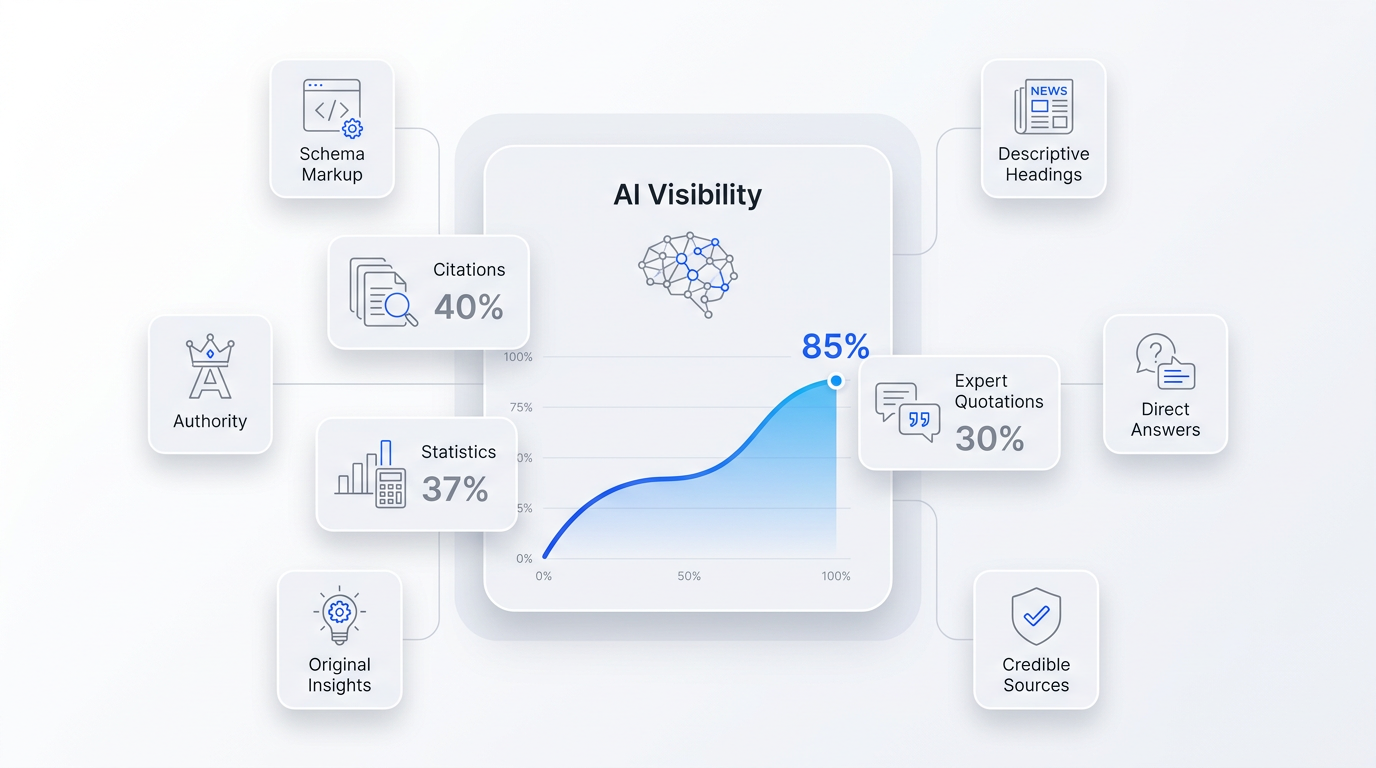
To gain influence over these AI overviews, organizations must structure their content in ways that algorithms prefer. Generative models look for specific formatting signals to determine which sources hold the most credible information. Research shows that citing sources increases AI visibility by 40%, and adding statistics boosts visibility by 37%.
Organizations can optimize their formatting by applying the following techniques:
-
Include verified data points to support main arguments.
-
Use descriptive headings to separate complex topics.
-
Provide direct answers to common questions in the first paragraph.
-
Link to credible external research to demonstrate transparency.
These structural adjustments make information easier for algorithms to process. When machines can quickly scan and verify content, they readily include that information in their generated responses.

Content Structure for Generative Engine Optimization
Machines include information in their generated responses based on how they read text. Machines read text differently than humans do. Algorithms rely on structural cues to understand the context and hierarchy of information. Proper schema markup translates human language into a format that search engines easily categorize. This technical foundation acts as a roadmap for artificial intelligence (AI) crawlers that navigate a website.
Clear formatting establishes authority in the eyes of an algorithm. Industry observations confirm that AI systems reward nonprofit content that features proper structure, and this structure requires logical headings and concise summaries. When organizations organize their articles with header tags, they help algorithms identify the most critical points. Bulleted lists, short paragraphs, and bold text further clarify the content's structure. A well-organized page ensures that this strategy succeeds because the underlying technology can easily extract and cite the published information.
Clear Answers to Build Content Framework
The technology extracts the published information effectively when the content answers questions directly. Supporters ask specific questions when they want to engage with a cause. They search for details about volunteer schedules, donation impacts, and community programs. A successful NGO marketing framework requires organizations to anticipate these questions and provide straightforward answers within their content.
Vague language frustrates both human readers and search algorithms. Nonprofits that optimize for algorithmic search must focus on answering specific supporter questions directly. When organizations demonstrate mastery over their subject matter through concise explanations, algorithms prioritize their content. A sound tactic involves stating the question clearly in a heading and providing the factual answer immediately below it. This direct approach eliminates ambiguity. Algorithms recognize this clarity and confidently pull the exact text into their synthesized overviews, and this connects potential supporters with the organization's mission.
Authority Through Quotable Insights
Organizations struggle to connect potential supporters with their mission because generic information floods the internet daily. Artificial intelligence models easily generate basic facts, which means organizations can't rely on surface-level content to stand out. Instead, they must inject their articles with original insights and proprietary data that machines can't replicate on their own.
Original perspectives provide a unique strength to published materials. Direct quotes from program directors, field workers, or community leaders add an undeniable layer of human authenticity. Data confirms this approach works because expert quotations increase visibility in AI search results by 30%. When articles feature unique quotes, algorithms view the content as primary source material. Search engines prefer to cite primary sources because they offer higher value to users. Organizations feature expert voices to elevate their content above machine-generated text and earn prominent placements in search overviews.
Practical Workflows for AI Marketing Automation
Organizations work hard to earn prominent placements in search overviews, and they often struggle to manage the demands of modern content publishing. Newsletters, social media posts, and donor appeals require significant time and energy to produce. Organizations can use artificial intelligence tools to automate these administrative tasks without losing their authentic human voice. Automation serves as a reliable digital assistant that handles repetitive work so staff doesn't spend hours on routine logistics.
A well-executed digital marketing strategy for NGO incorporates generative models to scale content production efficiently. Organizations can feed an annual report into an artificial intelligence platform and request several distinct social media captions that suit different audiences. The staff then reviews and refines the generated text to ensure it matches their specific organizational tone. This practical AI marketing strategy maintains necessary human oversight while it accelerates the drafting process.
Automation also improves direct communication with supporters. For example, the World Wildlife Fund deployed an AI-powered Messenger assistant for continuous donor engagement. This specific tool answers routine questions instantly and maintains momentum in donor conversations outside of normal office hours. When organizations use artificial intelligence for administrative workflows, they free their staff to build meaningful relationships with their community.
Eliminate Operational Silos Across Organization
Staff members fail to build meaningful relationships with their community when they create fragmented workflows. Individual staff members experiment with artificial intelligence tools on their own and cause this fragmentation. The organization loses its unified voice when one department uses generative models to draft emails while another uses entirely different prompts for social media. This ad hoc approach prevents teams from building a reliable NGO marketing framework that works across the entire operation. Organizations need documented and repeatable processes that guide how staff apply these tools to daily tasks.
Standardized procedures give staff command over their messaging. A documented digital marketing strategy for NGO ensures that every department produces content with the same tone, formatting, and structural quality. Real-world applications show the power of coordinated and organization-wide implementation. For example, Amnesty International deployed the Troll Patrol machine learning tool to detect online abuse through Twitter analysis. This project succeeded because the organization integrated the technology across research and outreach staff and did not isolate it within a single department.
When leadership establishes clear guidelines for tool usage, staff members execute their campaigns with confidence. Cross-departmental coordination allows data analysts to share performance insights directly with content creators. The content creators then adjust their formatting and structure based on those specific insights. This continuous feedback loop eliminates operational silos. The organization ultimately creates a cohesive environment where technology serves the broader mission rather than just individual and disconnected tasks.
Set Up Agile Performance Monitoring
A cohesive environment requires new methods to measure how technology serves the broader mission. Traditional tracking metrics no longer provide an accurate picture of online influence. Teams historically relied on organic search positions to measure success, but generative platforms operate on entirely different algorithms. This disconnect between traditional rankings and modern answer engine placement requires a new approach to performance measurement. Data analysts recently discovered that only 20% content overlap exists between AI citations and Google Top-10 rankings, and this drop from previous 70% overlap rates shows a significant shift. This discrepancy means an organization can rank first on a standard results page but remain completely invisible in an artificial intelligence overview.
To navigate this shift successfully, organizations must overhaul their tracking systems. The integration of AI-driven search optimization into an ngo marketing framework requires teams to monitor new performance indicators that actually reflect digital discovery.
Organizations track their visibility effectively when they monitor these specific metrics:
-
Organizations measure direct brand citations within generated answers across major search platforms.
-
They track the frequency of specific program mentions in conversational search queries.
-
Analysts review the referral traffic that originates specifically from artificial intelligence overviews.
-
Teams calculate the sentiment and context that surrounds the organization's cited information.
The evaluation of these metrics provides certainty about how well the current content strategy performs. Analysts identify exactly which formats algorithms prefer and which topics require structural adjustments to gain prominence.
Track Multi-Touch Attribution and AI Visibility
Analysts identify preferred formats and measure citations, but this measurement alone does not guarantee mission growth unless teams connect those citations to tangible actions. Supporters rarely donate or volunteer after a single interaction with an organization's content. These supporters typically read an artificial intelligence overview, follow a social media link days later, and eventually sign up through an email newsletter. This complex journey requires advanced tracking capabilities that map every interaction.
A modern AI marketing strategy relies on multi-touch attribution systems to assign value to each step in the supporter journey. These tracking models show exactly how initial answer engine citations lead to final donations. For example, 75% of surveyed companies implemented multi-touch attribution by 2026 because they recognized the financial return from these tools. Non-profits gain competence to evaluate their overall digital impact when they adopt similar systems.
Precise tracking provides a clear framework to adjust campaigns in real time. Marketing analysts review the attribution data to identify which content formats consistently drive volunteer signups. If a specific data report generates high-quality citations but yields low donations, the team immediately revises the content structure. This continuous optimization gives organizations control over their resource allocation. A cohesive digital marketing strategy for ngo directs funding exclusively toward the formats and platforms that demonstrably inspire supporter action.
Conclusion
Organizations inspire supporter action when they adapt to the major changes that generative search requires. This adaptation presents an opportunity to gain visibility over larger competitors. A unified digital marketing strategy for NGO aligns publishing efforts with the exact formats that artificial intelligence engines reward. Evolving algorithms increasingly favor organizations that prioritize clear structures, expert quotations, and real stories. This technical shift helps essential community programs reach more people. Organizations achieve long-term growth when they evaluate current content structures, track modern citations, and apply nonprofit SEO practices to answer specific supporter questions directly.