Introduction
The rapid shift from traditional search engine rankings to zero-click AI-generated summaries changes how organizations establish digital authority. People increasingly receive immediate answers directly from platforms like ChatGPT and Google AI Overviews, and they no longer click through a list of blue links. A recent Seer Interactive study shows that the organic click-through rate plummeted 61% when AI Overviews appear on the search results page. Because of this steep decline, organizations understand that top keyword positions no longer guarantee website traffic. Generative engine optimization provides a new way to secure online visibility and trust.
This optimization process requires organizations to format information so artificial intelligence systems can accurately read, extract, and cite it. Organizations adapt their publishing workflows to this reality to maintain relevance and expand their reach. They use AI powered content creation to systematically format their knowledge for these new platforms. When organizations embrace these structural changes, they ensure their authentic stories and essential data continue to reach the people who rely on their services.
Shift to Generative Engine Optimization
To reach these people, organizations must rethink how they measure digital success because search engines now prioritize generative answers over traditional blue links. A July 2025 Pew Research Center study reveals that 1% of searches generate clicks within AI Overviews. Because of this drastic drop, traditional Click-Through Rates no longer provide certainty about audience reach. These traditional metrics fail to reflect how people actually consume information today.
How Generative Engine Optimization Improves Visibility
Organizations must focus on Generative Engine Optimization and stop their pursuit of clicks. Effective nonprofit search optimization requires tracking how often AI platforms mention and cite the organization's content. Seer Interactive research shows that brands receive citations in AI Overviews and earn 35% higher organic clicks and 91% higher paid clicks. This data proves that direct citations in generative answers heavily impact visibility and trust.
Teams adapt to this environment and prioritize citations over raw traffic. A strategy centers on scalable content marketing and helps teams format their knowledge so artificial intelligence systems can extract it easily. Updated AI-driven search strategies ensure the organization remains visible when people ask complex questions about social issues and community programs.
Structured Human Expertise Amplification
Organizations rely on human experts to answer these complex questions about social issues and community programs. These experts hold command over their subjects and understand the nuances of community impact and donor relations. However, organizations lack the time and resources to turn that expertise into consistent digital formats. This gap makes ai powered content creation essential for teams with limited budgets and high publishing demands.
How AI Amplifies Human Expertise Through Structured Content
Subject matter experts dictate the core insights, and artificial intelligence structures the text for search engines. A 2025 AI SEO Adoption Statistics report shows that 56% of marketers use generative AI extensively or partially in their search workflows. These teams use technology as an assistant rather than a replacement. Automation tools organize rough notes into structured articles, draft summaries, and generate metadata.
This scalable content marketing approach allows organizations to produce more materials, and they do not need to hire additional staff. The implementation of content automation frameworks frees human experts to focus on strategy and relationship building. The technology handles the repetitive formatting tasks, and the humans provide the emotional intelligence that connects with readers.
Authentic Search Optimization Framework
Humans express this emotional intelligence through proprietary data and real stories that build immediate trust with readers and search algorithms. Experts inject their firsthand experiences into the text to demonstrate deep understanding. Algorithms prioritize these genuine narratives because they offer unique value that automated systems cannot invent. PlanBeyond research indicates that authentic human-voiced content outperforms generic machine-generated text in AI systems.
Organizations speak with conviction when they share actual outcomes from their field operations. Real-world case studies prove the organization's impact much better than theoretical explanations. This authentic approach ensures the content does not sound robotic and keeps the audience engaged with the mission. If teams remove the human element, they risk the loss of the unique voice that separates them from automated summaries.
Expansion of Digital Distribution
Once teams secure their unique voice, artificial intelligence easily converts a single expert interview into multiple formats. A core article becomes a series of social media posts, a newsletter draft, and a video script. This repurposing maximizes digital reach, and it does not increase administrative overhead for the team. ZipTie benchmarks reveal that multimodal content increases selection rates by 156% in generative answers.
Organizations build authority when they present information through text, images, and structured data simultaneously. Effective content marketing relies on this exact formatting strategy to reach diverse audiences across different platforms. The team creates one strong core message, and the software adapts that message for every necessary channel.
Tactical Structure for AI Powered Content Creation

Generative search engines require this adapted message to follow a strict structural organization so they can extract and cite information accurately. Algorithms scan pages for clear answers and do not read narratives from beginning to end. Writers must adopt an answer-first approach that delivers the main point immediately in the opening paragraph. This direct structure provides the certainty that automated systems need to process the information.
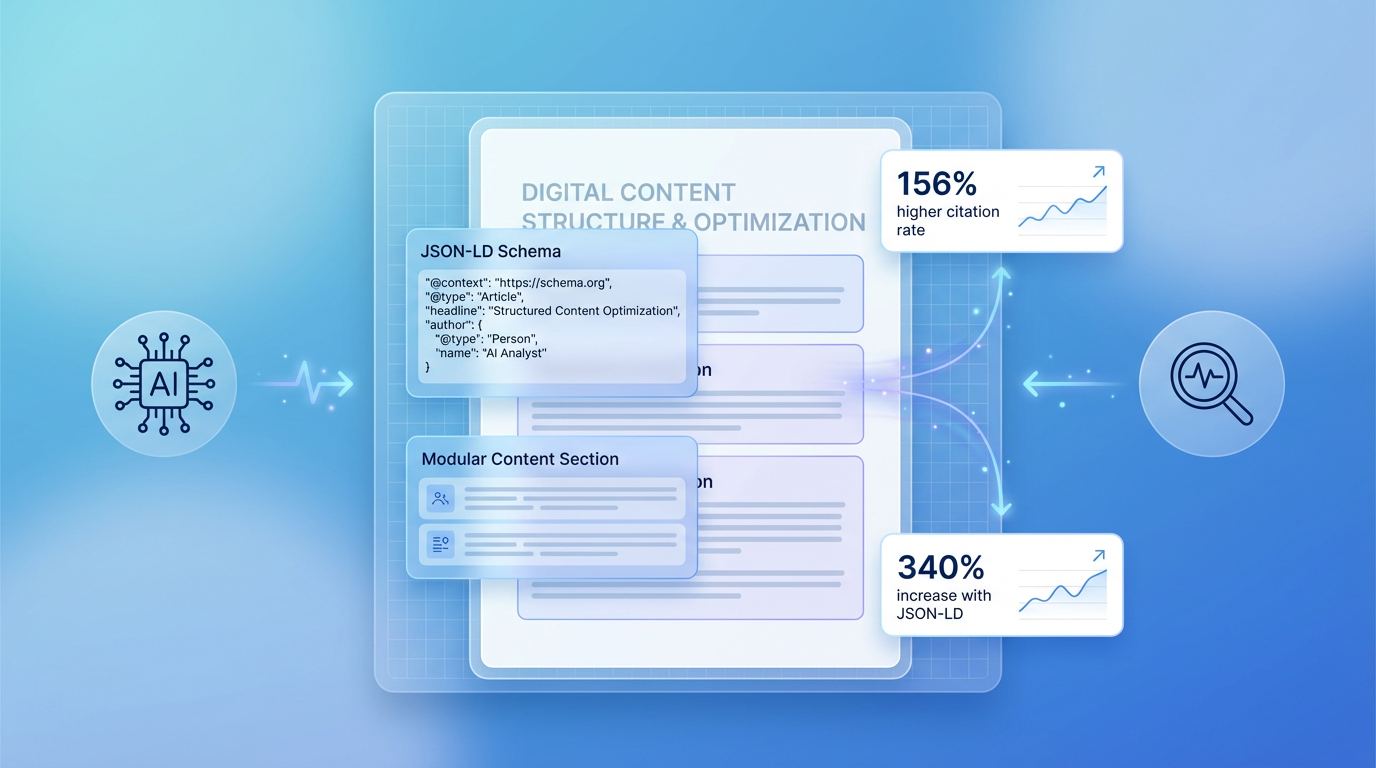
Growth Rocket analysis shows that structured text with proper hierarchies achieved 156% higher citation rates. Teams maintain command over their digital presence when they organize their text logically. A successful AI powered content creation workflow depends on specific technical elements that guide the algorithms.
A successful structure includes several critical components that guarantee extractability:
-
Sequential headings that do not skip levels.
-
Direct answers in the first sentence of a paragraph.
-
JSON-LD schema markup to classify organizational data.
-
Short paragraphs that focus on a single topic.
Growth Rocket data indicates that JSON-LD schema markup increases citation probability by 340% over unstructured text. These technical adjustments form the backbone of modern nonprofit search optimization. Proper text structure ensures that search engines recognize the value of the information provided. An effective technical search structure supports digital marketing because it makes every published piece immediately readable by machines.
Protection of Trust Through Fact Verification Workflows
Even when published pieces become immediately readable by machines, organizations risk the loss of their audience's trust if they publish inaccurate information. High content velocity requires rigorous human fact-checking to protect credibility and maintain donor confidence. Every piece of automated text needs a human editor to verify the data before publication. This review process proves that all statistics and claims reflect the organization's true impact. Google's official guidance states that expert content receives stronger visibility across both traditional and AI search results. These Experience, Expertise, Authoritativeness, and Trustworthiness signals remain critical for digital success.
Building Transparent Fact-Checking Workflows for AI Content
Teams must disclose their use of automation to maintain transparency with their readers. A December 2025 California Management Review study found that AI systems prioritize disclosed authors and clear creation methodologies. Editors establish conviction when they attach real names and professional biographies to the articles. Reviewers check every automated draft against primary sources and field reports to catch potential hallucinations. Proper fact-checking prevents misinformation and strengthens the overall search optimization strategy. Organizations build lasting relationships when they consistently publish accurate information on their primary digital platforms.
Shift to Generative Engine Optimization
Search engines now prioritize generative answers over traditional blue links across these primary digital platforms. This shift forces organizations to change how they measure digital success. A July 2025 Pew Research Center study reveals that 1% of searches generate clicks within Artificial Intelligence Overviews. Because of this drop, traditional Click-Through Rates no longer provide certainty about audience reach. They do not reflect how people consume information today.
How Generative Engine Optimization Improves Visibility and Trust
Organizations must focus on Generative Engine Optimization to replace traditional click tracking. Effective nonprofit search optimization requires the tracking of how often AI platforms mention and cite the organization's content. Seer Interactive research shows that brands with citations in AI Overviews earn 35% higher organic clicks and 91% higher paid clicks. This data proves that direct citations in generative answers impact visibility and trust.
Teams adapt to this environment and prioritize citations over raw traffic. A scalable content marketing strategy helps teams format their knowledge so artificial intelligence systems can extract it easily. Updated AI-driven search strategies ensure the organization remains visible when people ask complex questions about social issues and community programs. For example, the Global Clean Water Initiative shifted their metrics from website visits to AI citation tracking, and this change helped them secure more accurate funding measurements.
Structured Human Expertise Amplification
Accurate funding measurements require authentic knowledge, and human experts hold the command over their subjects to provide it. They understand the nuances of community impact and donor relations. However, organizations often lack the time and resources to convert that expertise into consistent digital formats. This gap makes AI powered content creation valuable for teams with limited budgets and high publishing demands.
How AI Amplifies Human Expertise for Greater Publishing Scale
Subject matter experts dictate the insights, and artificial intelligence structures the text for search engines. According to 2025 AI SEO Adoption Statistics, 56% of marketers use generative AI in their search workflows. These teams use technology as an assistant rather than a replacement. Automation tools organize rough notes into formatted articles, draft summaries, and generate metadata.
This scalable content marketing approach allows organizations to produce more materials and avoid hiring additional staff. The content automation frameworks free human experts to focus on strategy and relationship building. The technology handles the formatting tasks, and the humans provide the emotional intelligence that connects with readers. For instance, wildlife conservation directors establish authority when they share field observations, and language models format those observations into blog posts. This workflow protects the genuine message and increases the publishing frequency. Publishing frequency matters because generative engines constantly scrape the internet for the most recent data.
Authentic Search Optimization Framework
When organizations publish this recent data, proprietary data and real stories build trust with readers and search algorithms. Experts inject their firsthand experiences into the text to demonstrate deep understanding. Algorithms prioritize these genuine narratives because they offer specific details that automated systems cannot invent. PlanBeyond research indicates that authentic human-voiced content outperforms generic machine-generated text in AI systems.
Organizations speak with conviction when they share outcomes from their field operations. Case studies prove the organization's impact much better than theoretical explanations. This authentic approach prevents robotic content and keeps the audience engaged with the mission. If teams remove the human element, they risk the loss of the unique voice that separates them from automated summaries. Genuine stories remain a strong foundation for long-term digital influence.
Digital Distribution Expansion
Organizations expand this digital influence when artificial intelligence easily converts a single expert interview into multiple formats. A core article easily becomes a series of social media posts, a newsletter draft, and a video script. This format adaptation maximizes digital reach and avoids administrative overhead increases for the team. ZipTie benchmarks reveal that multimodal content increases selection rates by 156% in generative answers.
Organizations build authority when they present information through text, images, and structured data simultaneously. Effective content marketing relies on this exact formatting strategy to reach diverse audiences across different platforms. The team focuses on a single strong central message, and the software adapts that message for every necessary channel. This automated distribution ensures that the original human insights reach the widest possible audience.
Tactical Structure for AI Content Creation
Generative search engines require structural rules to extract and cite information accurately so organizations can reach this widest possible audience. Algorithms scan pages for answers instead of a full narrative review. Writers must adopt an answer-first approach that delivers the message immediately in the opening paragraph. This direct structure provides the certainty that automated systems need to process the information.
Growth Rocket analysis shows that structured text with correct hierarchies achieved 156% higher citation rates. Teams maintain command over their digital presence and organize their text logically. A successful AI powered content creation workflow depends on specific technical elements that guide the algorithms.
Content creators must implement several structural components to guarantee extractability:
-
Format headings sequentially and avoid skipped levels.
-
Answer questions directly in the first sentence of a paragraph.
-
Embed JSON-LD schema markup to classify organizational data.
-
Keep paragraphs short and focused on a single topic.
Growth Rocket data indicates that JSON-LD schema markup increases citations by 340% compared to unstructured text. These technical adjustments form the backbone of modern nonprofit search optimization. Proper structural rules ensure that search engines recognize the value of the information. An effective technical search structure supports the overall marketing strategy because it makes every published piece readable by machines. If organizations structure their web pages correctly, artificial intelligence tools will naturally prioritize their insights over poorly formatted alternatives.
Trust Protection Through Fact-Check Workflows
Artificial intelligence tools prioritize these structured insights, but organizations still risk the loss of their audience's trust if they publish inaccurate information. High content velocity requires rigorous human fact-checks to protect credibility and maintain donor confidence. Every piece of AI powered content creation needs a human editor to verify the data before publication. This review process provides the assurance that all statistics and claims reflect the organization's true impact. Google's official guidance states that expert content receives stronger visibility across both traditional and AI search results. These Experience, Expertise, Authoritativeness, and Trustworthiness signals remain critical for digital success.
Building Transparent Verification Workflows for AI Content
Teams must disclose their use of automation to maintain transparency with their readers. A December 2025 California Management Review study found that AI systems prioritize disclosed authors and clear creation methodologies. Editors establish conviction when they attach real names and professional biographies to the published articles. Reviewers check every automated draft against primary sources and field reports to catch errors.
Proper fact-checks prevent misinformation and strengthen the overall digital strategy. For example, a global health charity recently implemented a two-step verification workflow where field nurses review AI-formatted medical articles. This case study demonstrates how human oversight protects the organization's reputation while it scales output. Organizations build lasting relationships when they consistently publish accurate and verified information on their primary digital platforms. A sustainable publication cycle always balances the speed of artificial intelligence with the accuracy of human judgment.
Conclusion
This balance demonstrates that artificial intelligence serves to augment human storytelling rather than replace genuine lived experiences and original research. Organizations prioritize transparent, human-led insights and use automation strictly for structural formatting and distribution. These organizations develop a successful AI powered content creation strategy when they rely on real people to provide authentic perspectives. When these teams combine authentic emotional narratives with precise technical optimization, they achieve long-term visibility across future search platforms. Leaders take the next step when they adapt content generation processes to ensure the mission continues to connect with audiences in an AI-driven world.