Reporting without the manual pull
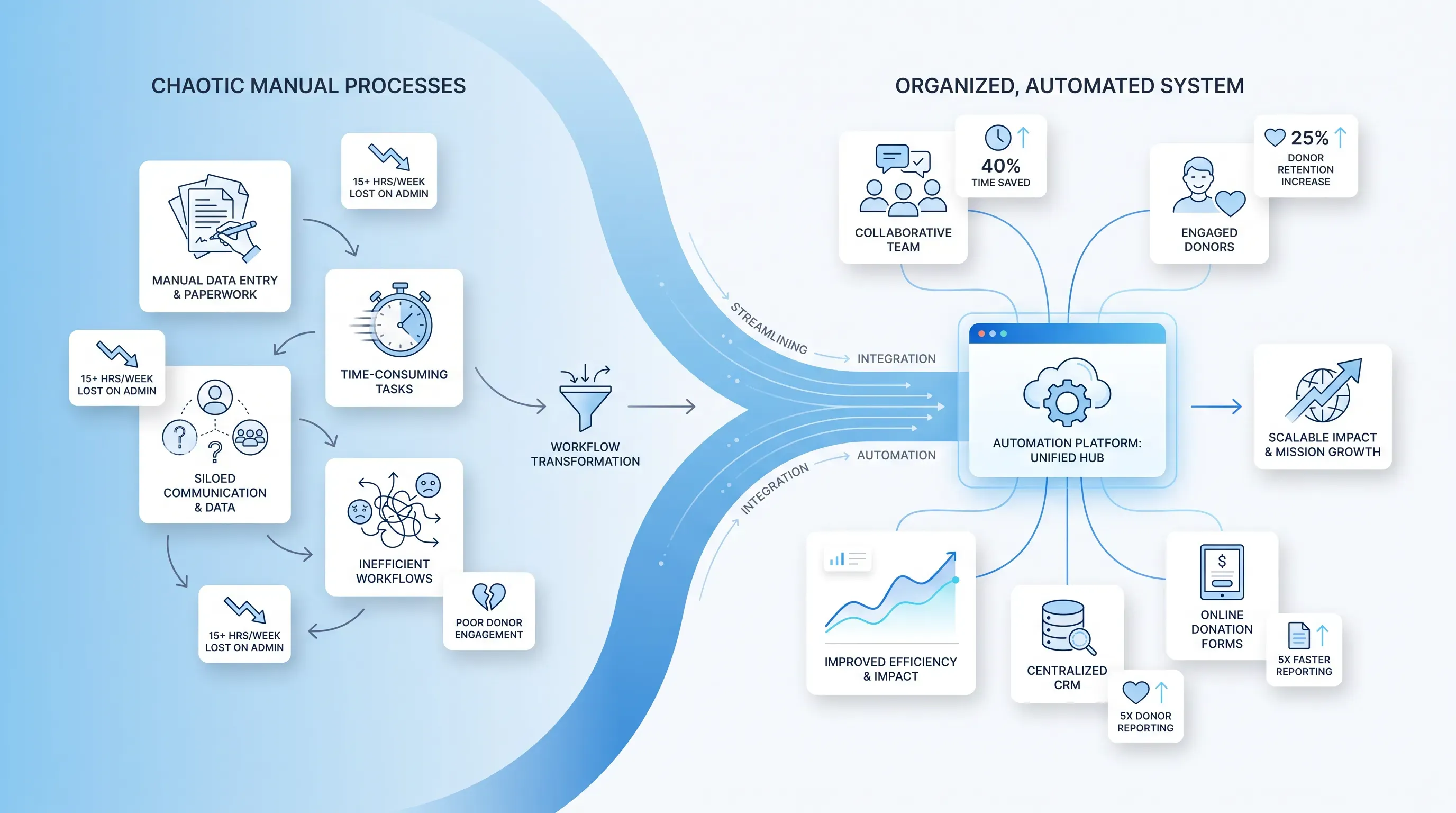
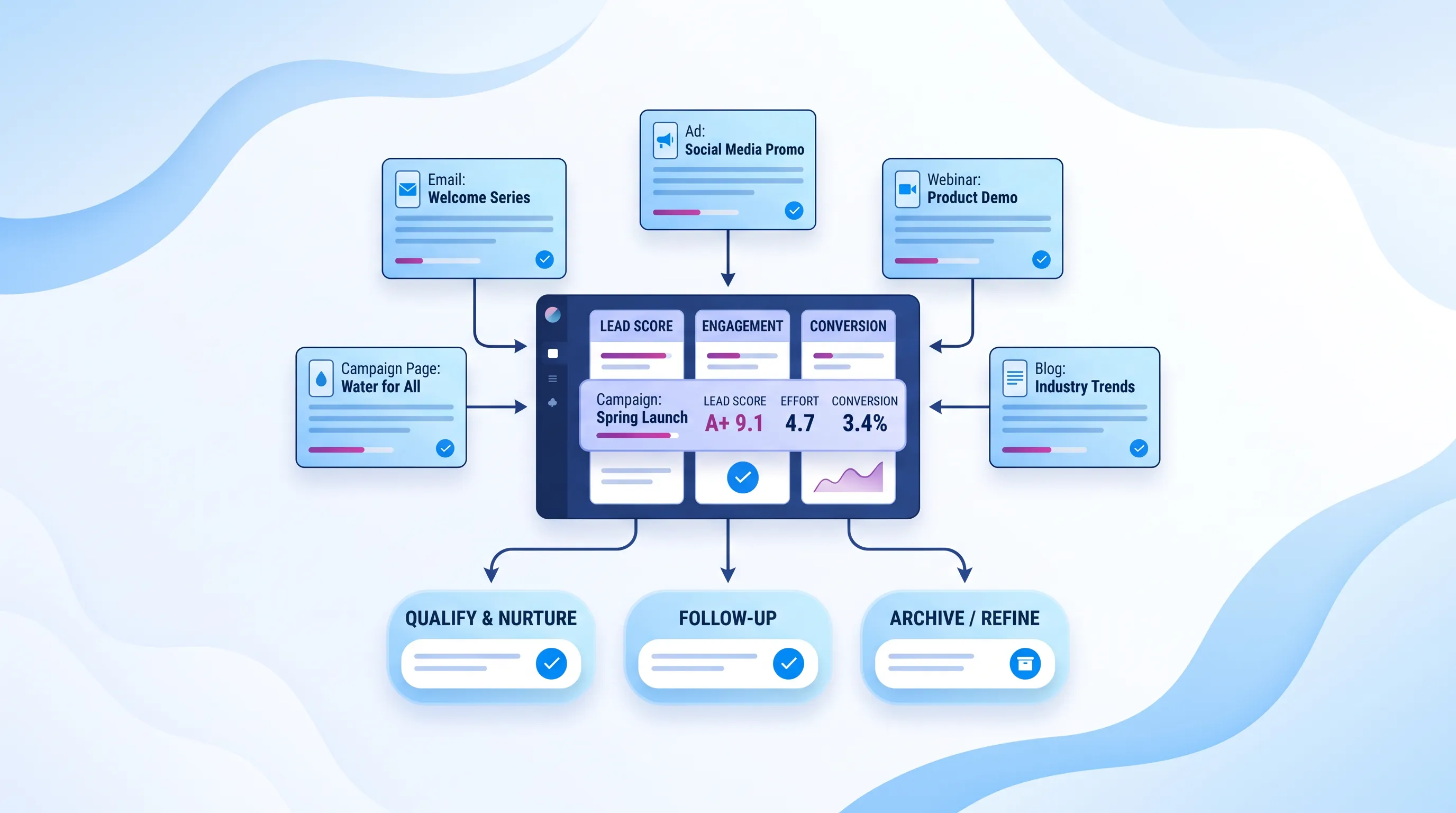
The late-night spreadsheet before a board meeting is one of the clearest wins here. Automated reporting in nonprofit automation platforms generates donor and revenue reports on a schedule, so the numbers are ready when you need them instead of assembled by hand at 11 p.m. That reclaims real time. Kleercard's 2026 analysis found that nonprofits that adopt this kind of automation report that they save 15 to 20 hours per week on administrative work.
The AI highlights trends worth acting on, like a dip in retention among mid-level donors or which segment is quietly giving the most. That turns raw rows into a decision a director can defend to the board. The stakes are real, since dedicated reporting tools produce reports 4.2 times faster than spreadsheets, per the Blackbaud Institute's 2025 census. When you answer to a board and to grant funders on a fixed calendar, having accurate reports ready on demand changes how the conversation goes.
Smarter supporter engagement and ai campaign management
The individual tasks add up to something larger. Once the scaffolding runs itself, ai campaign management helps you engage supporters at a scale a small team could never reach manually, and run campaigns that sharpen over time instead of starting from zero each round.
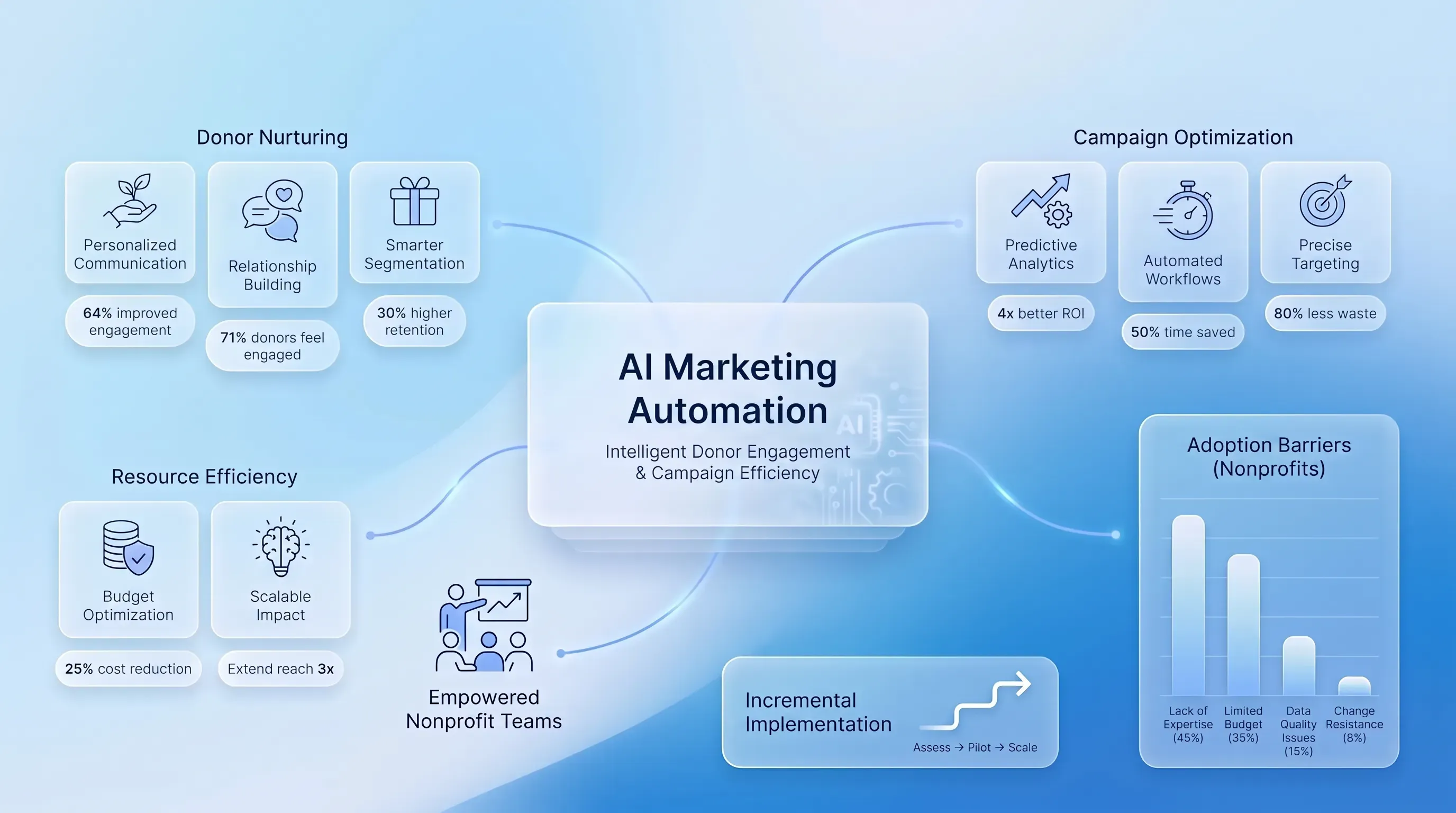
Segmentation is where the reach comes from. You group supporters by giving history or interests, then send each group a message that actually fits. An Abila study cited by Nonprofit Tech for Good found that 71% of donors feel more engaged when communications are personalized. AI-driven segmentation updates those groups in real time as behavior shifts, so a donor who lapses moves into the right flow without you rebuilding the list.
Then there's the optimization side. AI campaign management tools test the variables you'd otherwise guess at, like subject lines and send timing, then adjust future sends toward what works. Personalized send-time optimization alone can lift open rates from the 18 to 22% range up to 28 to 35%, because the email lands when each person actually checks their inbox. The value of AI campaign management is that the software keeps learning across campaigns, so your outreach gets both broader and sharper after every send. That compounding is the operational win, and it's why AI campaign management belongs in the toolkit of a team that can't afford to run every test by hand.
Adopting automation without burning out your team
The honest fear is that new AI marketing automation software becomes another job nobody has time for. That fear is grounded in reality, since Taproot reports that over a quarter of nonprofit leaders cite lack of staff training as a top barrier to AI adoption and that training gets just 1% of nonprofit technology budgets. The goal is to start small and let early wins build confidence.
A staged rollout keeps the team steady. Here's a sequence that works:
-
Pick one or two high-value workflows first, like the new-donor welcome series and automatic thank-yous, since those deliver visible results fast.
-
Manage cost through nonprofit programs before paying full price. TechSoup connects nonprofits to software at up to 90% off, and eligible organizations qualify for $10,000 a month in free Google Ad Grants.
-
Use templates and vendor support so setup stays manageable.
The two barriers that stop most teams, limited expertise and limited time, both shrink when you narrow the scope. You don't need a tech hire to switch on a welcome sequence built from a template. And you don't need a free month to launch one workflow. Once that first automation is quietly running and saving hours, adding the next one feels like relief instead of risk.
Doing more with the team you have
At its best, AI marketing automation software lets a lean, mission-driven team act with the consistency and reach of a much larger one. The repetitive scaffolding runs on its own, which frees your hours for the work only people can do, like the personal call to a major donor or the story that moves a board. The technology handles the tracking while your team protects the relationships.
Start by auditing which repetitive task costs your team the most hours, then automate that one first. If you want a partner to map that first workflow and choose AI marketing automation software that fits a small nonprofit budget, reach out to our team for a walkthrough.