Track engagement and adjust
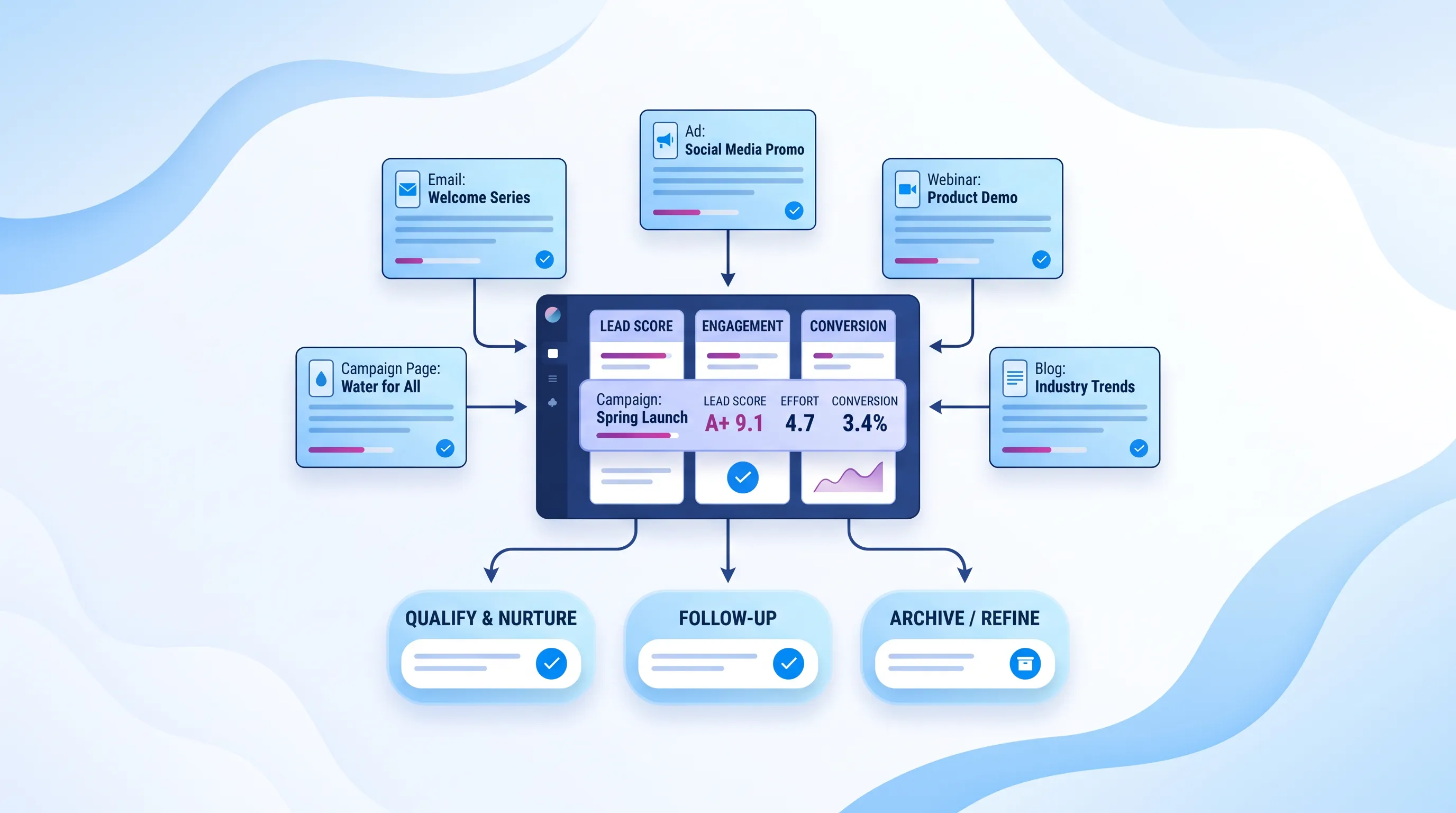
Build a monthly habit that looks at a handful of numbers tied to your mission and tells you what to keep and what to drop. Vanity metrics like raw follower count feel good and teach you nothing. Signal metrics tell you whether your non profit organization social media strategy is landing.
Pick a few and check them once a month. Engagement rate is a fair place to start, since nonprofits average 0.623% on Instagram per the Rival IQ benchmark, which gives you a line to measure against. Watch which posts drive saves and clicks to your donation page, because those actions point toward money and repeat support.
A basic tracking template is enough:
-
Month and platform
-
Posts published and average engagement rate
-
Top post and why it worked
-
One thing to stop, one thing to do more of next month
The last row is the whole point. Tracking is only worth the half hour if it changes what you do. The Uganda nonprofit mentioned earlier found short-form video pulled twice the engagement of static posts and shifted resources accordingly. That's the loop: use the numbers to steer the next month instead of your gut.
Turn volunteers into a content engine
Your biggest untapped asset is people. Volunteers and staff in the field see moments worth sharing every day. When they share the content work, a non profit organization social media strategy can finally scale. The instinct to keep control is understandable. Structure is what makes letting go safe.
Start by briefing contributors on what you need. Give them prompts, such as a photo of today's session or a sentence about what happened. Set light guardrails so voice and quality stay steady, like a short do-and-don't list and a rule that faces need permission before they're posted. You're making creativity usable.
Protect the organization with a written social media policy, because the risk is real and worth naming. As the Nonprofit Law Blog points out, the more you direct volunteers, the more they act as your agents, and the more the organization is responsible for what they post. A one-page policy covering confidentiality, consent, and who's authorized to speak for the organization closes that gap. Make it accessible to everyone and hand it to new contributors on day one.
Why is this worth the setup? Because the content it produces outperforms the polished stuff. Personal video from the field, the kind a volunteer can shoot on a phone, helps crowdfunding campaigns raise 150% more on average than those without, according to NonprofitPRO. Structure multiplies the number of people who can carry your voice.
A storytelling framework for impact
Storytelling is the creative layer that sits on top of the non profit organization social media strategy you've built. And it's the part people wrongly treat as a rare flash of inspiration. With a repeatable structure, you can turn program work into a post that moves people without staring at a blank page every time. The payoff is steep: 72% of donors say they're very likely to give after watching a nonprofit's video, and stories are what make video worth watching.
Use a four-beat structure. Open on a real person or moment. Name the stake, what was at risk for them. Show the action your organization took. Then land the impact, what changed because of it. That's the frame. The source material from your staff and volunteers plugs right into it, which is why the intake system from earlier matters so much here.
Here's a fill-in-the-blank version to keep on hand:
-
Meet [name or moment], who was facing [the stake].
-
So [your organization] did [the action].
-
Now [the impact, ideally with one concrete detail].
-
Here's how you can be part of the next one: [call to action].
The same four beats flex across post types. In an update, the impact does the heavy lifting. In an appeal, the stake leads and the call to action sharpens into an ask. In a thank-you, you close the loop by showing donors the impact their last gift created. Structured storytelling is worth the effort, because nonprofits that consistently review and adjust their stories saw a 34% improvement in donor retention, per a Network for Good report. One frame, many uses, and never a blank page again.
Make the system outlast you
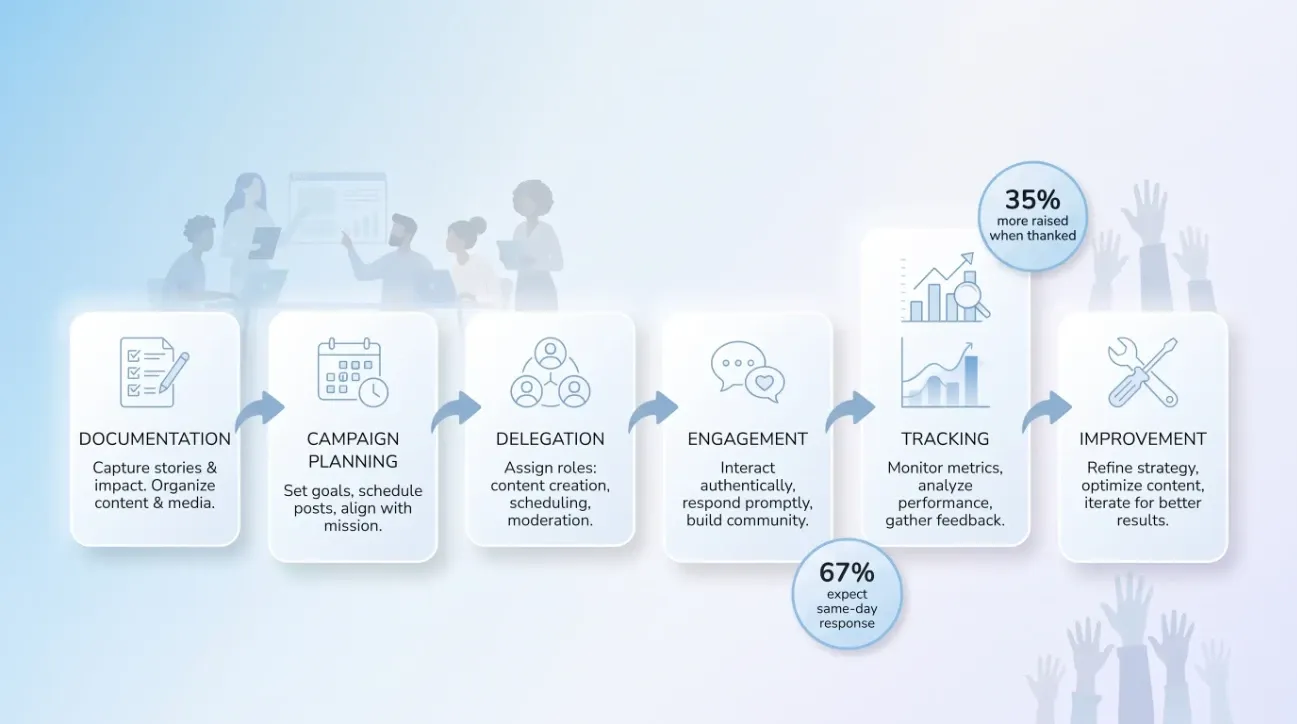
Put the six pieces together and the picture changes. They form a non profit organization social media strategy built for real capacity and shared execution. It's an operation that keeps running through a busy month or a staffing gap.
The shift is who you become in it. You stop being the person who does all the posting and start being the person who owns a system others can run. So pick one system this week and write it down. Documenting that first piece is the whole beginning of a non profit organization social media strategy that grows with your mission and survives whoever's holding it next.