New and cold followers
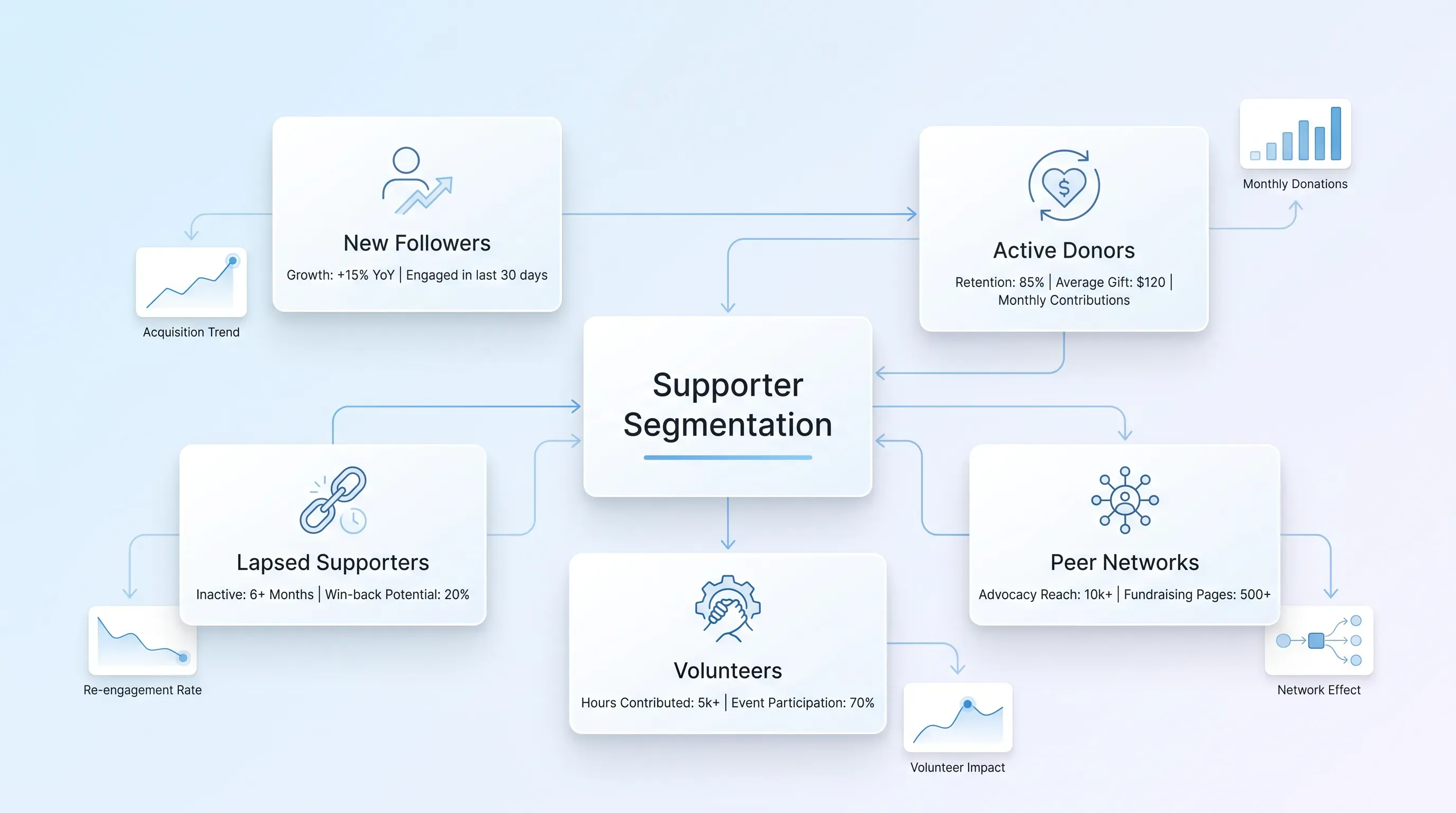
This is the person who tapped follow after a friend shared your post. They know your name and almost nothing else. What they need is clarity about who you are and an invitation to picture their own place in the story.
Keep the tone welcoming and plain. Skip the jargon your sector lives in. Your calls to action here should cost almost nothing: watch a 40-second video or read one beneficiary story. The goal of charity audience building is a first small yes, because a stranger who takes one tiny action takes a bigger one later. Pushing a gift ask on this group too early teaches them to scroll past you.
Move them one step at a time. A cold follower who watches your video and saves a post has told you something useful, since 72% of donors say they're "very likely" to give to a charity after watching a video about its work, per figures compiled by Here Now Film. Video is how strangers meet you before they ever consider their wallet.
Active donors and volunteers
These people already give time or money. What keeps them close is recognition through honest updates on the impact they helped create, which cast them as the hero in the story. They need to feel their contribution landed.
You can spot this group without paid tools. Watch for supporters who comment more than once or share posts to their own feed. Those repeat signals are useful for charity audience building, and a quick note in a spreadsheet is enough to track them. When you thank people directly, it pays off: Facebook fundraisers who get thanked by the nonprofit during the campaign raise 35% more than those who aren't, according to GivePanel data cited by Nonprofit Tech for Good.
Your messaging here should deepen loyalty and open the door to more. Show the volunteer the family they helped. Tell the monthly donor exactly what their $20 covered last month. Then make the next ask specific, whether that's an upgrade to recurring giving or bringing a friend to an event. Retention is fragile, with the average donor retention rate at 45% in 2024 per the Fundraising Effectiveness Project, so every recognition post is retention work.
Nonprofit social outreach to lapsed and peer networks
Some supporters used to engage and have gone quiet. Others are active right now and sit on top of networks you'll never reach directly. Both are within reach if you handle charity audience building right, and neither responds to cold-audience messaging.
For lapsed supporters, remind them of what they were part of and show what's changed since. A "here's what you helped build" message respects the history and reopens the door faster than a fresh appeal. This kind of nonprofit social outreach reconnects with people who already know you.
For peer networks, put the sharing in your supporters' hands, because people act when they see people like themselves already involved. The data backs this hard: 87% of peer-to-peer donations come from individual supporter pages rather than the main campaign page, according to CauseVox figures compiled by Fundraise Up, and 80% of first-time donors to an organization give through a peer campaign, per GoFundMe Pro. That's why effective nonprofit social outreach leans on your existing supporters as messengers. Give them a ready-made graphic with a suggested caption. Keep every tactic here cheap and repeatable, because a one-person team can't manage anything else. Done well, nonprofit social outreach through peer networks reaches people no paid ad in your budget ever could.
Build your storytelling pillars
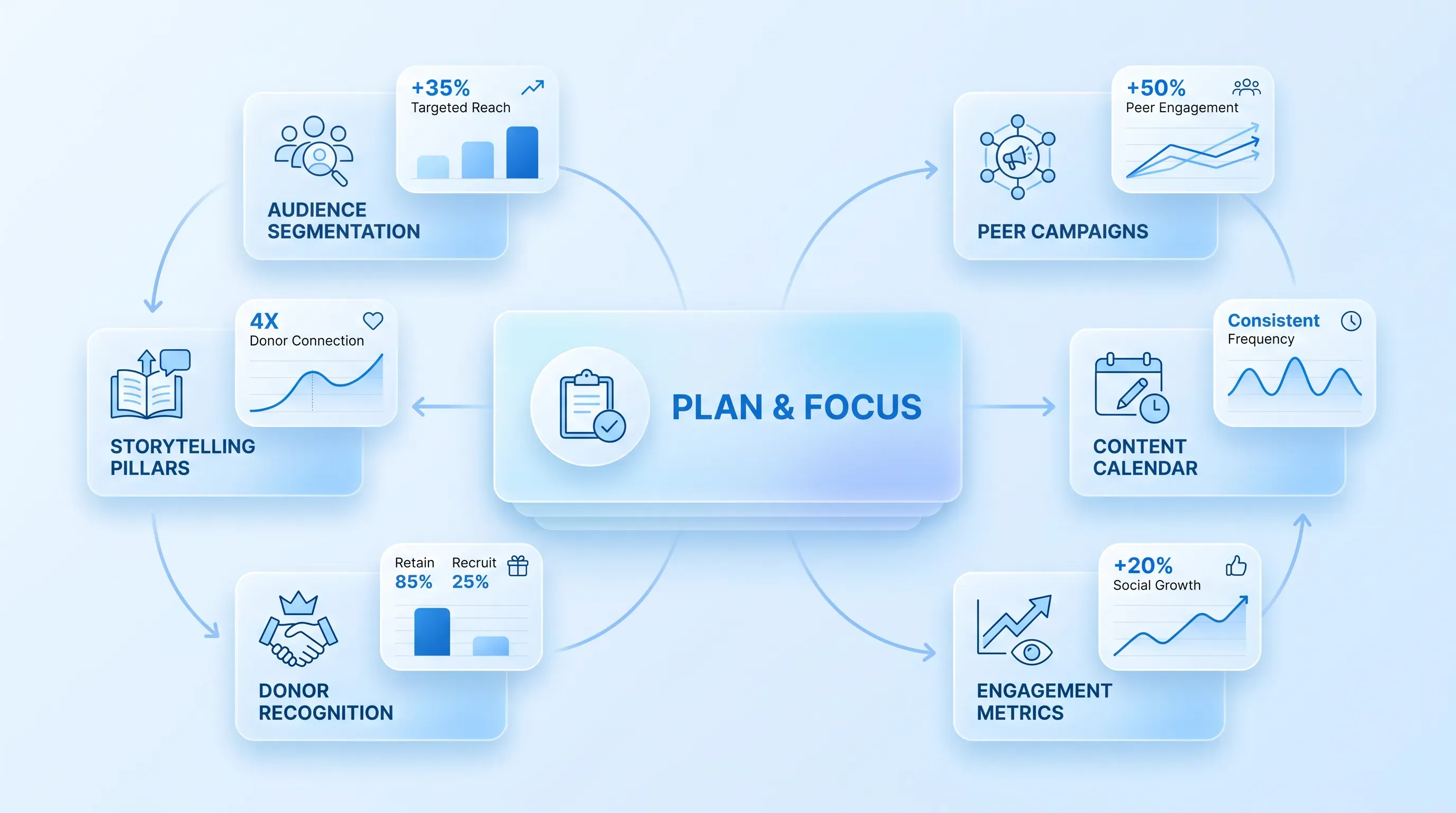
Social media marketing for non profit organization feels random when every post starts from a blank page. Storytelling pillars fix that. Pillars are three to five recurring themes that every post ladders up to, so the account holds together even when the individual posts vary. Decide the themes once, and daily planning stops being an act of invention.
Four pillars cover almost any nonprofit, and you can rotate through them:
-
Beneficiary impact: the specific person or family your work changed
-
Donor and volunteer spotlights: the supporters doing the work, made visible
-
Behind-the-scenes program work: how the mission actually runs day to day
-
Mission education: the issue itself and why it needs attention
Beneficiary impact carries the most weight, and there's hard evidence for why. In the well-known Save the Children experiment, people who read a fact-based appeal donated $1.14 on average, while those who read about one identifiable child gave $2.38, more than double, as documented in the research on the identifiable victim effect. A single named story moves people that statistics can't. Organizations that use storytelling well report a donor retention rate of 45% against 27% for those that don't, according to CauseVox, which makes pillars a retention tool.
Pillars also keep your messaging balanced instead of lopsided. Left unplanned, most feeds drift into constant appeals until supporters tune out. When you assign each week's posts to a pillar, you can see at a glance whether you've asked for money three times running and forgotten to educate or celebrate anyone. That balance lets different campaign content coexist without one swallowing the others.