Wikidata and Wikipedia for Nonprofits: Making Your Organization Machine-Readable

Content authorArtem LozinskyPublished onReading time11 min read
A modern infographic featuring a central browser panel surrounded by geometric icons representing data flow, set against a soft blue gradient.

This article explains how to check what public records say about your organisation across Wikipedia and Wikidata, and how to improve them without breaking community rules. It covers eligibility testing and the limits of what any of this work can promise.

When identity becomes unclear

Nonprofit entity optimization starts with a problem most communications teams recognise long before they have a name for it. Your organisation appears under an acronym in one database and its pre-merger name in a funder's annual report. Somewhere else, a similarly named group runs a different programme in a different country.

Inconsistent identity information costs you in ordinary ways. Journalists cite the wrong entity. Grant officers query which legal body signed the agreement. Catalogues and registries record two organisations where there is one.

Wikipedia and Wikidata both hold public records about organisations, and both are governed by volunteer communities with their own rules. Neither is a profile you own. Understanding the difference is where nonprofit entity optimization begins.

Wikipedia and Wikidata differ

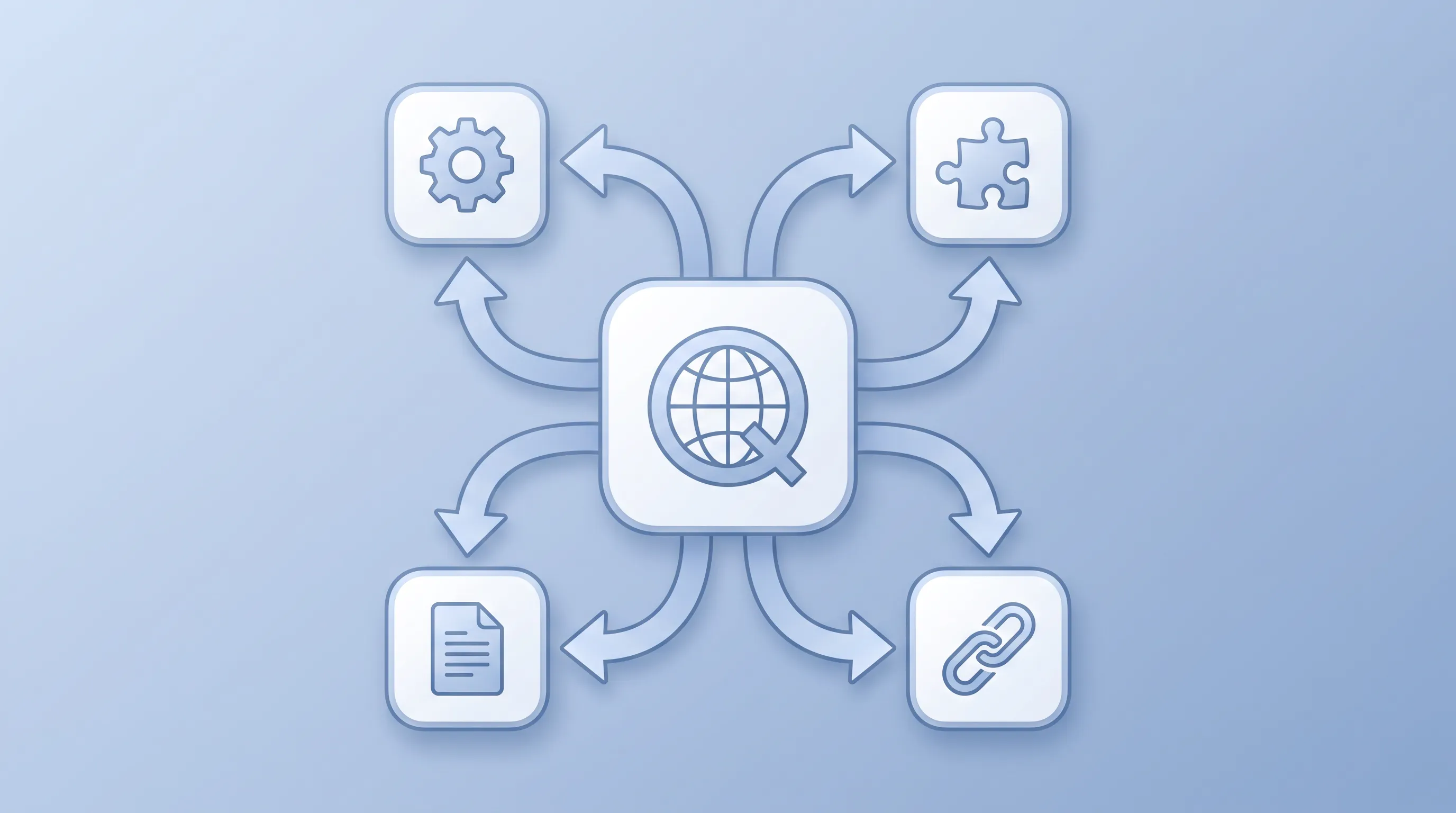
Rounded square icons representing aspects of Wikidata with a central item icon, connected by soft blue arrows on a gradient background.

A knowledge graph is a set of entities with typed links between them. Instead of a sentence saying an organisation was founded in Nairobi, a knowledge graph records the organisation as one item, Nairobi as another, and connects them with a property. Wikidata holds 123,710,142 items built that way, and it became the second Wikimedia project recognised as a digital public good in September 2025.

Lydia Pintscher, who leads the Wikidata portfolio at Wikimedia Deutschland, described the underlying work in a Whose Knowledge? interview: "this is all about how we model the world, right? The world is very complex, and there are many different ways you can model this reality."

Wikipedia vs. Wikidata

  • What it holds: Wikipedia contains encyclopaedic prose articles written for people. Wikidata contains structured statements written for people and machines.

  • Inclusion test: Wikipedia requires substantial coverage in independent, reliable sources. Wikidata has one of three criteria, including a clearly identifiable entity described by serious public references.

  • Scope per language: Each of the 348 active Wikipedia editions sets its own rules. Wikidata uses one shared item with labels in many languages.

  • Who decides: Wikipedia volunteer editors make decisions through discussion and deletion processes. Wikidata volunteer editors use the same kind of community process. That distinction matters for nonprofit entity optimization. An item on Wikidata and an article on Wikipedia answer different questions, and meeting the inclusion criteria for one does not guarantee meeting the criteria for the other.

That split matters for nonprofit entity optimization. An item on Wikidata and an article on Wikipedia answer different questions, and clearing one bar tells you nothing about the other.

Build an identity fact sheet

Before touching anything public, write down what's true and where it's documented. The fact sheet is an internal document, and it does the work that prevents sloppy edits later. Everything on it needs a source you can point a stranger to.

  • Official legal name, exactly as registered, plus the jurisdiction and registration number

  • Former names, acronyms, and translated names, each with the date range it applied to

  • Founding date, with the document that records it

  • Official website and the pages you control that state your identity

  • External identifiers you already hold, such as a Research Organization Registry record or one of the 2.93 million active Legal Entity Identifiers issued by the end of 2025

Then draw the boundaries. The registered charity is one entity. Its flagship campaign is another thing, or it is nothing more than a name the charity uses. A national branch with its own registration is a separate legal entity. The executive director is a person. Most of the confusion I've seen in nonprofit entity optimization work comes from collapsing these into one record and then wondering why nobody can tell them apart.

Need help with your AI visibility?

Book a free consultation with our experts we'll help you determine exactly which services your organization needs.

Test Wikipedia eligibility

English Wikipedia asks for significant coverage in reliable sources that are independent of the subject, and for organisations it applies that test strictly. Coverage has to treat your organisation directly and in detail. A quoted sentence from your spokesperson in a story about something else doesn't do it.

Other language editions set their own thresholds, and German Wikipedia's rules aren't English Wikipedia's rules. If your work is concentrated in one country, the relevant edition is the one that covers it.

Here's the part that stings. Eligibility has nothing to do with whether your mission matters. A clinic serving 40,000 people a year can fail the test while a defunct software company passes it, because the test measures documented attention. Treating nonprofit entity optimization as a reward for good work leads teams to argue the wrong case with reviewers.

Assess each source

Score every candidate source against four criteria: depth, independence, reliability, and relevance. Be critical when evaluating your own material.

  • Feature profile in a national newspaper: Full article about your organisation; no commercial ties; editorial oversight; focuses on the legal entity.

  • Your annual report: Detailed information; no independence; self-published; relevant to your organisation but not independent evidence.

  • Funder’s grant announcement: Routine coverage; partial independence; reliability varies; confirms existence only.

  • Sponsored supplement: Can be long; paid placement; not independent; carries no evidential weight.

  • Name in a list of attendees: One-line mention; independent; reliable enough; too little detail to count as substantial evidence.

Length isn't depth. A 2,000-word sponsored piece carries no more weight than a press release, because independence from the subject is what the guideline asks about. Routine announcements fail for the same reason that a birth notice doesn't make someone notable.

Decide whether to proceed

Count the sources that passed all four columns. If you have three or more independent, reliable pieces, you have a case worth putting in front of a reviewer. If you have one, you have a reason to wait. Lumino's audit of 1,009 drafts sampled in late 2025 found 68% were declined, and thin sourcing is the reason.

Stopping is a legitimate outcome. So is spending the next two years earning coverage instead of arguing about it. And a Wikidata item never establishes Wikipedia eligibility, because the two projects test different things, which means nonprofit entity optimization can't be sequenced as a ladder from one to the other.

Use transparent processes

If you're employed by the organisation, or paid by it as a consultant or agency, you have a conflict of interest. Wikimedia's Terms of Use require you to disclose your employer, client for any contribution you're compensated for, on your user page or in the edit summary. That's a binding term, not advice.

English Wikipedia's conflict of interest guideline goes further. Conflicted editors are strongly discouraged from editing affected articles directly, which means they propose changes on the talk page instead. New articles go through Articles for Creation, where an uninvolved volunteer reviews the draft.

Two practices will get your work reverted and your account scrutinised: editing under an undisclosed account and stripping sourced criticism because it reads badly. The last one is the most common temptation and the most damaging when it's caught. Responsible nonprofit entity optimization means correcting what's wrong and leaving what's accurate, even the parts you'd rather not see.

Need help with your AI visibility?

Book a free consultation with our experts we'll help you determine exactly which services your organization needs.

Audit Wikidata records

Search before you create. Run your official name and every former name through the Wikidata search box. Then search your registration number and any identifier you hold, because items are often created from registry imports under names nobody at your organisation uses.

Check related entities for knowledge graph presence too. Your founder and your parent body may already have items that point at something resembling your organisation. Wikidata's notability policy accepts an item under one of three criteria, the most relevant of which is a clearly identifiable entity that can be described using serious and publicly available references.

An item is a referenced public record maintained by volunteers. It isn't a marketing form, and the project's own essay discourages creating items about yourself or your organisation without that evidence. Pintscher put the reuse logic plainly to TechInformed in June 2025: if people know where the data comes from, "they also know they can contribute or correct it."

Check knowledge graph presence

Assessing knowledge graph presence means looking at four things on any item. Are there duplicates, where two items describe the same legal entity? Does the label use the name your sources use? Is the description a short, neutral phrase that distinguishes you from the similarly named group two countries over? And does the item's scope match one entity?

Aliases carry more weight for knowledge graph presence than people expect. Adding your acronym and former name as aliases is how a record stops colliding with its neighbours, and it's the cheapest improvement available in nonprofit entity optimization. Strong knowledge graph presence helps a human or a system tell two organisations apart. It guarantees nothing about any external platform's features, and anyone promising otherwise is selling you something.

Use Wikidata for organizations

Working with Wikidata for organizations means choosing established properties rather than inventing descriptive text. Start with instance of and official name. Add official website. Add external identifiers you verified during the fact sheet stage, since those are what let other databases reconcile against your record.

Every statement in Wikidata for organizations wants a reference, and a registry page or a published article is a reference while your own marketing copy is not. The description field is where discipline matters most when you use Wikidata for organizations: "charitable foundation registered in Kenya" works, and "leading voice for community-led change" doesn't. Neutral descriptions survive review. Promotional ones get rewritten by someone less sympathetic than you.

Nonprofit entity optimization example

Take a fictional body called the Riverbank Literacy Trust, registered in Ireland in 2011, which runs an international programme branded Riverbank Reads and publishes in French as Fondation Riverbank. Its fact sheet treats the Trust as the legal entity and Fondation Riverbank as a translated name for the same Trust.

That gives a single item for the Trust, with "Fondation Riverbank" as a French label and "RLT" as an alias. Its description reads "literacy charity registered in Ireland." Statements record inception 2011, referenced to the national charity register, and country Ireland. Riverbank Reads gets no item until independent sources describe it as something distinct from the Trust.

Applying Wikidata for organizations this way keeps the boundaries legible. If a second Riverbank Trust exists in Canada, the description and the registration identifier do the disambiguation work without either record claiming anything promotional.

Fix gaps and review

Most nonprofit entity optimization audits turn up the same handful of problems, and each has a defined route.

  1. Duplicate items: propose a merge through Wikidata's merge process rather than editing one and abandoning the other

  2. Dead or redirected official website links: replace them with current URLs and a reference

  3. An outdated name on a Wikipedia article: post a disclosed edit request on the talk page with the source that documents the change

  4. No independent coverage at all: stop, and improve what you control instead

That last case is where the real work sits. Your About page should state the legal name and registration number in plain text. Google's documentation says Organization structured data helps it disambiguate your organization in search results, which is a claim about understanding. Public registries you can update, like charity registers and research identifier records, are worth the same attention.

Review after something substantive changes, such as a merger or a renaming. Don't review monthly out of anxiety. Nonprofit entity optimization operates inside projects the community controls, and repeatedly nudging volunteers for cosmetic changes damages the relationship you'll need when something genuinely needs fixing.

Choose the next step

The sequence holds: verify your own identity facts and work through disclosed community processes when a change is warranted.

Snoika Foundation works with nonprofits and public institutions on how their organisations are represented and found across search and AI systems, and our team can review your current records and sources before you commit to any editing. Book a call with us to discuss where your nonprofit entity optimization effort starts.
Need help with your AI visibility?

Book a free consultation with our experts we'll help you determine exactly which services your organization needs.

Compare the items’ legal names, registration numbers, identifiers, references, and incoming links before proposing a merge. Keep the record with stronger sourcing when possible, then follow Wikidata’s merge process. Don’t abandon one item or move statements manually without documenting which entity each statement describes.

A nonprofit can suggest corrections or an item, but it should first confirm that reliable public references support the record. Staff and paid editors must disclose their relationship, use neutral wording, and avoid adding claims based only on internal marketing material. Volunteer editors make the final decision.

Review records after a merger, legal-name change, registration update, leadership change, or website migration. Check Wikidata, relevant Wikipedia pages, charity registers, identifier databases, and your own website. A change-based schedule works better than monthly reviews because it limits unnecessary edits and keeps evidence current.

No. Organization structured data helps search engines interpret information on your website, but it doesn't edit Wikipedia or Wikidata. Correct inaccurate community records through their published processes, and make sure your website, registries, and external identifiers contain consistent facts that reviewers can verify.

Ask Snoika Foundation for a review when your organisation has conflicting names, duplicate records, unclear legal boundaries, or uncertain source quality. A review can compare public records with your fact sheet before any edits begin. You can book a call if you need help deciding which issue to address first.

Book a Demo

Book a time that works best for you

You Might Also Like

Discover more insights and articles

A diagram of an editorial calendar workflow in blue shades, featuring interconnected icons and labeled steps in a modern, clean style.

AI-Powered Editorial Calendar for Continuous Visibility

This article explains how a small communications team can plan publishing and maintenance in one spreadsheet that follows documented reader demand instead of the awareness-day treadmill. It covers inputs and prioritisation. A worked four-week example and the review questions worth asking at month end follow.

Modern infographic illustrating a central browser interface for nonprofit competitive intelligence, surrounded by symbolic blue icons and connectors.

Competitive Visibility Monitoring for Mission Organizations

This article explains how to check whether your organisation shows up, and shows up accurately, in search results and AI-generated answers about your cause. It covers a question registry and a coding method two reviewers can reproduce, plus a share calculation with defined denominators that shows the point at which paid software earns its cost.

Modern infographic depicting an advocacy content strategy with a central browser window, user group icons, and a soft blue gradient background.

Advocacy Content SEO for Policy and Public Education

This article sets out a practical framework for planning and measuring policy pages so that facts and organisational positions stay separate on the page. It covers question mapping and evidence ranking through an outcome worksheet for ethical evidence publishing built around one clearly fictional proposal.

A modern infographic featuring a central web browser window with a multilingual AI dashboard, surrounded by blue line icons on rounded cards.

Multilingual AI Visibility Roadmap for International Missions

This article sets out a prioritized way to decide which languages your organization publishes in and what a complete reader journey looks like in each one. It covers language scoring and localization briefs, then hreflang structure and review gates, along with measurement by language and geography.