AI-Readable Internal Linking Strategy

Content authorArtem LozinskyPublished onReading time11 min read
A modern digital interface displays interconnected web pages with highlighted links, surrounded by white rounded cards and soft blue gradient background.

This article explains how to connect scattered pages on an NGO website so both crawlers and language models can follow the thread from a programme to the research and policy work that surrounds it. It covers mapping and clustering.

Why linking deserves a second look

AI-focused internal linking is worth your attention for one unglamorous reason: the systems reading your site follow the paths you build, and most mission-driven sites have not built any. Pages pile up after campaigns, and the research report from 2022 sits with no route in or out.

The pitch you have probably heard is that links pass authority to AI systems and buy you citations. That is not what the evidence supports. What AI-focused internal linking actually does is more modest and more useful. It makes your content findable and it gives a machine the context to tell a water programme apart from a water policy brief.

Rethink links for retrieval

Start with what is documented. Google states plainly that it can crawl a link when it is an <a> HTML element with an href attribute, and that URLs found in those attributes get added to the crawl queue. Discovery and navigation are the established functions. John Mueller, Senior Search Analyst at Google, called internal linking "super critical for SEO" and one of the biggest things you can do to guide both Google and visitors toward the pages you consider important.

Retrieval systems add a wrinkle. Vercel and MERJ analysed real crawler traffic and found that none of the major AI crawlers render JavaScript. If your related-content module is injected client-side, those links don't exist as far as those bots are concerned. Server-rendered anchors in the body copy do.

There is also evidence that agents move through sites the way a reader does. Analysis of ChatGPT's Deep Research telemetry surfaced by Chris Long and David Konitzny found that roughly 30% of the content it reads is reached by following internal links from pages it already fetched. An orphan page is invisible to that pattern.

Now the part people oversell. Ranking well still correlates with being cited: seoClarity analysed 362,000 queries and found 94% showed at least one overlap between AI Overview citations and the top 20 organic results. But Ahrefs found that only 38% of cited pages also rank in the top 10, down from about 76% seven months earlier. AI-focused internal linking helps a system find and interpret your work.

Map expertise and intent

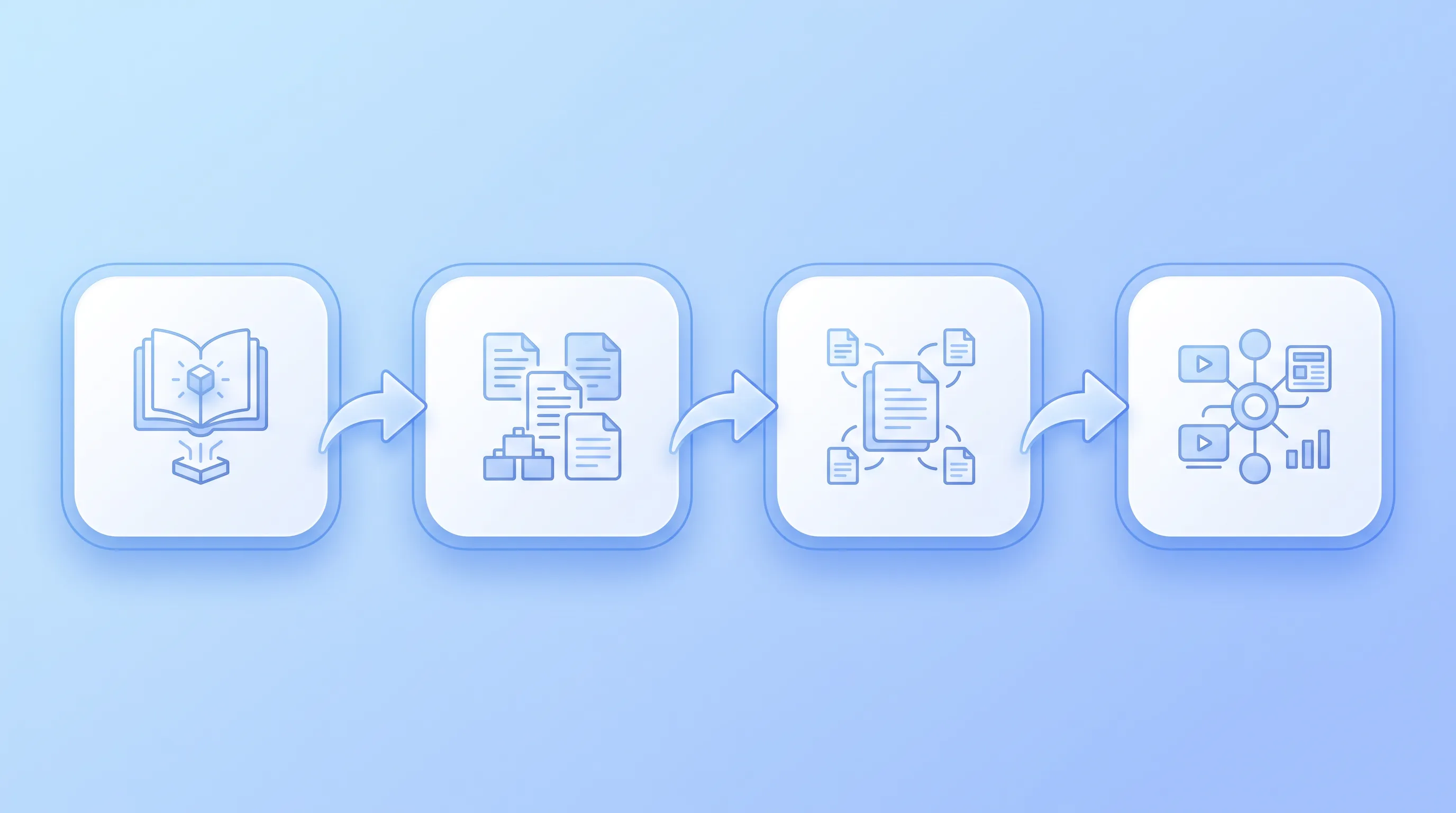
Conceptual icons in soft blue shades within rounded squares, connected by arrows, set against a soft blue gradient background.

Before you link anything, you need to know what you have. Most NGO sites sit between 20 and 80 pages, which means a spreadsheet and an afternoon will get you further than any tool. For anything larger, Screaming Frog crawls up to 500 URLs free, which covers the vast majority of charity websites.

List every URL, then add columns for what the page is about and who it was written for. A further column captures what the organisation knows about that subject that nobody else does. That last column is the one teams skip, and it is the one that makes AI-focused internal linking different from generic SEO housekeeping. You are documenting expertise.

Then add the questions. Our donors ask where the money goes. Our partners ask how the programme is delivered. A journalist asks for the evidence base. Each question implies a route through the site, and routes are what you are about to build.

Need help with your AI visibility?

Book a free consultation with our experts we'll help you determine exactly which services your organization needs.

Entity relationship mapping

Entity relationship mapping is the step where you write down how things actually connect. A programme runs in a location. A location sits inside a country strategy. A policy position rests on research. Research produces findings that a programme then applies, and an impact report reports on the result.

Take WaterAid as a working example. Their 2024-25 annual report records reaching 30 million people with clean water through influencing and capacity strengthening. That figure belongs on an impact page. It also belongs linked from the country programme pages that produced it and from the policy page arguing for government investment. Those are meaningful relationships, because each one answers a question the other page raises.

Compare that with a keyword-driven link. A blog post about handwashing and a fundraising page about hygiene kits share a word. They share nothing else. Entity relationship mapping forces you to say what the relationship is in plain language before you create the link, and if you can't finish the sentence "this page explains the X that page depends on," there is no link to make.

Content topology strategy

A content topology strategy is the shape your mapped relationships take once you group them. You are deciding which pages belong in the same neighbourhood and which page is the front door to that neighbourhood.

Four or five clusters is plenty for a lean team. Climate resilience. Sanitation in healthcare facilities. Gender and inclusion. Governance and financing. Each cluster gets one page that explains the subject properly and a set of pages that supply evidence and practical steps. Semrush's guidance on keeping crawl depth to three clicks or fewer is a reasonable constraint to hold yourself to, and it happens to be good for people in a hurry.

A content topology strategy built this way needs no plugin and no migration. It lives in a spreadsheet with a cluster column, and it survives a CMS change.

Define page roles

Every page in a cluster plays one of two parts. It is either the foundational resource that frames the subject, or it is a supporting page that proves or extends it. Writing this down stops the arguments about which page should link to which.

A policy hub on sanitation financing, for instance, would carry outbound links to:

  • The research that produced its evidence base, with a line saying what the research measured

  • One or two country programme pages where the policy position has been tested in practice

  • The most recent impact report section containing the relevant figures

  • A short explainer for people who arrived without background

  • Any practical tool, template, or guidance note a partner organisation would use

Supporting pages link back up to the hub when the reader would benefit from the wider frame. A content topology strategy for AI-focused internal linking works when the hub is reachable, not when every page points at it mechanically.

Build AI-focused internal linking

Here is the repeatable part. Work one cluster at a time and finish it before starting the next, because half-finished clusters are worse than untouched ones.

  1. From the hub page, link out to every supporting page in the cluster, in the body copy, with a sentence that explains why the reader would go there.

  2. From each supporting page, link back to the hub once, near the top, where the reader is still deciding whether they are in the right place.

  3. Add links between supporting pages only where entity relationship mapping showed a real dependency, such as a programme page citing the research that shaped it.

  4. Connect adjacent clusters at the hub level. The sanitation hub links to the climate hub.

  5. Check that anything you would hate to lose sits within three clicks of the homepage.

Density is worth restraint. SearchPilot's controlled test on a site with around 8,000 regional pages found that adding links to the six nearest regions produced a 7% uplift in organic traffic on the receiving pages. A separate test that expanded a homepage footer from 30 links to over 100 produced a 5% uplift overall, below the 95% confidence threshold. Relevance did more work than volume in both cases, which is the whole argument for AI-focused internal linking over bulk linking.

Need help with your AI visibility?

Book a free consultation with our experts we'll help you determine exactly which services your organization needs.

Write descriptive anchor text

Google's own guidance is that good anchor text is descriptive and relevant to both pages. "Click here" fails that twice. So does repeating the identical exact-match phrase on every link to the same destination, because the surrounding sentence stops carrying any information.

The accessibility requirement points the same way. WCAG success criterion 2.4.4, Link Purpose (In Context), requires that the purpose of each link be determinable from the link text or its programmatic context, because screen reader users navigate by pulling up a list of links. GOV.UK's content guidance puts the practical version better than most style guides: front-load the relevant terms and avoid generic text like "click here" or "more."

So instead of "read our report," write "our 2024 review of sanitation spending in Malawi." Instead of "learn more about our work," write "how the community water committees are funded." The anchor tells the reader where they are going, and it tells a retrieval system what the destination covers. That is the cheapest part of AI-focused internal linking and the part most often skipped.

Audit existing links

You don't need a budget for this. A crawler and a spreadsheet will surface almost everything that matters on a site of a few hundred pages. Screaming Frog classifies any URL with no observed linking path from the crawl start point as an orphan, and you can spot them in the Internal tab by filtering for a blank crawl depth.

Work through the findings in this order, because the first two cost you the most:

  • Orphan pages that matter, especially research and impact content with no inbound link anywhere

  • Broken links and redirect chains, which waste crawl attention that is already thin on small sites

  • Ambiguous anchors, starting with anything that says "here," "this," or "more"

  • Clusters where the hub links down but nothing links back up

  • Pages carrying so many links that none of them reads as a deliberate choice

Record what you changed and when. An AI-focused internal linking audit is worth repeating twice a year, and the second pass is far faster when you can see what the first one touched. Entity relationship mapping notes from your original inventory make the re-check quicker still, because you already wrote down which connections were supposed to exist.

Avoid common mistakes

Linking by keyword alone is the first trap, and it produces pages that look connected while telling a machine nothing about how the subjects relate. The second is forcing a link into a sentence that was not going there, which readers notice immediately and which damages the copy more than the missing link ever did.

Overloading is the third. Analysis of Deep Research session logs found that pages with fewer than 20 links made up about 78% of what the agent read in full on its first pass. The figure fell to 33% for pages carrying 60 or more. Relying only on the main menu is the fourth, because navigation describes your org chart rather than your subject relationships, and a content topology strategy exists precisely to fix that gap for AI-focused internal linking.

Then there are the quieter failures. Circular journeys where three pages link to each other and nowhere else. Icon-only or empty links that leave screen reader users with nothing to go on. Automated linking plugins deployed without an editor reading the output, which is how a page about child protection ends up linking to a donation form on the word "support." NTEN's guidance on nonprofit traffic in an AI-first search world is blunt about the squeeze small teams are under, and automation without review adds cleanup work rather than removing it.

AI-focused internal linking checklist

Run through this before you call a cluster finished:

  • Every page has a defined role, either foundational or supporting

  • Relationships are documented in words

  • Anchor text describes the destination and makes sense read on its own

  • Links are server-rendered <a> elements with real href values

  • Each cluster has a hub, and the hub links out to all of its supporting pages

  • No page you care about is orphaned or more than three clicks deep

  • Link text meets WCAG 2.4.4, which also covers image and icon links

  • One named person owns the link map, and a review sits in the calendar twice a year

Your entity relationship mapping notes are the source of truth for the second item, so keep that file somewhere the whole team can reach it.

Snoika Foundation works with NGOs and nonprofits to make their content legible to ChatGPT and Perplexity, which starts with the structural work described here. If your research and programme pages are doing good work that nothing else on your site points to, book a call with our team and we'll walk your site's structure with you and show you where AI-focused internal linking is missing.
Need help with your AI visibility?

Book a free consultation with our experts we'll help you determine exactly which services your organization needs.

View the page source or fetch the URL with JavaScript disabled, then search for the destination URL inside an HTML element with an href attribute. If the link appears only after scripts run, it may be invisible to crawlers that don't render JavaScript.

Remove a link when the destination no longer supports the sentence, has been replaced, creates a redirect chain, or adds no useful route for readers. Check the surrounding paragraph after removing it so the text still makes sense and the page keeps a clear path to related evidence.

Internal links can help systems discover and understand a page, but they can't guarantee a citation or replace strong evidence. Use a relevant anchor and explain the relationship in nearby text. Citation decisions also depend on the page's content, authority, and the question being answered.

Yes, breadcrumbs can clarify a page's position within a topic hierarchy, especially on deep sites. They shouldn't replace links in the main copy because breadcrumbs usually show location rather than explain why two pages are related. Keep them server-rendered and label each step with meaningful text.

Start with pages that support current programmes, research, policy positions, or measured results, then map one topic cluster at a time. Snoika Foundation works with NGOs on this structural review, while your team should retain ownership of the relationship notes and final editorial decisions.

Book a Demo

Book a time that works best for you

You Might Also Like

Discover more insights and articles

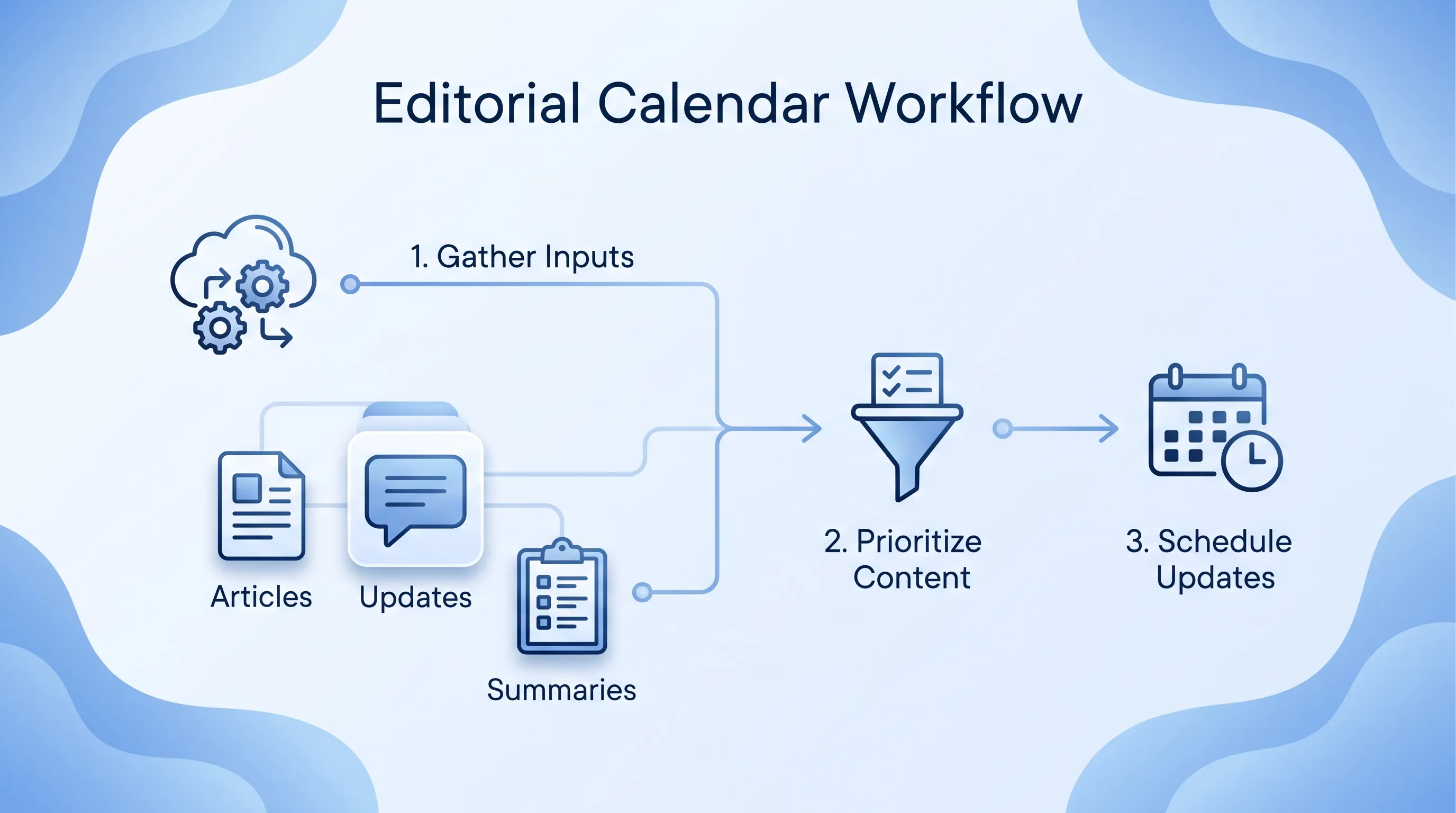
A diagram of an editorial calendar workflow in blue shades, featuring interconnected icons and labeled steps in a modern, clean style.

AI-Powered Editorial Calendar for Continuous Visibility

This article explains how a small communications team can plan publishing and maintenance in one spreadsheet that follows documented reader demand instead of the awareness-day treadmill. It covers inputs and prioritisation. A worked four-week example and the review questions worth asking at month end follow.

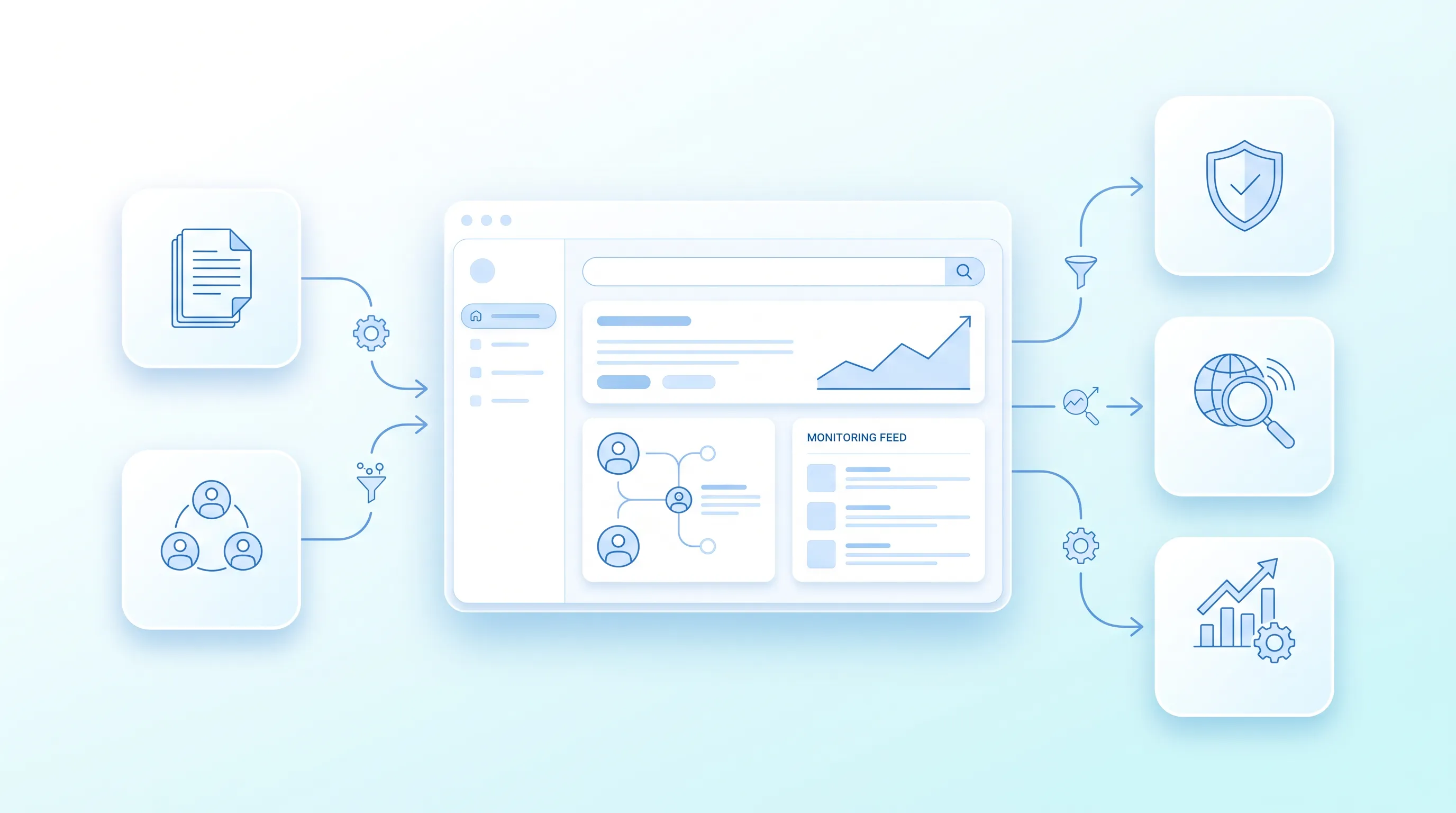
Modern infographic illustrating a central browser interface for nonprofit competitive intelligence, surrounded by symbolic blue icons and connectors.

Competitive Visibility Monitoring for Mission Organizations

This article explains how to check whether your organisation shows up, and shows up accurately, in search results and AI-generated answers about your cause. It covers a question registry and a coding method two reviewers can reproduce, plus a share calculation with defined denominators that shows the point at which paid software earns its cost.

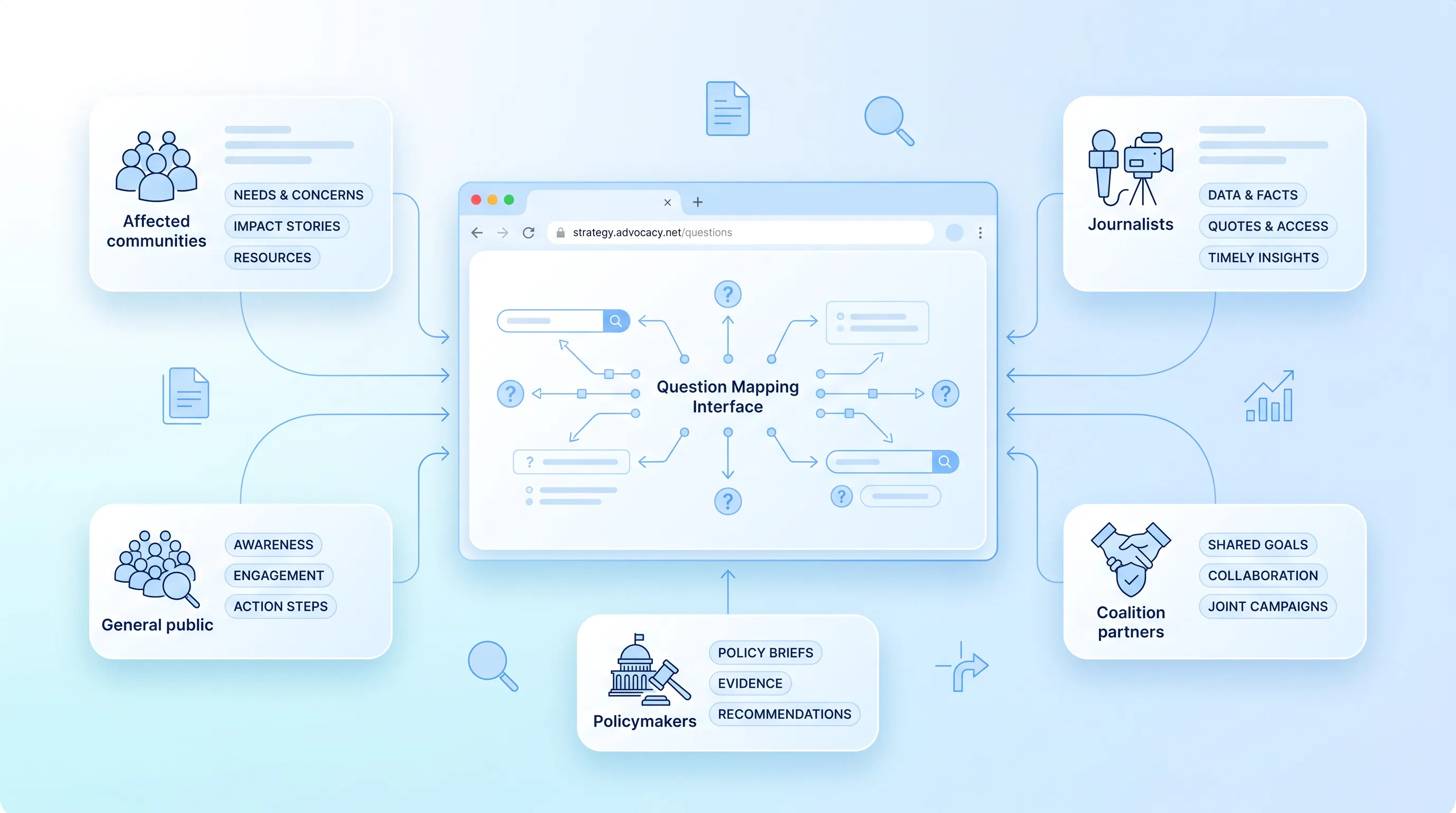
Modern infographic depicting an advocacy content strategy with a central browser window, user group icons, and a soft blue gradient background.

Advocacy Content SEO for Policy and Public Education

This article sets out a practical framework for planning and measuring policy pages so that facts and organisational positions stay separate on the page. It covers question mapping and evidence ranking through an outcome worksheet for ethical evidence publishing built around one clearly fictional proposal.

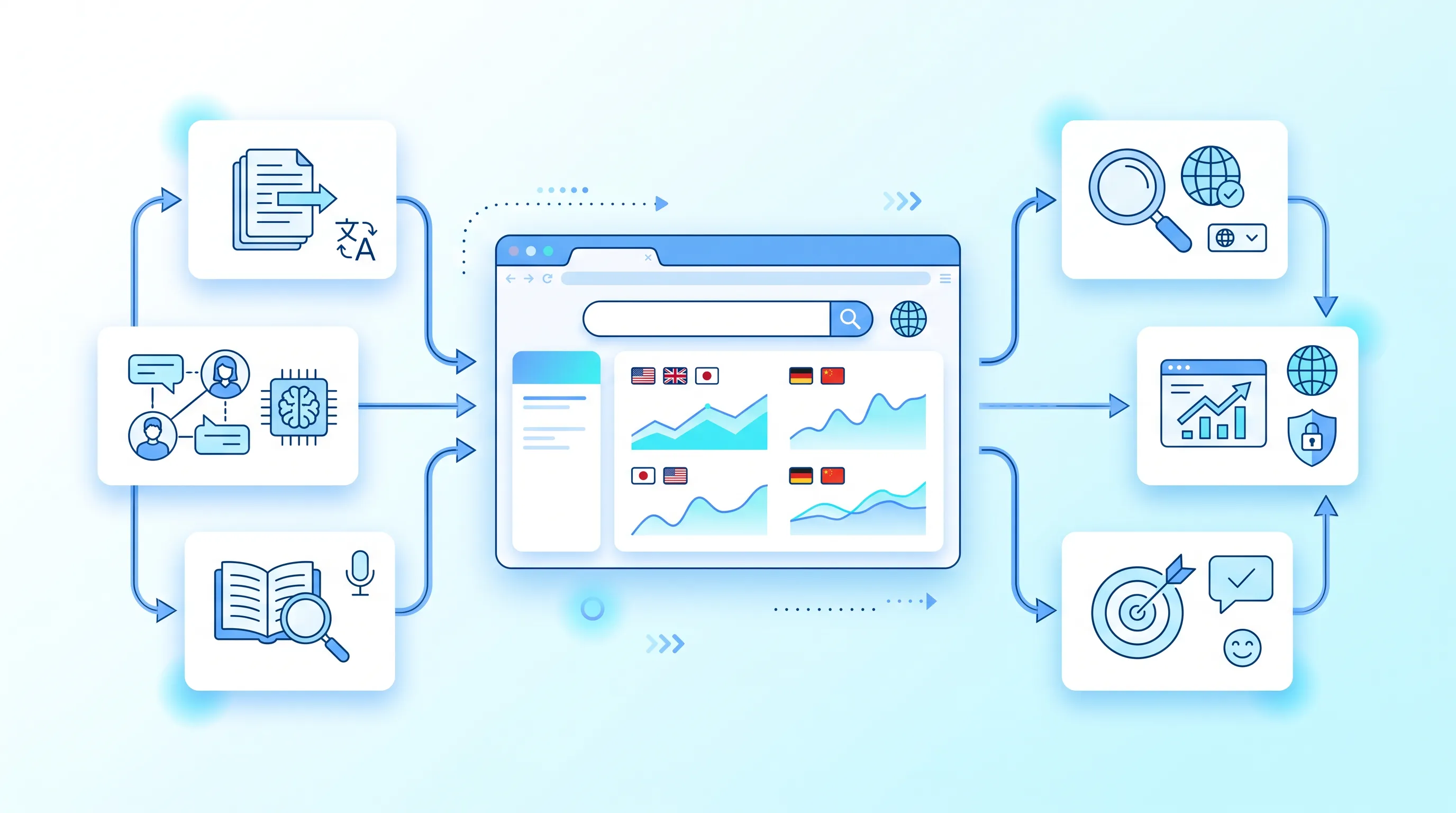
A modern infographic featuring a central web browser window with a multilingual AI dashboard, surrounded by blue line icons on rounded cards.

Multilingual AI Visibility Roadmap for International Missions

This article sets out a prioritized way to decide which languages your organization publishes in and what a complete reader journey looks like in each one. It covers language scoring and localization briefs, then hreflang structure and review gates, along with measurement by language and geography.